SAEDNEWS: Skara Brae, a 5,180-year-old prehistoric village in the Orkney Islands of Scotland, known as the “Pompeii of Scotland,” offers a rare insight into Neolithic life. Its stone houses were equipped with beds, cupboards, and even an early drainage system.
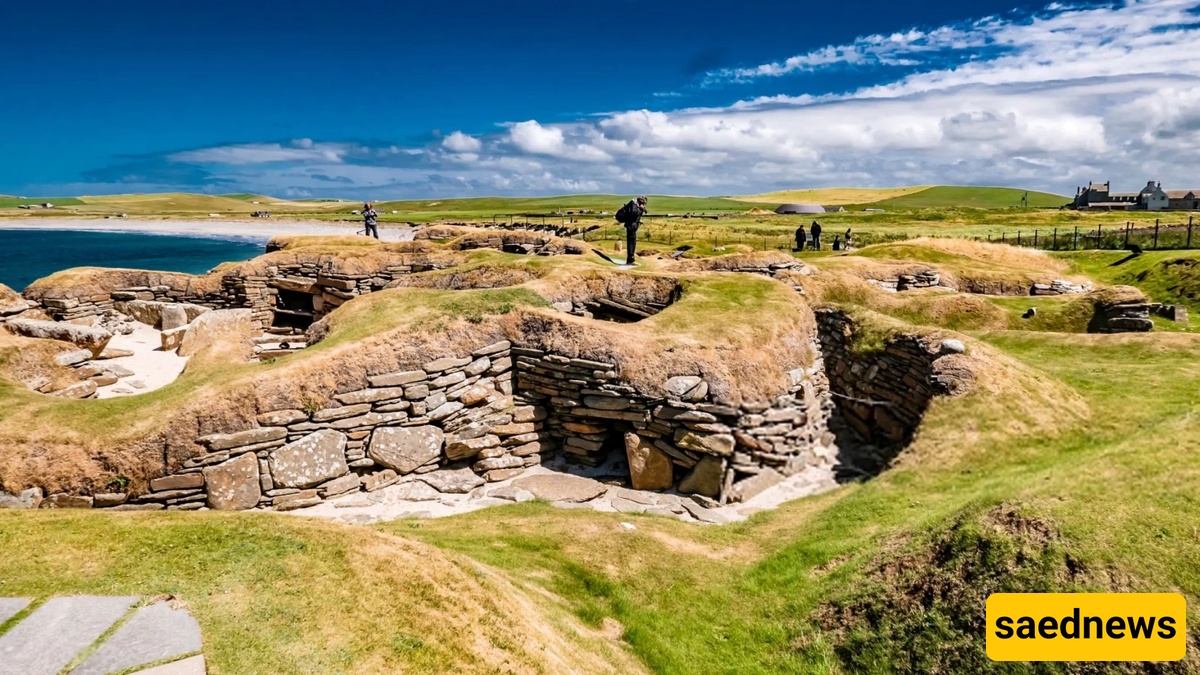
According to Saednews, Skara Brae is a 5,000-year-old village in the Orkney Islands of Scotland and one of the most complete Neolithic settlements in the world. Often called the “Pompeii of Scotland,” it preserves stone houses equipped with beds, cupboards, and even primitive toilets, offering a vivid glimpse into the daily life of prehistoric humans.
Skara Brae is one of the most remarkable archaeological sites in the world—a Neolithic village located on the western coast of Mainland Orkney in Scotland. Known as the “Pompeii of Scotland” due to its exceptional preservation, it provides a rare window into everyday prehistoric life. With a history of more than 5,000 years, Skara Brae is older than both Stonehenge and the Egyptian pyramids and is listed as a UNESCO World Heritage Site. The village consists of ten stone houses and stands as both a symbol of Neolithic engineering and social organization, as well as evidence of human adaptation to the harsh climate of Orkney.
The story of Skara Brae began in the winter of 1850, when a severe storm stripped away sand dunes and revealed the stone walls of ancient houses. The name “Skara Brae” is derived from Old Norse, meaning “rocky hill” or “stony mound.” Local residents initially believed they had found a legendary lost city and began early investigations.
William Graham Watt, a local landowner interested in geology, conducted the first amateur excavations and uncovered four houses by 1868, but the work was later abandoned due to limited resources.
The site remained largely untouched until 1913, when looters damaged parts of it and stole numerous artifacts. Another storm in 1924 caused further damage, prompting official archaeological intervention.
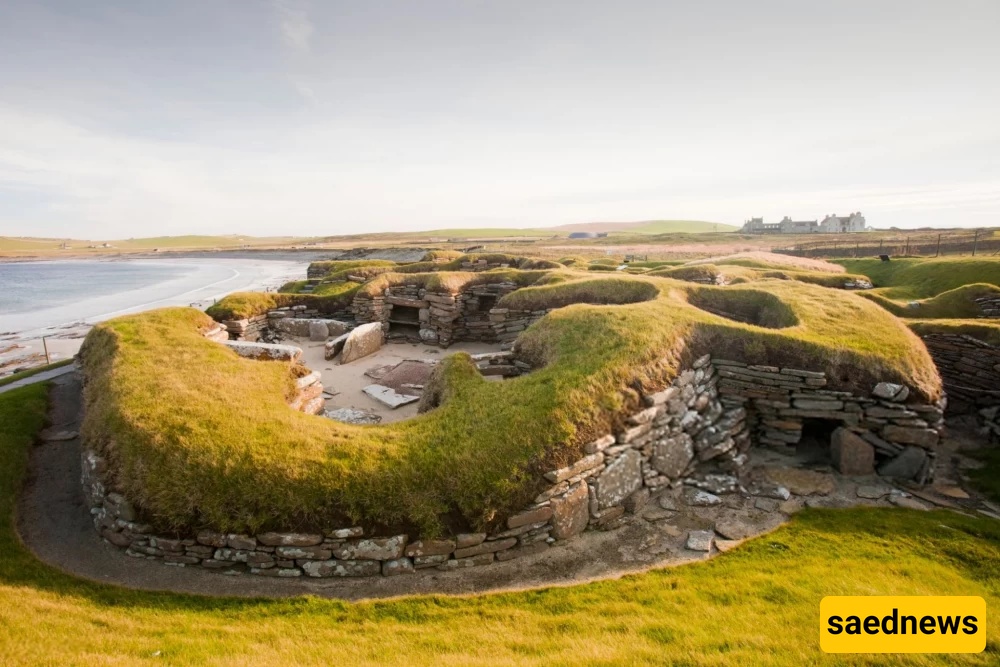
Systematic excavations began in 1927 under archaeologist Victor Gordon Childe from the University of Edinburgh. His team, which included female archaeologists such as Margaret Simpson, Margaret Mitchell, Mary Kennedy, and Margaret Cole, uncovered most of the settlement. Later excavations in 1972–73 revealed waterlogged layers that preserved organic materials such as rope and wooden handles. In 2019, reassessment of Childe’s photographs highlighted the important role of women in the excavations, drawing attention to gender dynamics in archaeology.
These excavations revealed that Skara Brae was not just a village but a complex social community preserved for millennia beneath sand dunes. Without the storm of 1850, this prehistoric treasure might never have been discovered.
Skara Brae was established around 3180 BCE and was occupied until approximately 2500 BCE, lasting about 600 years during the Neolithic period. Early dating by Childe suggested a much later period (around 500 BCE), but radiocarbon dating in the 1970s corrected this.
The inhabitants belonged to the “Grooved Ware culture,” practicing mixed farming—raising cattle, sheep, and pigs, and cultivating barley. The settlement was built beside a freshwater lagoon protected by dunes, which has since been eroded by the sea.
The reason for abandonment remains uncertain. Evidence such as personal ornaments and butchered animal remains suggests a sudden departure, possibly due to a major storm or climate deterioration. Others argue for a gradual decline and natural burial by sand. After abandonment, dunes covered the site, preserving it remarkably well.
Skara Brae consists of ten stone houses, each about 40 square meters in size, built with thick stone walls (up to 2 meters in some cases). The structures were partially underground and insulated with household waste (middens), helping them withstand harsh winters.
Each house had a central square room with a stone hearth for heating and cooking. Stone furniture included large beds, storage cupboards, and shelves. Entrances were low and could be sealed with stone slabs, secured using bone pins.
The layout is remarkably standardized: shelves opposite entrances, storage boxes guiding movement inside the house, and evidence of animal-hide coverings over beds. A primitive drainage system directed waste water toward the sea, making it one of the most advanced domestic systems of its time.
House 8 appears to have been a workshop rather than a dwelling, possibly used for tool production.
Life in Skara Brae was based on farming, animal husbandry, and fishing. The inhabitants consumed seafood such as shellfish and fish, and likely used dried seaweed, animal dung, and driftwood as fuel.
Artifacts discovered include carved stone balls, bone tools, ivory ornaments, pottery vessels, and red ochre pigments. Some pottery may have contained fermented beverages made from barley and plants.
One notable discovery is early evidence of human fleas in Europe. Other tools were made from bone, antler, whale ivory, and stone, including needles, knives, beads, and polished tools.
A carved ivory whale figurine known as the “Skara Brae Buddo” is another significant artifact.
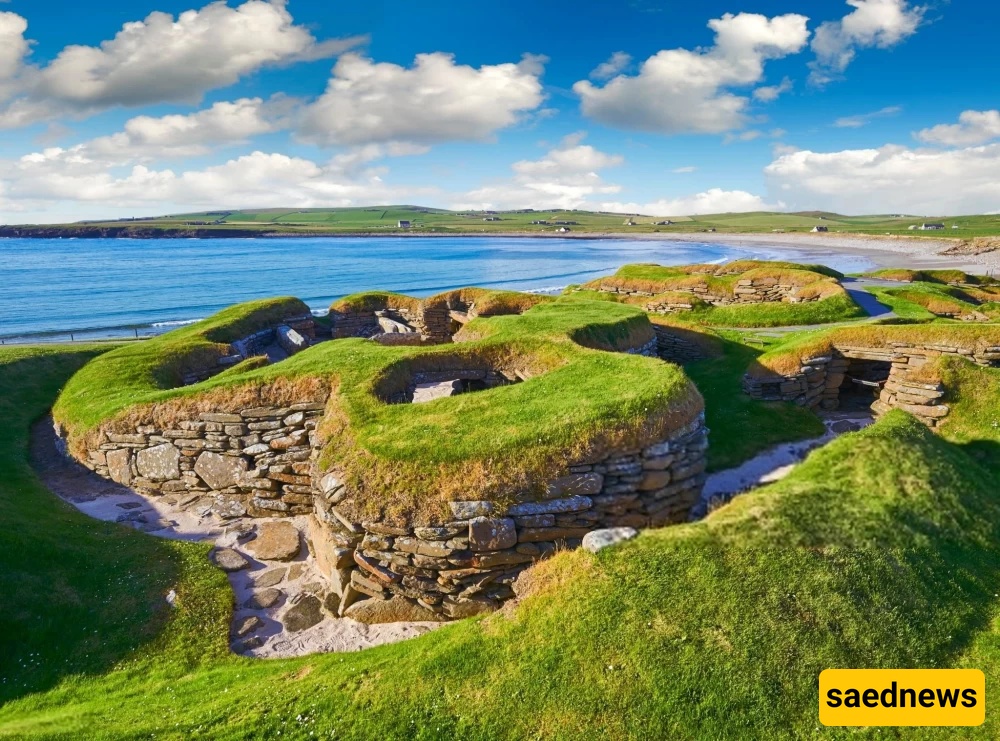
Skara Brae is one of the best-preserved Neolithic villages in Northern Europe and is contemporary with early Egyptian tombs, Mesopotamian temples, and the Indus Valley civilization. It is part of the UNESCO-listed “Heart of Neolithic Orkney,” alongside sites such as the Ring of Brodgar and the Stones of Stenness.
It represents a major achievement of prehistoric human society in a remote northern environment, offering insight into domestic life, social structure, and early engineering.
Today, Skara Brae is managed by Historic Environment Scotland in cooperation with local and environmental organizations. Protective sea walls and conservation measures help prevent erosion.
However, the site is highly vulnerable to climate change. Rising sea levels, increased rainfall, and stronger storms threaten its long-term survival. Coastal erosion remains a constant risk.
Despite these challenges, Skara Brae continues to attract thousands of visitors each year, although it was temporarily closed during the COVID-19 pandemic.
Skara Brae: The 5,000-Year-Old Neolithic Village of Orkney, Scotland
Skara Brae: Scotland’s Best-Preserved Prehistoric Settlement
Skara Brae: A Window into Neolithic Life in Northern Europe
Skara Brae: The Ancient “Pompeii of Scotland”