SAEDNEWS: When traveling to Italy and its charming capital, Rome, we recommend adding a visit to this hill to your itinerary. For more information about Palatine Hill, stay with us and continue exploring.
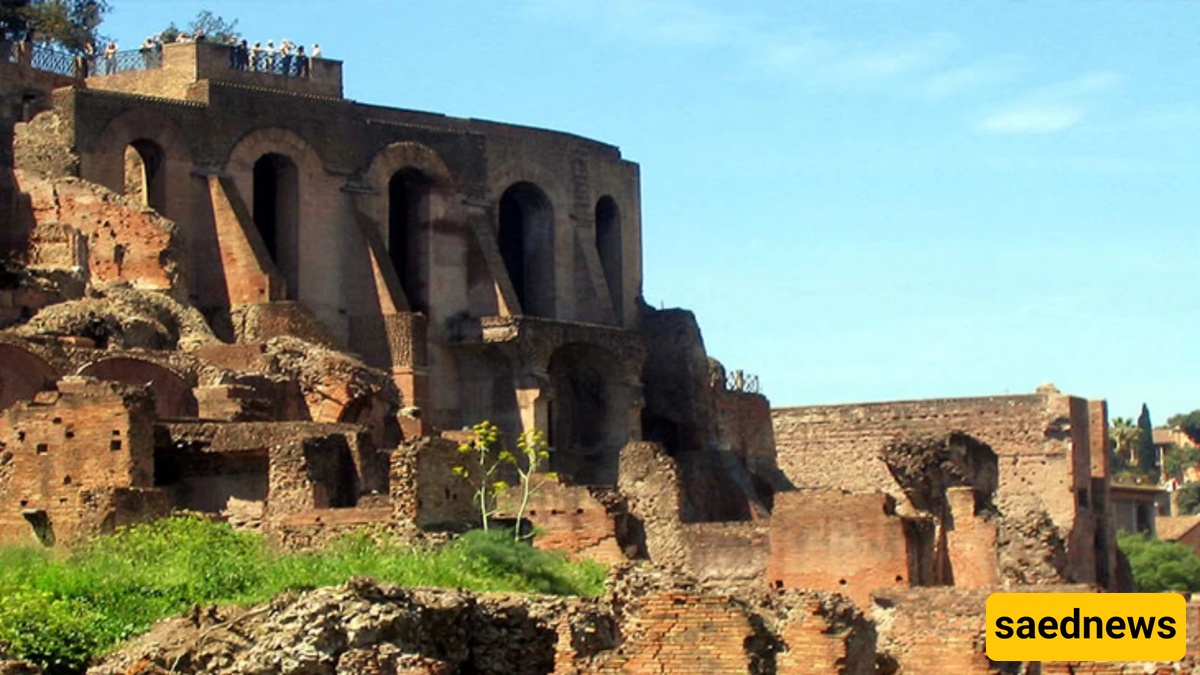
According to Saednews, Palatine Hill in Rome, Italy may sometimes be overshadowed by the famous Colosseum located right next to it, but during a trip to Rome, visiting it is absolutely essential. No proper tour of Rome is complete without seeing the Colosseum, the Roman Forum, and Palatine Hill.
This magical hill stands beside the Roman Forum and the Circus Maximus. Even from a distance, the ruins of its ancient palaces are still visible. Once, it was home to Roman emperors and the site of many temples. It is also closely tied to Rome’s most famous legend: Romulus and Remus, the mythical founders of Rome.
Without understanding Palatine Hill and its long history, it is impossible to fully grasp ancient Rome. Beyond its archaeological remains, the hill is covered with wildflowers, and you may even spot rabbits in the distance. You can have a picnic there and spend peaceful time in the shade of the trees in the Farnese Gardens. Even during peak tourist season, the hill remains relatively calm and is a perfect escape from the crowds.
From one side of the hill, looking down at Circus Maximus gives a deeper appreciation of its historical grandeur. From another side, you can see the Aventine Hill.
However, the most breathtaking view is from the opposite side of the hill, where you can fully see the winding ruins of the Roman Forum, the Colosseum, and the Capitoline Hill. If you are looking for new perspectives on Rome and its history, there is no better place than Palatine Hill.
Palatine Hill is one of the seven hills of Rome and perhaps the most famous of them all. In ancient Rome, it was considered the most desirable residential area in the city and was home to emperors and aristocrats.
According to legend, this is the hill where the she-wolf found and raised Romulus and Remus, the twin founders of Rome. The cave believed to be their shelter is also said to be located here. This myth, along with its role as an imperial residence, made Palatine Hill one of the most important places in Rome.
Today, Palatine Hill is a vast archaeological site where the ruins of the Flavian Palace and the Stadium of Domitian can still be seen. The remains of the House of Augustus and the House of Livia—recently opened to the public—feature stunning frescoes that are truly worth visiting.
Palatine Hill lies next to the Roman Forum and the Colosseum, and a single ticket often allows access to all three sites.
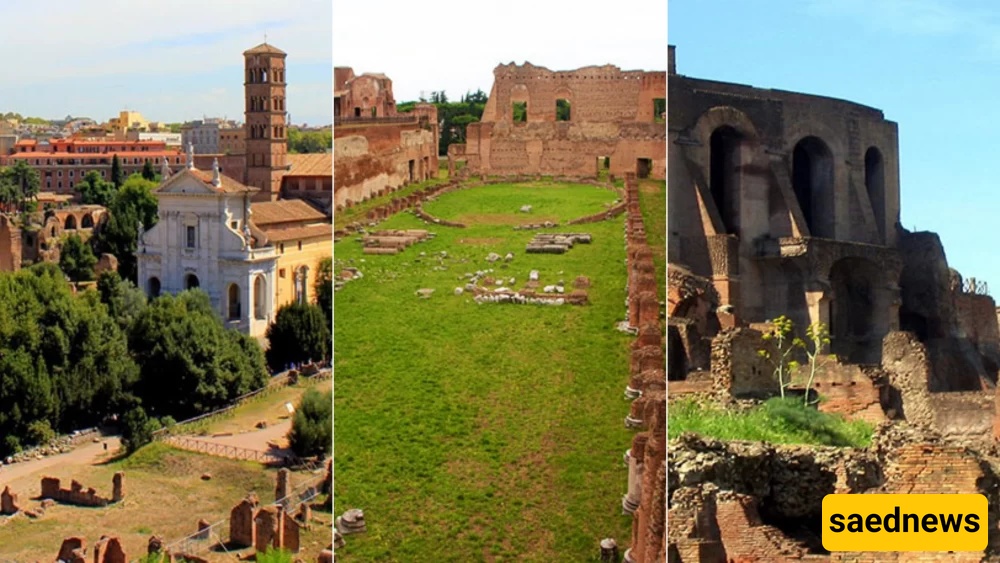
The story of Palatine Hill begins with mythology. Ancient Romans believed that Romulus and Remus once lived here, and they even identified a hut known as the “Hut of Romulus,” the legendary founder of Rome.
Remains of this hut, which has been respected and restored multiple times over the centuries, can still be seen in the southwestern part of the hill.
Even without the myth, Palatine Hill clearly has ancient origins. Archaeological research suggests that settlements existed here as early as the 10th century BCE, and historians believe it was one of the earliest inhabited areas of Rome.
Palatine Hill is located in central Rome, right next to the Roman Forum and the Colosseum. It is easily accessible on foot from many of Rome’s major historical landmarks. Visiting it usually takes a combined ticket that also includes entry to the Colosseum and Roman Forum.