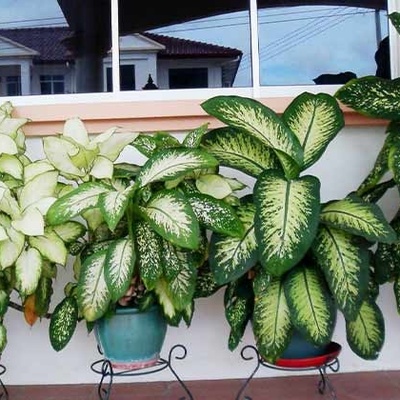
SAEDNEWS: By following a few simple tips outlined in this section, you can keep your Dieffenbachia plant healthy, vibrant, and bushy.
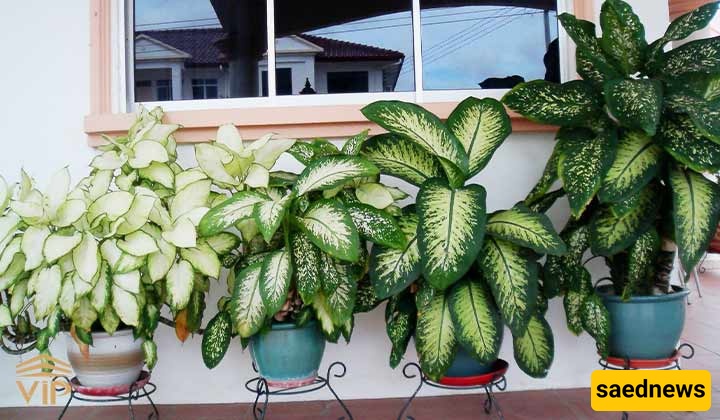
According to Saednews, Dieffenbachia, with its broad, beautifully patterned leaves, is one of the most popular houseplants. However, despite receiving plenty of care, it may sometimes develop yellow leaves or stop growing. To keep Dieffenbachia healthy indoors, you need to understand how much light and water it requires, which type of soil is best, and when to fertilize it. One important thing to remember is that Dieffenbachia prefers moist soil, but overwatering can cause root rot.
Yes, Dieffenbachia is a toxic plant. Its leaves and stems contain needle-shaped calcium oxalate crystals. If chewed or swallowed, these crystals can cause a burning sensation in the mouth, as well as inflammation and swelling of the tongue and throat.
Touching the plant, especially its healthy leaves, usually does not cause problems. However, contact with sap from a broken leaf or stem may irritate the skin and eyes.
Wear gloves when pruning, repotting, or propagating the plant. Keep it out of reach of children and pets. If someone swallows part of the plant or develops swelling in the mouth or throat, seek medical attention immediately.
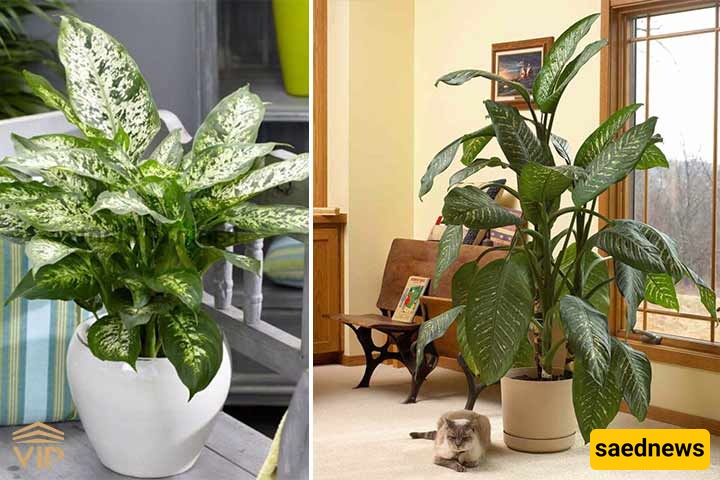
To keep your Dieffenbachia healthy and maintain its beautiful leaf colors, follow these four important care guidelines:
1. Light
Dieffenbachia grows best in a bright location with indirect sunlight. A spot near an east-facing window or behind a sheer curtain is ideal.
Insufficient light can slow down its growth, while strong, direct sunlight may burn its leaves.
2. Temperature
A temperature between 18°C and 25°C (64°F–77°F) is ideal for Dieffenbachia.
This plant is sensitive to cold temperatures and sudden temperature changes. Avoid placing the pot near cold windows, air-conditioning vents, or heating appliances.
3. Soil
Dieffenbachia needs lightweight, nutrient-rich soil with good drainage.
A suitable mixture is regular indoor potting soil combined with perlite. Adding coco coir or peat moss can also help maintain balanced soil moisture.
Make sure the pot has drainage holes at the bottom.
4. Humidity
Dieffenbachia prefers moderately humid conditions but can also grow well in normal household humidity.
If the air is too dry, the tips and edges of its leaves may turn brown. Using a cool-mist humidifier or grouping several houseplants together can help increase humidity.
When caring for Dieffenbachia indoors, watering should depend on how dry the soil is rather than following a fixed schedule.
Insert a wooden stick approximately 2–3 cm (1 inch) into the soil. If this section feels dry and no soil sticks to the stick, it is time to water your plant.
Water thoroughly until some water drains from the bottom of the pot. Then empty the drainage tray.
During warmer months, Dieffenbachia generally needs more frequent watering, while watering intervals should be longer in winter.
If the soil remains constantly wet, the roots and lower stem may develop rot.
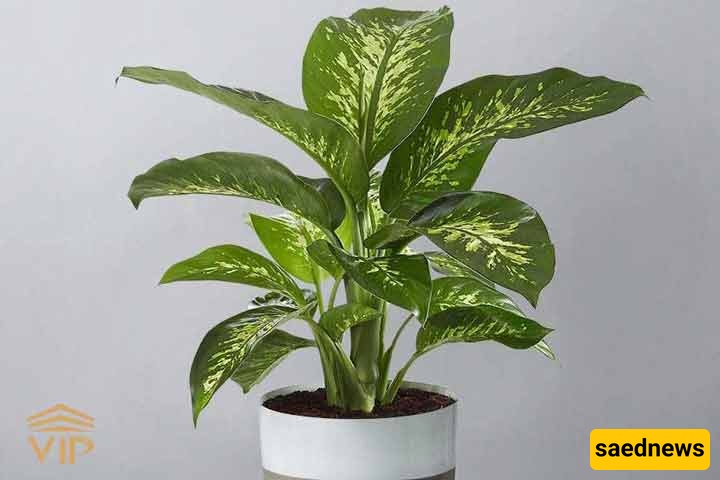
To encourage healthy growth and large, attractive leaves, first make sure your plant receives sufficient light and proper watering.
During spring and summer, when the plant is actively growing, you can use a balanced houseplant fertilizer, such as a 20-20-20 fertilizer.
Fertilizing every 4–6 weeks at the recommended dilution is usually sufficient.
Reduce fertilization if the plant receives insufficient light or has stopped growing.
For faster Dieffenbachia growth, provide:
Sufficient indirect sunlight
A suitable temperature
Well-draining, lightweight soil
Balanced nutrition
Excessive fertilizing or frequent watering will not make the plant grow faster and may actually damage its roots.
If roots are emerging from the drainage holes or have completely filled the pot, consider repotting in spring. Choose a pot approximately 2–5 cm (1–2 inches) wider than the current one.
Annual repotting is not necessary. Only repot when the plant needs more space.
Under suitable growing conditions, Dieffenbachia may produce new shoots from the lower part of its stem. However, the number of shoots depends on the plant variety and its growing conditions.
If your plant has a long, bare stem with very few leaves, you can prune it during the growing season.
Cutting back the stem may activate dormant buds below the cut and encourage new branches to develop. However, these new shoots are not necessarily independent, rooted offshoots.
If a new shoot grows beside the mother plant and has developed its own roots, you can carefully separate it during repotting.
One of the most common ways to propagate Dieffenbachia is through stem cuttings. Spring or early summer is the best time for propagation.
Follow these steps:
Put on gloves and prepare a clean knife or pair of pruning shears.
Take a healthy tip cutting or divide a leafless stem into sections approximately 5–8 cm (2–3 inches) long.
Make sure each stem section has at least two nodes.
Allow the cut surfaces to dry for approximately one day.
Place the stem sections horizontally in a moist, well-draining growing medium, such as perlite.
Keep the cuttings in a warm location with indirect light.
Maintain slightly moist growing medium, but avoid making it soggy.
You can also root terminal cuttings in water.
Depending on the growing conditions, root development and new shoots may take several weeks.
It is not always a sign of disease when an older leaf near the bottom of the stem turns yellow. However, if several leaves turn yellow at the same time, check the following possible causes:
1. Overwatering
Yellow leaves accompanied by constantly wet soil and sometimes a soft stem may indicate overwatering and root rot.
2. Improper Lighting
Insufficient light can cause slow growth and make the patterns on the leaves less vibrant.
3. Cold Temperatures
Leaves may become damaged after exposure to cold windows, drafts, or sudden temperature changes.
4. Pests and Nutritional Problems
Poor growth, unusual spots, or abnormal leaf discoloration may indicate pest infestations or nutritional deficiencies.
Before applying fertilizer or pesticides, check the soil moisture, inspect the roots, and examine the undersides of the leaves.
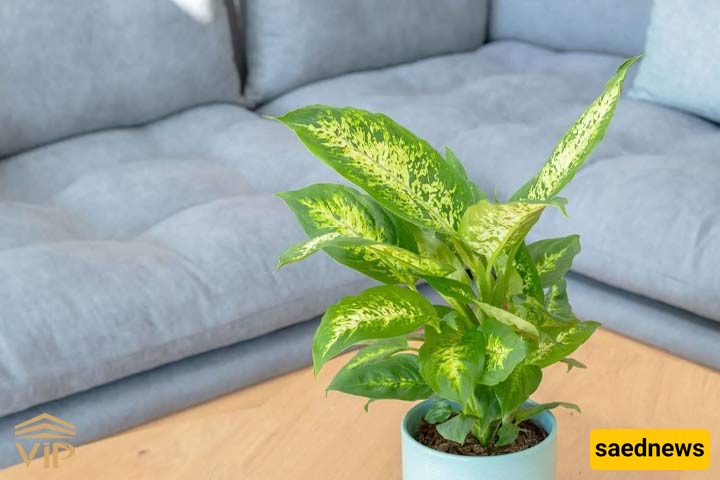
Contrary to what some people believe, Dieffenbachia is not divided into separate male and female plants.
Its flowers grow in a structure called an inflorescence. Male flowers are located in the upper section, while female flowers are found in the lower section.
Dieffenbachia rarely flowers indoors and is primarily grown for its attractive foliage.
Therefore, you do not need to identify male and female Dieffenbachia plants for ordinary care or propagation.
If your Dieffenbachia is not growing, its leaves are turning yellow, or it is not producing new shoots, start by checking its lighting, watering routine, and soil condition.
What problems have you experienced while caring for your Dieffenbachia? Share your questions and experiences in the comments so we can discuss possible causes and solutions.