SAEDNEWS: The color of your teeth doesn’t just reflect beauty—it reveals important secrets about your health.

According to Saednews, Tooth color reflects overall body health. Changes in tooth color can be a warning sign of oral problems or even indicators of more serious diseases in the body. Dental technologist Ellen Zhang emphasizes that teeth can reveal early signs of illness, and early detection of color changes using tools such as intraoral cameras can help prevent more serious complications. According to her, early diagnosis of tooth discoloration is a simple and effective way to maintain long-term health. Paying attention to tooth color and visiting a dentist regularly is an important step in protecting overall bodily health.
Below are the most important tooth discolorations and their possible scientific meanings.
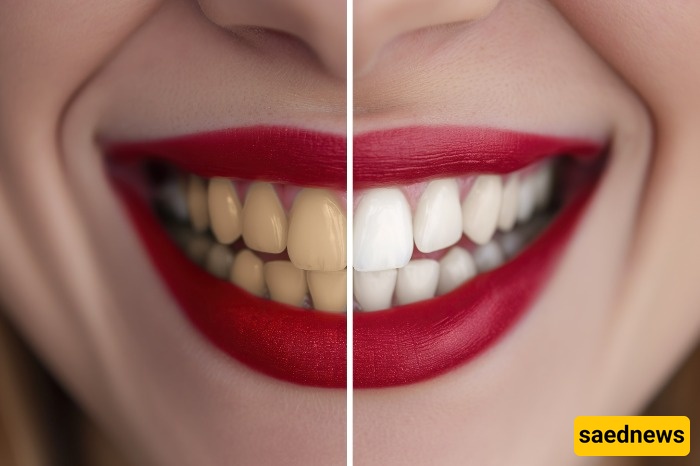
Yellowing of teeth is a common phenomenon, often linked to frequent consumption of colored beverages such as tea and coffee or tobacco use. However, it may also signal more serious health issues, including liver dysfunction. When the liver does not function properly, a substance called bilirubin can accumulate in the body, and elevated levels may contribute to changes in tooth color.
A gray or dull tooth color may indicate tooth death (necrosis). Beyond physical damage, it can also be associated with underlying conditions such as celiac disease. Celiac disease affects nutrient absorption and can interfere with proper enamel formation, leading to permanent discoloration. Fortunately, dentists can improve appearance using cosmetic treatments such as veneers and dental bonding.
Brown spots on teeth can be an early warning sign of tooth decay. They may also be caused by fluorosis, a condition that occurs when excessive fluoride exposure happens during tooth development, usually in childhood. Accurate diagnosis is essential for choosing the right treatment and prevention method.
Use of certain antibiotics, especially tetracyclines, during childhood can cause permanent tooth discoloration. These drugs can enter developing tooth structures and deposit in enamel and dentin, resulting in gray, blue, brown, or yellow stains or lines that are usually irreversible.

Many people assume that very white teeth are the healthiest, but chalky white spots may actually indicate early tooth decay or defects in enamel formation. One less-known cause is celiac disease, an autoimmune disorder in which the immune system reacts to gluten found in wheat, barley, and rye.
Severe darkening or black discoloration usually indicates a serious dental problem such as advanced decay or pulp necrosis (death of the tooth’s inner tissue). If left untreated, it can lead to severe infections. In rare cases, it may also result from exposure to heavy metals.
Dull or speckled enamel (known as mottled enamel) may be linked to genetic disorders such as amelogenesis imperfecta. This condition affects the development of tooth enamel and can lead to discoloration (white, yellow, brown, or gray spots), thinning enamel, and increased wear.