SAEDNEWS: The Meaning of the “Happiest Country in the World”
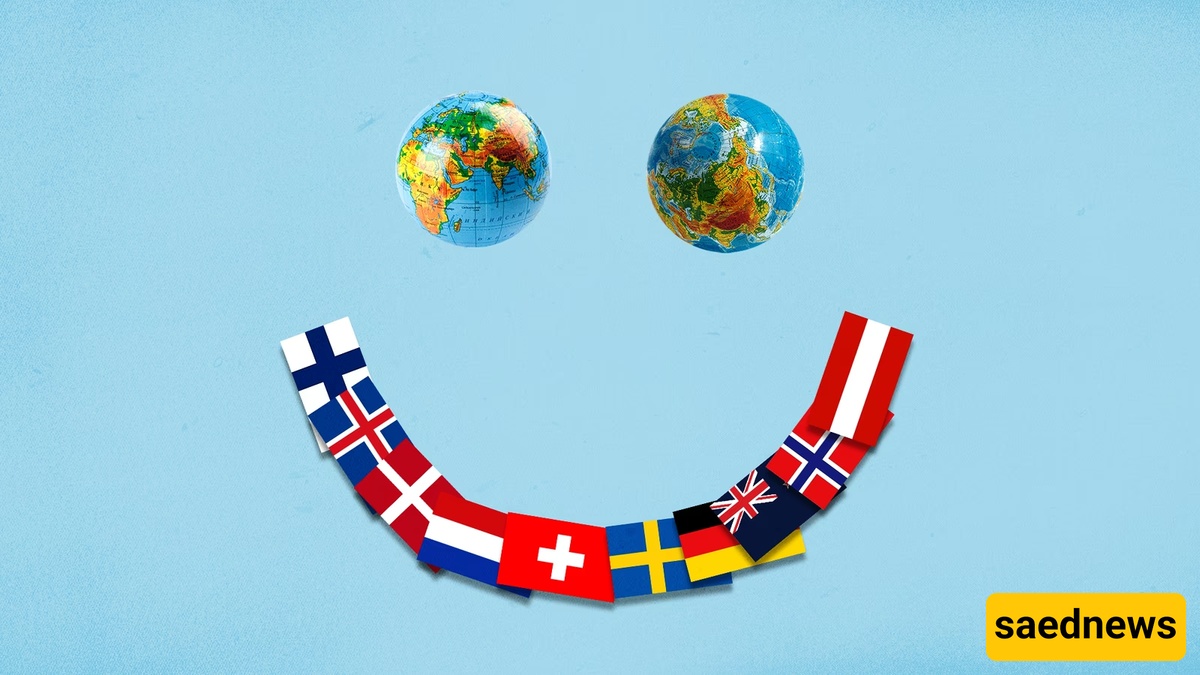
According to Saednews, Imagine two people: both have ordinary jobs, average incomes, and busy urban lives. Yet one falls asleep each night with a sense of security and satisfaction, while the other is filled with anxiety about tomorrow. Where does this difference come from?
At this point, many people shift their focus from income and job status alone to broader indicators of quality of life and overall life satisfaction. You can also explore the world’s best countries based on 10 key factors through the linked article.
So the interesting question is: which countries are truly more successful in creating this sense of peace and satisfaction?
Rank | Country | Common Languages | General Lifestyle / Culture | Practical Immigration Insight |
|---|---|---|---|---|
1 | Finland | Finnish, Swedish | Orderly, safe, high welfare | Excellent for stability and quality of life |
2 | Denmark | Danish (English widely spoken) | Balanced lifestyle | Strong opportunities in skilled fields |
3 | Iceland | Icelandic (English widely spoken) | Calm, nature-focused | Safe and small-scale society |
4 | Sweden | Swedish | Structured, family-oriented | Good career paths for professionals |
5 | Netherlands | Dutch (English widely spoken) | Urban, international | Popular for work migration |
6 | Costa Rica | Spanish | Nature-driven, relaxed lifestyle | Attractive for slower-paced living |
7 | Norway | Norwegian (English widely spoken) | High welfare, strong services | Stability and job security |
9 | Luxembourg | Luxembourgish, French, German | Small but very wealthy | Strong for international finance careers |
10 | Mexico | Spanish | Social and vibrant | Attractive cultural lifestyle |
11 | Australia | English | Migrant-friendly, high quality of life | Diverse skilled migration pathways |
12 | New Zealand | English, Māori | Calm, nature-oriented | Peaceful lifestyle, smaller job market |
13 | Switzerland | German, French, Italian (Romansh) | Highly organized, high standards | High cost, language skills required |
14 | Belgium | Dutch, French, German | Multicultural European hub | Good for international careers |
15 | Ireland | English, Irish | Modern, open society | Attractive for work migration, housing can be expensive |
16 | Lithuania | Lithuanian (English common in cities) | Emerging modern economy | Lower living costs, growing tech sector |
The well-known “World Happiness Report” is based mainly on the Gallup World Poll and people’s responses to a key question known as the Cantril Ladder.
In this method, respondents imagine a ladder from 0 (worst possible life) to 10 (best possible life) and rate where they believe they stand.
Unlike common assumptions, country rankings are based directly on these self-reported life evaluations.
Other factors such as:
Social support
Life expectancy
Freedom of choice
Perceived corruption
are not the direct happiness score itself, but are used to explain why people in some countries report higher life satisfaction.
Finland consistently ranks at the top because several key elements work together to improve daily life:
Trust and security: High trust in both people and institutions
Strong social safety net: Support during crises is reliable
High-quality public services: Education and healthcare are stable and effective
Work-life balance: Personal time and wellbeing are prioritized over overwork
Simply changing location without changing life conditions often leads to temporary excitement, followed by the return of stress and pressure.
Real migration success depends on moving to a country that improves your overall quality of life—not just income.
The key question becomes:
“Where do I have the highest chance of living a stable, peaceful, and high-quality life?”
Countries with higher happiness scores typically offer:
Psychological safety and strong institutions
Better work-life balance
Higher social trust and lower daily friction
The “happiest country” rankings are not just media headlines—they are based on large-scale global data reflecting how people actually experience their lives.
For anyone considering immigration, such reports can act as a practical guide rather than just statistics. They help identify destinations where well-being is not an exception, but a normal part of everyday life.