Saed News: Air pollution has long been associated with respiratory problems, heart diseases, and reduced quality of life, but scientists are now concerned about another risk that may be even harder to detect.
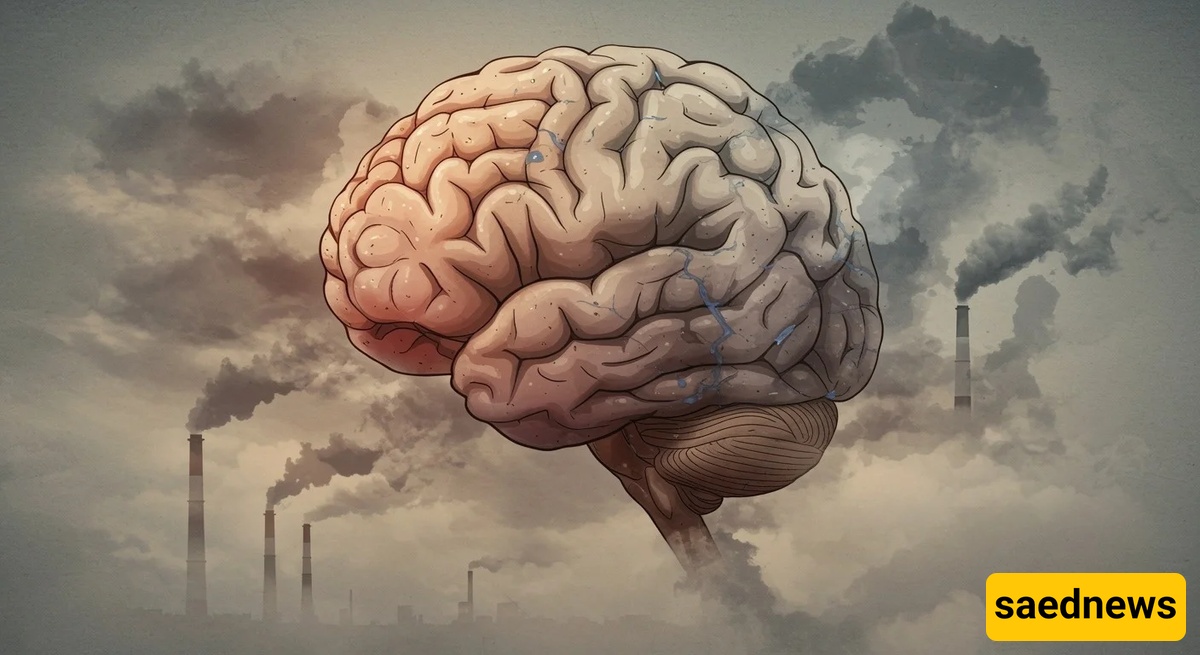
According to SAEDNEWS, new research by British scientists shows that common air pollutants can change both brain function and lung function within just a few hours after exposure. These findings suggest that even short-term breathing of polluted air may quickly affect how the brain works.
This research was conducted by a group of scientists from several British institutions, including the University of Birmingham. For years, experts have known that air pollution can irritate the lungs and increase the risk of asthma, chronic lung disease, stroke, and heart attacks. More recently, researchers have examined the link between long-term exposure to air pollution and neurological diseases such as dementia.
Dementia, especially with aging populations, is a growing global health problem. Millions of people worldwide live with memory loss and cognitive decline, and scientists are trying to better understand environmental factors that may contribute to these conditions.
The important “lung-brain axis” theory suggests that the lungs and brain are closely connected. Air pollution may directly damage the brain when very fine particles enter the bloodstream and eventually reach brain tissue. Pollution may also indirectly affect the brain by causing inflammation in the lungs, which then leads to harmful changes throughout the body.
Researchers aimed to better understand whether different pollution sources affect the body in different ways. Most current air quality measurements focus on the amount of fine particles in the air, known as particulate matter (PM). However, scientists suspected that the type of pollution may be as important as its total amount.
To investigate this, researchers conducted a carefully controlled clinical study involving 15 healthy volunteers. In this double-blind study, neither the participants nor the researchers directly interacting with them knew which pollutant was being tested at any time. This method helps reduce bias and increase scientific accuracy.
Volunteers were exposed to several different types of real air pollution, including clean air, diesel exhaust, wood smoke, cooking emissions, and secondary organic aerosol from limonene. Limonene is a chemical with a citrus smell commonly found in cleaning products, air fresheners, and scented household items. When mixed with other chemicals in indoor air, it can form tiny particles called secondary organic aerosols.
Each participant was exposed to pollutants for 60 minutes. Four hours later, researchers tested their breathing and several aspects of brain function. Scientists measured working memory, attention, emotional processing, movement speed, and motor control.
The results showed that different pollutants affect the body in different ways, even when all pollution mixtures contained similar levels of particulate matter. Limonene-related pollution had the strongest effect on lung function. Wood smoke and diesel exhaust also affected breathing, while cooking-related pollutants had the least respiratory impact.
Diesel exhaust and wood smoke appeared to improve processing speed in some tasks. Limonene-related pollution improved working memory compared to cooking-related pollutants. However, diesel exhaust also showed signs of impairing executive function, which is the brain’s ability to plan, focus, and make decisions.
Researchers believe that nitrogen oxides (NOx) may partly explain these mixed results. These chemicals are commonly found in vehicle emissions and can alter blood flow in the brain. Changes in blood flow may temporarily modify mental performance in different ways.
Gordon McFiggans explained that although the pollution mixtures contained similar levels of particulate matter, the body did not respond in the same way. Each pollution source created its own unique pattern of effects on the lungs and brain.
Thomas Faherty, the lead researcher from the University of Birmingham, said the findings highlight the importance of understanding how the lungs and brain interact when people breathe polluted air.
A particularly concerning finding was how quickly effects appeared. Detectable changes were observed after only one hour of exposure.
Researchers warn that if such changes can occur this quickly, repeated or long-term exposure over many years may have much greater consequences for brain health. This is especially relevant for people living in cities, where traffic pollution, cooking emissions, and indoor air pollutants are part of daily life.
The study also raises questions about current air quality regulations. Since different pollution sources appear to affect the body differently, measuring only particulate matter may not fully capture real health risks.
Scientists say future public health strategies may need a more detailed focus on the exact sources and chemical composition of air pollution, not just particle levels. These findings may also help doctors better understand why some people are more vulnerable to neurological diseases such as dementia.
Overall, this research provides important new evidence that the air people breathe every day may affect brain health much faster than previously thought.
The study was published in the journal npj Clean Air.