SAEDNEWS: Researchers have identified two-dimensional gold with a thickness of just two atoms. This breakthrough is expected to revolutionize the development of nanomaterials, medical applications, and electronics.
According to Saednews, Researchers at the University of Leeds in the UK have succeeded in producing the world’s thinnest gold, measuring just two atoms thick—what they call “two-dimensional gold.”
Classified as a nanomaterial, this ultra-thin gold holds immense potential for medical and electronic applications. Sanji Yi, lead author of the study, described the achievement as the first creation of standalone two-dimensional gold under one nanometer in thickness.
Stefan Evans, supervising the research, explained that these nanoscale gold sheets are exceptionally efficient catalysts, performing up to ten times better than conventional gold nanoparticles used in industry.
The unique properties of this flexible gold could bring significant economic benefits. Potential applications include developing artificial enzymes for water purification and advanced medical diagnostic tests.

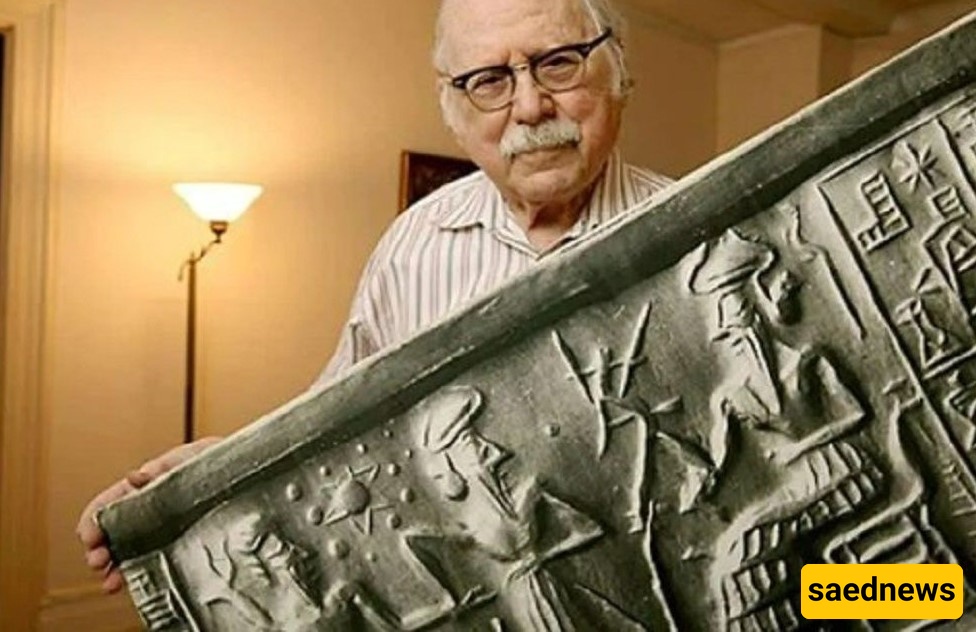
Alongside this scientific breakthrough, ancient Sumerian tablets tell tales of the Anunnaki—extraterrestrial beings who, according to legend, came to Earth thousands of years ago to mine gold.
Ancient astronaut theorists propose that the Anunnaki genetically engineered early humans, or “Adamu,” around 450,000 years ago to work in gold mines, supplying the precious metal needed to save their dying planet.
Author Zecharia Sitchin, who spent decades interpreting these theories, argued that the tablets recorded historical events as well as myths. He suggested that the Anunnaki transferred genes to Homo erectus to create early workers capable of thought and tool use.
Could humanity have inherited advanced knowledge of gold use from these ancient visitors? The question remains a tantalizing intersection of modern nanoscience and ancient legend.