SAEDNEWS: The violin is one of the most popular musical instruments, known for its beautiful and distinctive sound. Violins come in various sizes and types, making them suitable for players of different ages and skill levels. Among the simplest and most common types is the acoustic violin.
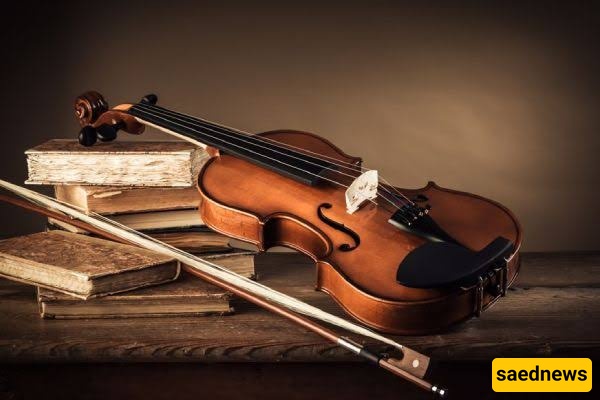
According to Saednews, Learning music and playing a musical instrument have attracted human attention since ancient times. Music is deeply connected with the human mind and soul, and it can help people spend their free time in a meaningful, enjoyable, and productive way.
Among musical instruments, string and bowed instruments are particularly popular because of their soft, warm, and pleasant sound. The violin is one of the oldest bowed string instruments and is known for producing a unique and beautiful tone.
Violin solos are highly enjoyable to listen to, but the sound of the violin becomes equally fascinating when combined with other musical instruments. In this section, we will take a closer look at the violin.

The violin is a bowed string instrument that plays an important role both in large orchestras and in group and solo performances. It is often regarded as the leading instrument among string instruments.
The violin is commonly used in Western classical music as well as jazz.
The violin family includes the violin, viola, cello, and double bass. Violins themselves are generally divided into acoustic and electric types.
The acoustic violin is the simplest and most traditional type of violin and is particularly suitable for beginners.
An electric violin has an electrical output for amplifying its sound. It is often made using modern materials, including metal components, and is commonly used in rock, pop, and other contemporary styles.
Electric violins are generally lighter than acoustic violins and may have a different number of strings depending on their design.
The viola resembles an acoustic violin, and the player holds it on the left shoulder in a similar manner. However, the viola is larger than the violin and has a slightly lower pitch.
Its tone is rich, deep, mellow, warm, and soothing.

The cello is considerably larger than the violin and is played while sitting. The instrument rests on the floor on an endpin and is positioned between the player's knees.
Unlike the violin and viola, the cello is not placed on the player's shoulder. Its neck extends upward toward the player's left shoulder, while the bow is drawn horizontally across the strings.
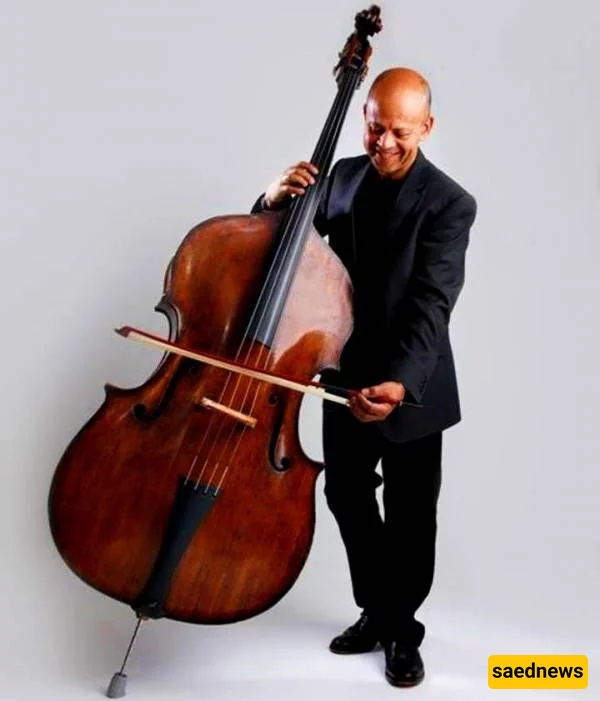
The double bass is the largest member of the bowed string instrument family. The player normally stands while playing it, holding the instrument beside the body. The neck extends above the player's left shoulder, and the instrument is played with a bow in a horizontal motion, similar to the cello.

The double bass has a powerful, full, deep, and resonant tone. It has the lowest pitch and the smallest pitch range among the bowed string instruments.
There has long been disagreement among musicians and historians about the origins of the violin. Some believe that the instrument originated in Italy, while others suggest that the violin developed from the rabab, an instrument associated with Arab countries.
Early versions of the instrument reportedly had a hole in the body. Over time, this feature disappeared, and an instrument with three strings became one of the early forms that eventually developed into the modern violin.
The violin evolved in Europe after the 11th century and gradually became widely used.
Gasparo Bertolotti, an Italian instrument maker, is often credited as one of the earliest makers of the violin and is sometimes referred to as its inventor. Although more than three centuries have passed since the development of the early violin, its fundamental structure has remained remarkably consistent.
A violin weighs approximately 400 grams and consists of around 58 individual components. Its main parts include the following:
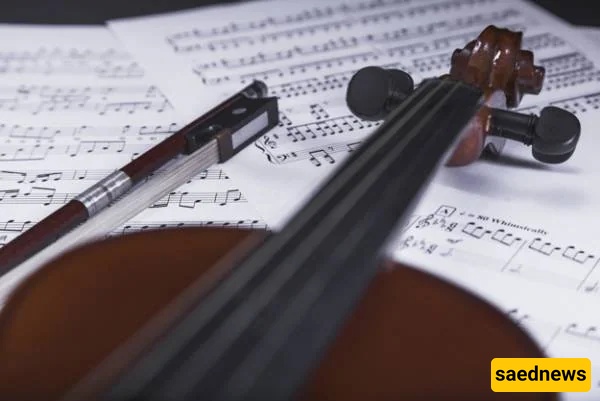
The bow is a wooden stick along which strands of horsehair are stretched and secured at both ends. The player moves the bow across the strings to produce sound.
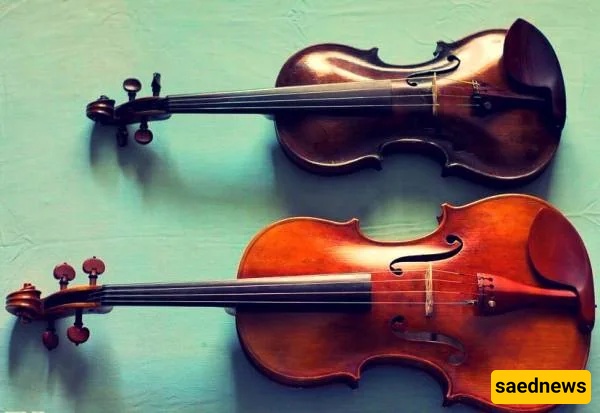
The sound box consists of three main sections: the top plate, the back plate, and the ribs around the sides.
The fingerboard, bridge, and tailpiece are commonly made from ebony, which provides strength and durability.
The neck is the wooden extension that supports the strings. The upper part provides the surface on which the player's fingers are placed.
A small pegbox is located at the end of the neck. The strings are wound around the tuning pegs inside this section.
The bridge connects the strings to the sound box. It separates the strings, holds them at the proper height above the body, and transfers their vibrations to the sound box.
A small wooden component called the sound post is located inside the instrument. It transfers vibrations to the back plate and helps distribute the pressure of the strings so that the top plate is not damaged.
The fingerboard is the part against which the player presses the strings with the fingers. It is attached to the neck and extends toward the middle of the instrument's body.
The fingerboard is usually made of ebony. By pressing a string against it, the player shortens the vibrating length of the string and produces different notes.
The tailpiece is located near the bridge and extends toward the bottom of the violin. It is generally made of ebony and is connected to an end button by a tailgut made from gut, plastic, or wire.
In the past, violin strings were made from sheep gut. Today, many strings are made with metal cores, while thicker strings may have a fine metal winding around a gut or synthetic core.
The strings begin at the pegbox, extend along the fingerboard, pass over the bridge, and are secured at the tailpiece.
From the highest-pitched string to the lowest-pitched string, the violin's four strings are tuned as follows:
E — first string
A — second string
D — third string
G — fourth string
Each adjacent pair of strings is separated by a perfect fifth.
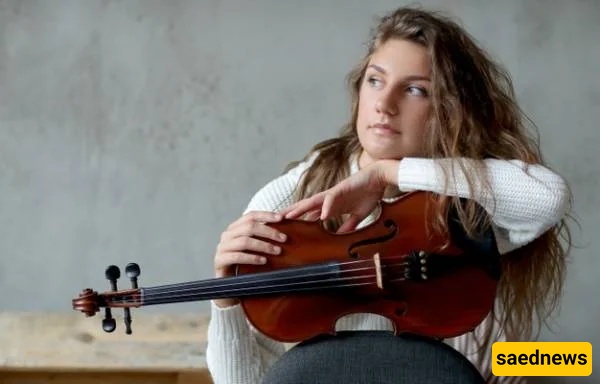
A violinist should be able to support the instrument comfortably using the neck and shoulder. During playing, three main contact points—the chin, shoulder, and left hand—help support the violin and distribute its weight.
The player normally uses the left shoulder to help support the instrument. The shoulder should remain relaxed and should not be unnecessarily raised.
However, players with a long neck may need to raise the shoulder slightly and lower the neck to maintain proper control of the instrument.
The violin and its neck should remain approximately horizontal to the ground. Therefore, the player should raise the left hand sufficiently to maintain the correct position.
The violin should not be held with the neck and scroll pointing excessively downward or upward.
If the instrument points downward, unnecessary tension can cause the player's posture to collapse and may interfere with breathing. If it points upward, excessive pressure can be placed on the neck.
When purchasing a violin, consider the following points:
If you are a beginner, avoid buying an extremely expensive instrument, as you may accidentally damage it while learning.
The quality of a violin should not be judged solely by its sound. A well-made violin should also have a strong and stable structure.
Instead of buying a new violin, you may consider purchasing a good-quality, well-maintained second-hand instrument.
Violins are available in different sizes. For players over approximately nine years old, a 4/4 violin, commonly called a full-size violin, is generally suitable.
Pay attention to the accessories and equipment included with the violin.
Try to purchase an instrument that has already been properly set up and adjusted.
Make sure the body has no cracks.
The edges of the instrument should be properly aligned and should not protrude from the top or bottom.
The neck should be straight.
Check the height of the strings above the fingerboard.
The tuning pegs should turn smoothly without sticking.
Traditionally preferred woods for violin construction include maple, spruce, ebony, willow, and rosewood.
A carefully selected and properly set-up violin can make learning more comfortable and enjoyable while providing a better foundation for developing good playing technique.