SAEDNEWS: Persimmon Pie: A Delicious Autumn Dessert with a Crisp Crust and Fragrant, Soft Persimmon Filling

According to Saednews, Persimmons are among the most fragrant and delightful fruits of autumn. While they are commonly enjoyed fresh, one of the most appealing ways to use this seasonal fruit is to turn it into a homemade dessert: persimmon pie.
With a few simple techniques, you can make a persimmon pie with a crisp crust, a smooth and flavorful filling, and delicate hints of cinnamon and vanilla. This dessert is perfect for afternoon tea, holiday gatherings, or as a seasonal treat throughout autumn and winter.
In this article, we will walk you through the complete persimmon pie recipe, including how to choose the right persimmons, prepare the pie crust and filling, balance the sweetness, bake it properly, and store it for later.
If you are looking for an elegant homemade pie with a soft texture and perfectly balanced flavor, this recipe is an excellent choice.

Persimmon pie is more than just a delicious dessert; it is also a wonderful way to use ripe, seasonal persimmons. Naturally sweet and rich in moisture, persimmons give the filling a soft, creamy texture.
Adding spices such as cinnamon and nutmeg enhances the warm autumn flavors of this dessert.
Another advantage is that persimmon pie can be made with simple ingredients commonly found in most kitchens. Flour, butter, sugar, eggs, cream, and persimmons form the foundation of this recipe.
With accurate measurements and careful preparation, you can achieve a delicious, bakery-quality result at home.
The following ingredients are enough to prepare one persimmon pie in a round 9.5-inch (24 cm) pie pan.
2 cups all-purpose flour (250 g)
½ cup cold unsalted butter (125 g)
¼ cup powdered sugar (50 g)
1 egg yolk
2–3 tablespoons cold water
¼ teaspoon salt
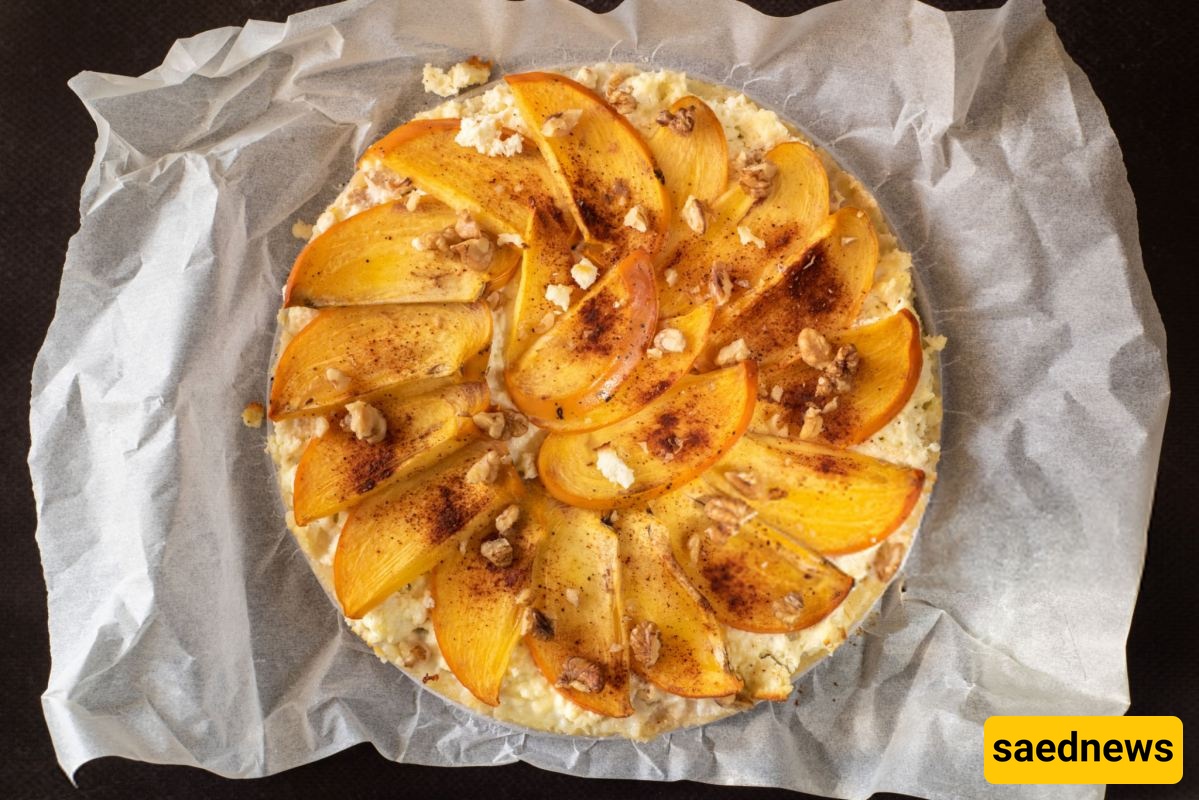
5–6 medium-sized, fully ripe and sweet persimmons (approximately 600–700 g of purée)
⅓–½ cup sugar (80–100 g), depending on the sweetness of the persimmons
2 eggs
½ cup heavy cream or whole milk (120 ml)
2 tablespoons cornstarch
1 tablespoon freshly squeezed lemon juice
1 teaspoon ground cinnamon
¼ teaspoon ground nutmeg (optional)
¼ teaspoon vanilla extract
20 g melted butter
Whipped cream, as desired
Ground cinnamon or chopped pistachios
Thin slices of fresh persimmon (optional)

The quality of the persimmons plays an important role in the final flavor of your pie. For the best results, choose fully ripe, soft, and naturally sweet persimmons.
Unripe or astringent persimmons can create an unpleasant taste and negatively affect the texture of the filling.
If your persimmons are slightly underripe, leave them at room temperature near an apple or banana to help speed up the ripening process.
Once fully ripe, wash and peel the persimmons and remove any seeds. Blend the flesh using a food processor or hand blender until smooth.
If you prefer an extra-smooth filling, pass the purée through a fine-mesh sieve. This is particularly helpful if the fruit contains fibrous strands.
Set the prepared purée aside until you are ready to make the filling.
First, sift the flour, powdered sugar, and salt into a large mixing bowl.
Cut the cold butter into small cubes and add it to the dry ingredients. Using your fingertips or a fork, rub the butter into the flour until the mixture resembles coarse crumbs.
Avoid allowing the butter to melt. Keeping it cold is essential for achieving a tender, flaky crust.
Next, add the egg yolk and cold water. Gently bring the ingredients together with your hands until a smooth dough forms.
Avoid overworking the dough, as excessive kneading can make the crust tough.
Shape the dough into a flat disc, wrap it in plastic wrap, and refrigerate for at least 30 minutes.
Chilling allows the gluten to relax and helps prevent the crust from shrinking during baking. This is one of the most important steps for achieving a successful persimmon pie.
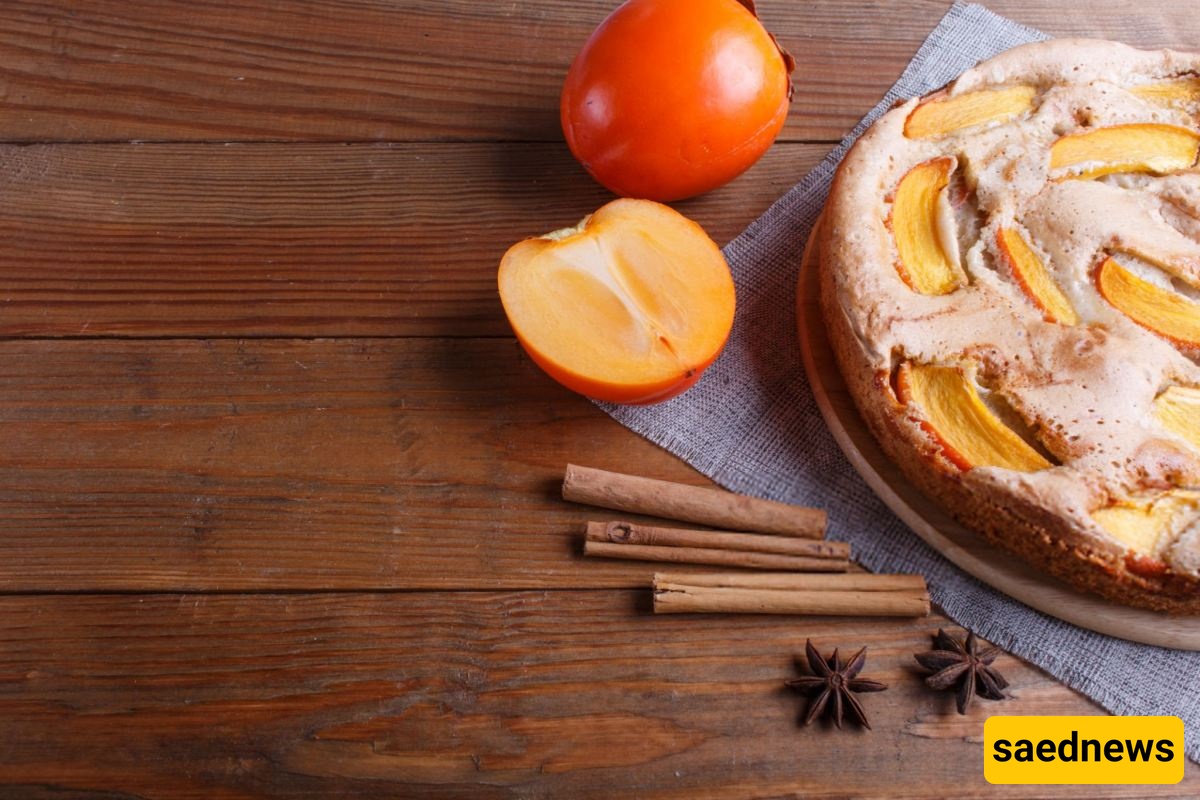
In a medium-sized mixing bowl, whisk the eggs and sugar together using a hand whisk or electric mixer until combined. There is no need to create excessive foam.
Add the cream, cornstarch, vanilla extract, cinnamon, nutmeg, and lemon juice. Mix until everything is smooth and evenly incorporated.
Add the persimmon purée and gently stir until combined.
Finally, pour in the melted butter and mix again.
Lemon juice helps balance the natural sweetness of the persimmons while enhancing the overall flavor. If your fruit is particularly sweet, you can slightly reduce the amount of sugar.
Cornstarch is especially important in this recipe because it helps thicken the filling and prevents the pie from becoming too runny. Avoid reducing the amount too much.

Preheat your oven to 350°F (180°C).
Remove the chilled dough from the refrigerator and roll it out on a lightly floured surface into a circle approximately 11–12 inches (28–30 cm) in diameter.
Carefully transfer the dough to your pie pan and trim the edges. Prick the bottom several times with a fork to allow steam to escape during baking.
For the best results, partially bake the crust first using a technique known as blind baking.
Place a sheet of parchment paper over the dough and fill it with dried beans or pie weights.
Bake for 12–15 minutes. Remove the parchment paper and weights, then bake for another 5 minutes to allow the bottom of the crust to dry slightly.
Once the crust is ready, pour the persimmon filling into it and smooth the surface with a spatula.
Return the pie to the preheated oven and bake for approximately 35–45 minutes.
Baking time may vary depending on your oven and the thickness of the pie pan.
The pie is ready when the edges are golden and the center is mostly set but still has a slight jiggle.
Avoid overbaking, as this can cause the persimmon filling to become dry.
Remove the pie from the oven and place it on a wire rack to cool completely. Allowing it to cool helps the filling firm up and develop the right consistency.
For cleaner slices, refrigerate the pie for 2–3 hours before serving.

Use fully ripe persimmons: Unripe fruit can produce an unpleasant astringent taste.
Keep the butter and dough ingredients cold: Cold butter helps create a tender, flaky crust. Avoid overworking the dough.
Balance the sweetness: Persimmons are naturally sweet, so adjust the sugar according to the ripeness and sweetness of the fruit. Lemon juice also helps balance the flavor.
Bake the filling properly: Removing the pie too early may leave the center runny, while overbaking can make it dry. Look for a mostly set center with a slight jiggle.
Allow the pie to cool completely: Cutting the pie while it is hot can cause the filling to fall apart and affect its appearance.
There are several ways to customize this persimmon pie and create different flavor combinations.
For a fresh citrus aroma, add a little finely grated orange zest to the filling. It complements the sweetness of persimmons and gives the dessert a refreshing fragrance.
You can also use a small amount of lemon zest, but be careful not to overpower the natural flavor of the fruit.
For extra texture and richness, consider adding a few tablespoons of chopped walnuts, sliced almonds, or crushed pistachios to the filling.
If you enjoy chocolate, a little grated dark chocolate or chocolate chips can make an interesting addition. If you choose this variation, consider reducing the sugar slightly.
Another delicious option is to add a crumb topping, also known as a streusel topping. Simply combine flour, brown sugar, cinnamon, and cold butter, then sprinkle the mixture over the pie before baking.
The topping becomes golden and crispy in the oven, adding a delightful contrast to the soft filling.
You can also prepare individual persimmon pies using smaller tart pans. Simply reduce the baking time and check for doneness regularly.
If you prefer a less sweet dessert, reduce or omit part of the sugar and use your preferred alternative sweetener if desired. Keep in mind that changing the sugar content may affect the final texture and color.
If you eliminate sugar completely, a little extra cinnamon and vanilla can help enhance the overall flavor.
Persimmon pie can be served warm, at room temperature, or chilled.
If serving it warm, allow it to rest for a few minutes before slicing so the filling has time to set.
This dessert pairs beautifully with:
Freshly whipped cream
Vanilla ice cream
A light caramel sauce
Ground cinnamon
Crushed pistachios
Thin slices of fresh persimmon
For a more elegant presentation, serve each slice with a dollop of whipped cream and a few pieces of fresh fruit, such as pomegranate seeds or apple slices.
The combination of orange persimmon, red pomegranate, and white cream creates a beautiful autumn-inspired presentation.
Beverages such as tea, mild coffee, or cinnamon herbal tea also complement the flavors of this dessert wonderfully.
Persimmon pie can be stored in the refrigerator for approximately 2–3 days.
Once completely cooled, cover it with plastic wrap or a suitable lid to preserve moisture and prevent it from absorbing other refrigerator odors.
For best results, store the pie in an airtight container on a middle refrigerator shelf.
To reheat, place individual slices in an oven preheated to 300°F (150°C) for a few minutes.
You can also use a microwave, although this may soften the crust.
If you have decorated the pie with whipped cream, keep the cream refrigerated and add it only when serving.
Yes! Persimmon pie can be frozen for approximately 1–2 months.
For best results, allow the pie to cool completely after baking, then cut it into individual slices.
Wrap each slice separately and place them in a freezer-safe container.
When ready to serve, thaw the slices in the refrigerator or at room temperature, then warm them briefly in the oven if desired.
If the filling does not firm up after cooling, the amount of cornstarch may have been insufficient or the pie may not have baked long enough.
Next time, measure the cornstarch accurately and bake until the center is mostly set.
Allowing the pie to cool completely and refrigerating it also helps the filling reach the right consistency.
A soggy crust may result from excess moisture in the filling or insufficient pre-baking.
Blind baking the crust before adding the filling can help prevent this problem.
You can also sprinkle a thin layer of breadcrumbs or almond flour over the bottom of the crust to help absorb excess moisture.
Cracks may develop if the pie bakes too quickly at a high temperature or cools too suddenly.
Make sure your oven temperature is accurate and allow the pie to cool gradually after baking.
Small cracks generally do not affect the flavor and can easily be covered with whipped cream or crushed pistachios.
Fully ripe persimmons can be naturally very sweet.
Adjust the sugar according to the sweetness of your fruit and avoid adding extra sugar when decorating.
Fresh lemon juice can also help balance the flavor.
This problem is usually caused by using underripe or astringent persimmons.
Always choose fully ripe, sweet fruit for this recipe.
If desired, strain the persimmon purée to achieve a smoother and more refined filling.
Homemade persimmon pie is a wonderful way to celebrate the flavors of autumn and winter. Its buttery, crisp crust, naturally sweet fruit filling, and warm cinnamon aroma make it an inviting dessert for family gatherings and special occasions.
By choosing perfectly ripe persimmons, keeping the crust ingredients cold, measuring the filling ingredients carefully, and allowing the pie to cool completely, you can achieve a beautiful dessert with a smooth texture and balanced sweetness.
Whether served with whipped cream, vanilla ice cream, or simply enjoyed on its own, this homemade persimmon pie is a delightful seasonal treat worth making every year.