SAEDNEWS: Pigs and wild boars are mammals that share many similarities. For example, under Islamic dietary laws, consuming the meat of both animals is prohibited. In fact, a wild boar is a type of pig that has developed in the wild and possesses certain distinctive characteristics.
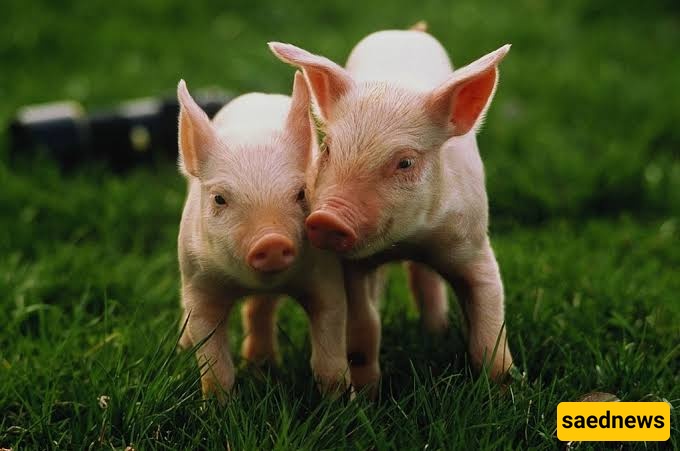
According to Saednews, The main reason people hunt wild boar or raise domestic pigs is their meat. But what exactly distinguishes a wild boar from a domestic pig? Although they share the same ancestry and many biological characteristics, their lifestyles, appearance, behavior, and relationship with humans are quite different.
The wild boar (Sus scrofa) is a large mammal belonging to the pig family, Suidae. It is considered the ancestor of most domestic pig breeds. Compared with domestic pigs, wild boars are generally stronger, more muscular, and better adapted to surviving in nature.
Wild boars prefer areas with abundant water and dense vegetation. They commonly inhabit lowland forests, woodland, reed beds, riverbanks, wetlands, and areas covered with shrubs. In Iran, they have been reported in many forested and green regions, including Gilan, Mazandaran, Golestan, Khorasan, Azerbaijan, Kurdistan, Kermanshah, Hamadan, Lorestan, Khuzestan, and Sistan and Baluchestan.
The species is native to large parts of Europe, Mediterranean regions, North Africa, and Asia, including countries such as Japan, China, India, Pakistan, and Afghanistan. Wild boars are highly adaptable and can establish themselves in many environments as long as sufficient water and food are available.
Domestic Pig | Wild Boar |
|---|---|
Raised as a farm animal | Lives and reproduces naturally in the wild |
Usually fed corn, wheat, soybean, and barley | Feeds on roots, plants, fruits, rodents, reptiles, insects, and other available food |
Relies on humans for food and shelter | Travels considerable distances in search of food |
Selectively bred for meat and fat production | Naturally muscular and physically powerful |
Generally social and intelligent | Usually shy and difficult to observe during daylight |
Has relatively soft skin compared with a wild boar | Has thick skin covered with coarse, stiff hair |
Lives under controlled conditions | Must survive predators, weather, and food shortages |
Wild boars have a large, elongated head, a short neck, large pointed ears, a heavy body, and relatively small eyes. Their snout is long and cylindrical, extending forward into a broad, flat, hairless, moist disk containing the nostrils.
Their eyesight is relatively poor, but this is compensated for by an exceptionally strong sense of smell and hearing. Their legs are relatively short, and each foot has four toes, although only two of the main hooves normally bear most of the animal's weight.
The body is compact and powerful, with high shoulders and a short, straight tail. A coat of coarse, thick hair covers the body. The hair is particularly long around the head, neck, shoulders, and upper back.
Coloration can range from brown and gray to dark gray and black. The legs, ears, and tail are generally darker. Young wild boars have a distinctive lighter coat with yellowish and brownish stripes. These stripes gradually fade as the animals mature.
Color variation also occurs between populations. In parts of Central Asia, for example, unusually pale wild boars have been reported.
Wild boars are strong and capable animals. They can travel long distances in a day and can reach speeds of around 40 km/h over short distances. They are also excellent swimmers and can cross rivers with ease.
Adult males commonly measure around 100–150 cm in body length and may weigh approximately 60–70 kg on average. However, exceptionally large individuals can be much heavier, with recorded animals reaching 150 kg, 227 kg, and even around 300 kg.
One of the most recognizable features of a wild boar is its tusks. The tusks are particularly important during fights between males and when the animal digs into the ground.
In males, the tusks can become large and curved upward, with a significant portion extending outside the mouth. Female wild boars generally have considerably smaller tusks.
Wild boars are normally cautious animals and tend to avoid people. They are primarily nocturnal, spending much of the day hidden in dense vegetation or resting places. At night, they become active and search for food.
Despite their generally cautious behavior, a wild boar can become extremely dangerous when injured, cornered, or threatened. It may raise the hair along its back and sides to appear larger before charging with its tusks. Females can also defend themselves effectively by biting.
Wild boars are opportunistic omnivores and will consume almost anything edible, although plant material generally makes up an important part of their diet.
Their food may include:
Roots and tubers
Stems and leaves
Seeds and grains
Fruits
Legumes
Insects and larvae
Worms and other invertebrates
Small rodents
Reptiles
Bird eggs and chicks
Carrion
In some circumstances, wild boars may even prey on small animals such as young deer.
Their habit of digging through soil while searching for roots and other food can have both negative and positive ecological effects. Heavy rooting may damage agricultural fields and vegetation, but moderate soil disturbance can also mix and loosen soil, expose insects, and create opportunities for certain plants to regenerate.
For this reason, wild boars are sometimes described as natural "forest gardeners" because their digging can contribute to soil turnover and ecological processes.
Wild boars have complex social structures. Females commonly live together with their young, sometimes forming groups containing several females and offspring from different years.
Adult males are more solitary outside the breeding season and generally join females primarily during mating.
Wild boars communicate using different sounds, including grunts and other vocalizations. A loud grunt or similar call can serve as a warning when danger is detected.
Because wild boars are strong and well-defended animals, they have relatively few predators once fully grown. However, young wild boars can become important prey for large predators.
Depending on the region, wild boars may be hunted by animals such as tigers, wolves, striped hyenas, large bears, crocodilians, large snakes, birds of prey, and various wild cats.
Although wild boars generally avoid confrontation, injured or threatened individuals can deliver serious injuries with their tusks or bites.
Wild boars generally mate during winter, with the exact timing depending on the climate. Their gestation period lasts approximately four months, after which females typically give birth to several piglets.
A litter commonly contains around four to eight young, although larger litters can occur. Piglets grow quickly and may reach sexual maturity at roughly 18 months of age.
Under suitable conditions, wild boars can live for around 20 years.
Wild boars can cause significant agricultural damage when their habitat overlaps with farmland. While searching for roots, insects, and other food, they may dig up soil and destroy crops.
They can damage fields containing crops such as wheat, grapes, and other agricultural products. Their adaptability, high reproductive potential, broad diet, and ability to survive in different environments have also contributed to their success as a species.
Wild boars may also carry parasites and diseases that can affect livestock or, in some circumstances, humans.
Historically, humans have hunted wild boars for many reasons, including obtaining meat, protecting agricultural land, demonstrating hunting skill, and controlling populations.
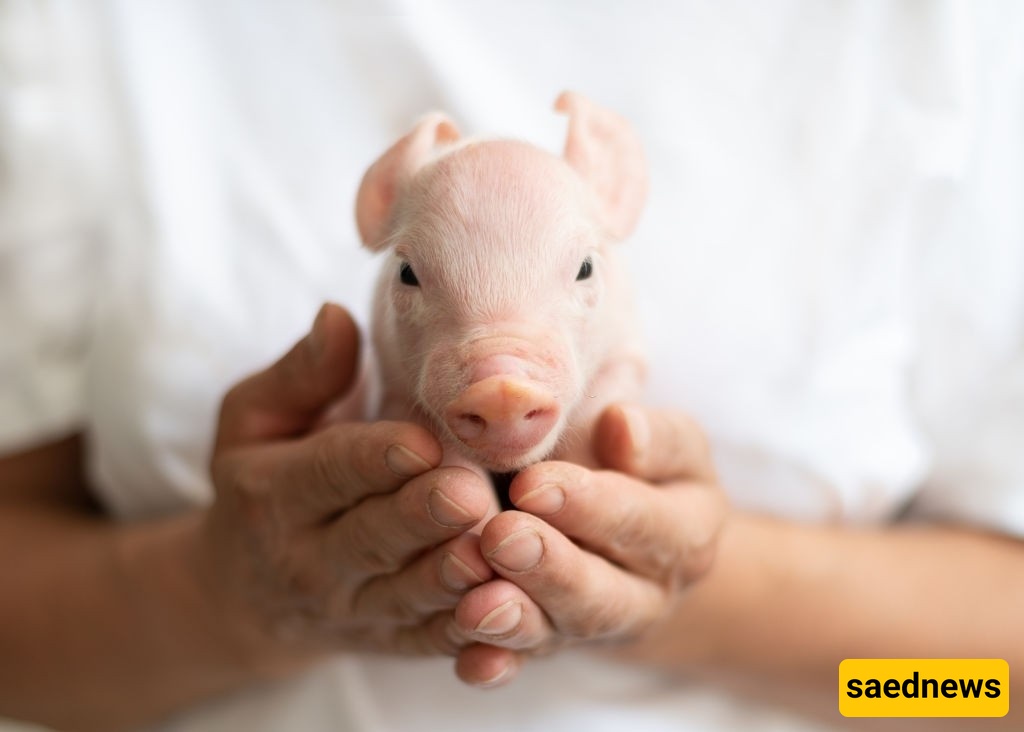
The domestic pig (Sus scrofa domesticus) is a domesticated member of the Suidae family. It descended from wild boar populations and was domesticated thousands of years ago, with important early domestication occurring in the Middle East and China.
Domestic pigs have become one of the world's most important livestock animals. They are primarily raised for pork, although their skin and hair can also be used for various purposes.
Pigs are particularly valuable in agriculture because they grow relatively quickly, reproduce efficiently, and can consume a wide range of foods.
Pork is one of the most widely consumed types of meat globally. Domestic pigs are selectively bred for characteristics such as rapid growth, efficient feed conversion, reproductive performance, and meat production.
Compared with beef and some other meats, pork can contain relatively high levels of fat, although the nutritional composition varies considerably between cuts and breeds.
Commercial pigs are usually provided with carefully formulated diets containing ingredients such as corn, wheat, soybean meal, vitamins, and minerals. Depending on the farming system, vegetables, grasses, hay, bran, rice, and other plant materials may also be included.
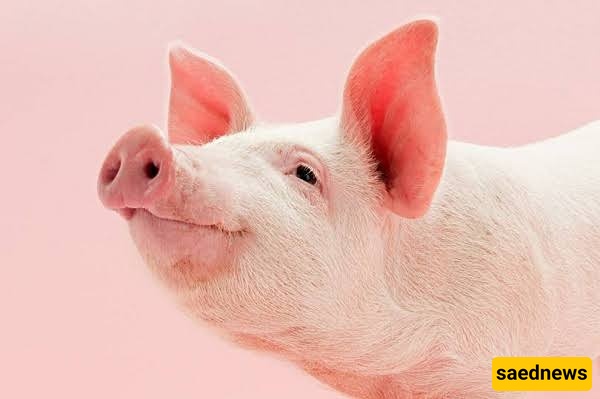
Domestic pigs have a large head and a long snout ending in a rounded, cartilaginous nose. This sensitive snout is used for digging and locating food.
Like wild boars, pigs have four toes on each foot, although the two larger central toes carry most of their weight.
Pigs have 44 teeth. In males, the canine teeth can develop into prominent tusks, although their size varies considerably among breeds and individuals.
Domestic pigs are also highly intelligent and social animals. They communicate using a variety of vocalizations, including grunts, squeals, growls, and other sounds.
The gestation period of a domestic pig is approximately 114 days, commonly remembered as "three months, three weeks, and three days." A sow may give birth to around eight to 12 piglets in a litter, although litter size varies.
Domestic pigs can reach reproductive maturity relatively early, and their lifespan may range from approximately nine to 15 years depending on breed, management, and living conditions.
Their strong sense of smell has also made pigs useful in some specialized activities, including locating underground truffles.
The difference between a wild boar and a domestic pig is primarily the result of domestication and selective breeding.
Both belong to the same broader species lineage, but domestic pigs have been selectively bred for generations to produce desirable agricultural characteristics. As a result, many modern pig breeds have bodies that are heavier, shorter-legged, and more specialized for meat production than their wild relatives.
Wild boars, on the other hand, retain physical and behavioral characteristics that help them survive independently. They tend to have stronger shoulders, longer snouts, thicker coats, larger tusks in males, and a more muscular body.
In simple terms:
A wild boar is adapted for survival in nature, while a domestic pig has been bred and managed primarily for life alongside humans.
Despite their differences, the two are closely related, and domestic pigs can interbreed with wild boars. Their similarities are a clear reminder of their shared evolutionary history.