SAEDNEWS: Futures and crypto trading is highly emotional and fast-paced, where one wrong decision can erase years of progress. This article highlights five major warnings: trading at the wrong time, acting on greed or revenge, entering trades without an exit plan, and ignoring psychological pressure and mental capital.
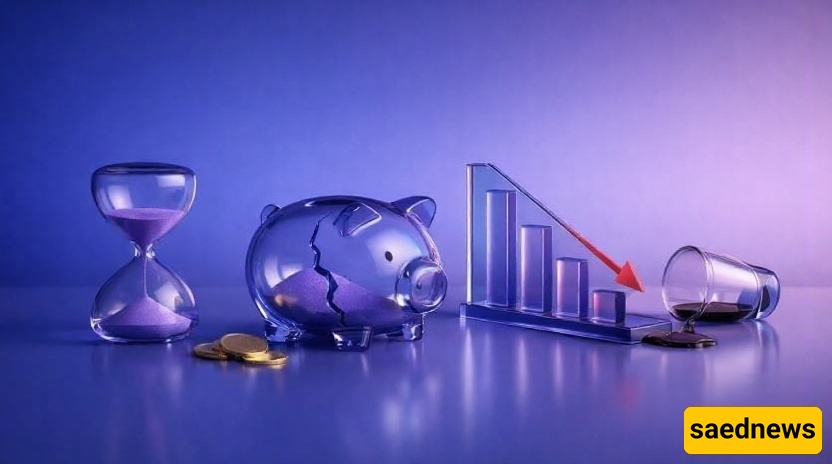
According to the Science and Technology service of Saed News Agency, citing Nobitex, the futures market is much faster and more volatile compared to traditional stock markets. Due to this speed and high volatility, traders can quickly become influenced by market emotions and deviate from their original, reliable strategies. These moments are when traders face the highest risk, as adrenaline rises and the promise of potential profits becomes highly tempting.
During crisis conditions, this pressure becomes even stronger, and many traders make decisions based on emotions and short-term excitement. When a trader acts impulsively instead of following careful analysis and risk management rules, the probability of mistakes and losses increases.
In such conditions, discipline is essential. Knowing the right time to enter a trade is just as important as knowing when to exit. Successful traders not only understand when to enter the market, but also when to stop trading and end their day. This skill helps preserve capital, control risk, and prevent impulsive decisions driven by market excitement.
Trading hours are a critical factor in both day trading and long-term strategies. Every trader must know exactly when their market is active and when trading volume is sufficient to make informed decisions based on real market conditions. One of the biggest risks is holding positions overnight, as it exposes traders to unexpected events and sudden volatility. This risk becomes even greater when internet stability is poor.
For example, in futures markets, most trading activity occurs around midday and evening due to US and London market hours. Although crypto markets operate 24/7, liquidity significantly decreases outside traditional trading hours. Therefore, traders are advised to close all positions before the end of the normal trading day.
In a trading career, especially in crypto markets, traders should commit to defined trading hours to simulate real market conditions. Managing positions continuously is extremely demanding. The idea of 24-hour trading may seem attractive, but it is not practical. Even if opportunities exist outside normal hours, maintaining proper sleep and mental health is essential for optimal performance.
Everyone has experienced making decisions influenced by emotions or temptation that do not align with their strategy. Recognizing and controlling these impulses is especially important during crisis periods.
One of the most common mistakes is boredom trading—entering trades simply because the market is quiet or cash is available. This type of trading usually leads to losses, as quality always matters more than quantity.
Greed is another major issue. While every trader wants to buy at the lowest price and sell at the highest, this is nearly impossible and mostly luck-based. Greed can cause traders to lose profitable positions and regret missed gains.
Chasing missed trades is also a frequent mistake. Entering a trade without a proper strategy after missing the ideal entry point significantly increases risk.
Finally, revenge trading is a serious threat. Trying to recover losses or missed opportunities often leads to higher risk-taking and poor focus. Successful traders control emotions, learn from mistakes, and avoid greed, revenge, and impulsive decisions.
In trading, having an exit strategy is just as important as entry. A clear exit plan helps traders make decisions based on logic rather than emotions like fear and greed, increasing profit protection and loss reduction.
Exits generally fall into two categories: taking profit and limiting loss. Traders should define exit points using both fundamental and technical analysis and execute them manually or through automated tools such as stop-loss and take-profit orders. Stop-loss is especially useful for preventing larger losses in case the market moves against a position, particularly during internet disruptions.
Exit strategies depend on trading style, risk-to-reward ratio, and risk tolerance. Different approaches such as position trading, swing trading, day trading, and scalping require different exit methods. Technical tools like support and resistance levels, moving averages, and ATR help identify optimal exit points.
A key warning sign to stop trading is when financial losses cause psychological distress or sleep problems. During crises, this emotional pressure becomes even stronger.
If losing money causes severe stress, it is a clear signal that trading may not be suitable. In such cases, lower-risk investment methods should be considered. Self-awareness and understanding psychological risk tolerance are essential. Even with advanced tools and strategies, trading is not appropriate if it disrupts mental peace.
Markets often behave unpredictably compared to expert forecasts. For example, gold—traditionally a safe haven—fell by 15% last month, while Bitcoin outperformed it despite being considered a high-risk asset. However, volatility was so high that only a few traders profited. Therefore, expectations should remain realistic.
One sign to stop trading is the exhaustion of “mental capital”—your psychological capacity to continue trading, handle losses, and recover from repeated setbacks. When this capacity is depleted, continuing to trade becomes harmful.
Mental exhaustion can result from multiple losing trades, long-term lack of success, or emotional burnout. During crisis periods, constant negative news can further damage focus and decision-making ability. In such cases, stepping away from the market is a rational decision rather than a failure.
Recognizing psychological limits and respecting them is a sign of maturity. You should not expose yourself to continuous stress, especially during volatile periods. Preserving mental energy for areas where you have real strength and interest is often the healthier long-term choice.
During crisis periods, the question “Should I stop trading?” often arises even among experienced traders. The clear answer is that if you lack psychological readiness, stepping away from trading is the wiser choice. In high-pressure environments, engaging in calm, restorative activities may be far more valuable than staying in the market.