SAEDNEWS: Ardabil is considered one of the most beautiful cities in Iran. In addition to its tourist attractions, it is also known for its distinctive and renowned handicrafts, which are recognized worldwide.
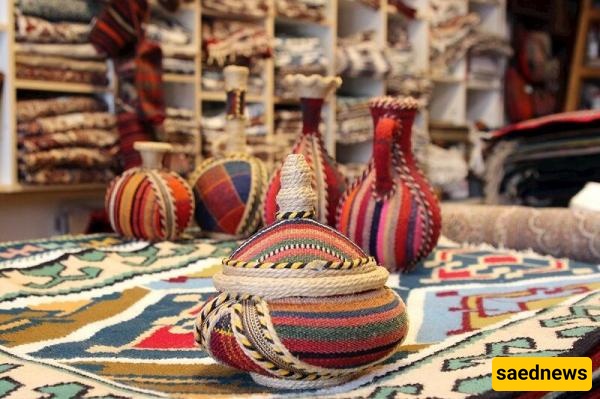
According to Saednews, Nomadic communities, villagers, and urban residents play the most important role in the production of handicrafts in Ardabil. Among the oldest and most well-known crafts of this region are kilim weaving, jajim weaving, and carpet weaving, with kilim weaving holding particular importance. The foundation of Ardabil carpets is typically formed by broken and arabesque (Islimi) patterns.
Prominent carpet designs include single-flower, star, scissors, Van, fine fish, Heris, ram’s head, subterranean, Zarinkalam, medallion-and-corner (lachak-toranj), and Qarabagh designs. About 80% of carpets woven in Ardabil are exported to countries such as Germany, Japan, France, and Italy.
Other handicrafts of Ardabil include crochet embroidery, woolen socks, saddlebag weaving, silverwork, shawl weaving, engraving, inlay work (khatamkari), wood and metal crafts, and pottery. This section introduces the handicrafts of Ardabil Province.
Carpet weaving in this region developed during the Safavid era and later grew significantly during World War II under the influence of Caucasian and Tabrizi weaving styles.
A famous historical carpet discovered at the burial site of Shah Ismail confirms the long history of this art. This carpet features medallion designs and is made of silk with Persian knots, creating a visually calming pattern. Other Ardabil carpet designs include Toranjdar, Zol-Soltan, Mashayekhi, Herati, and vase motifs.
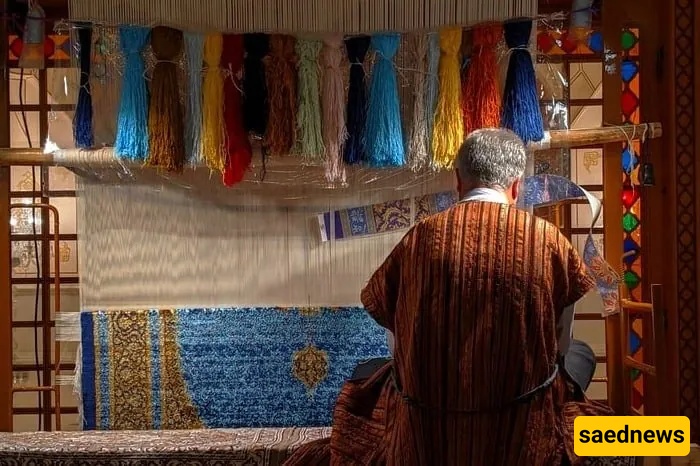
Verni is a type of floor covering unique to Ardabil, also known as needle kilim. It is woven on vertical looms using wool or silk and is considered a hybrid between kilim and carpet. Verni weaving originates from the Al-Son nomads of the Arasbaran region and is often used as bedding or floor covering. Its motifs usually depict local animals and geometric shapes.
Palas is a simple woven textile used as a floor covering, saddlebag, or prayer mat. It is less valuable than kilim and visually similar to coarse kilim. Unlike jajim, which has vertical stripes, palas features horizontal lines and is made of wool yarn.
Illumination refers to decorating manuscripts and books and is considered a fine art rather than an industrial craft. Ardabil artists are known for decorating books with gold leaf, arabesque and floral motifs, often using colors such as lapis blue, indigo, and gold.
Masnad is another type of handwoven floor covering similar to kilim. The main weaving center is the Namin region, where residents turned to this craft due to limited agricultural conditions. Masnad products are also popular in European countries such as Germany. Common designs include Qarabagh, vase patterns, Gangal, tripod, and Qapagh motifs, often using natural dyes.
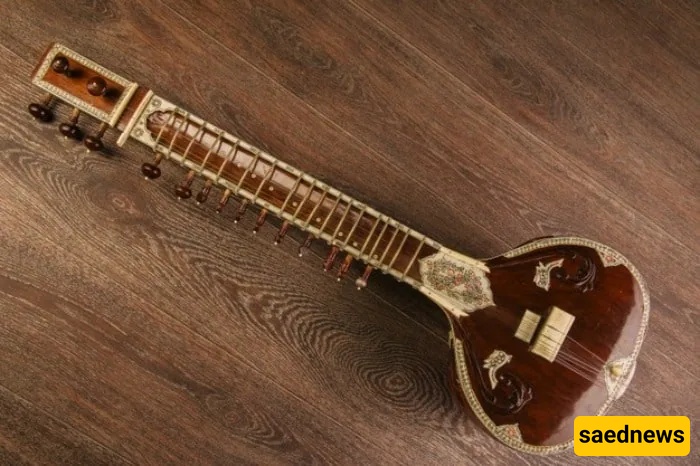
One of Ardabil’s traditional arts is instrument making, where instruments are crafted from woods such as mulberry, walnut, and boxwood. Common instruments include tombak, kamancheh, santur, dotar, and setar. Decorative arts such as calligraphy, painting, marquetry, and inlay work are also used in their production.
Doll making is an ancient symbolic art in Iran that is still practiced in Ardabil. Dolls are often made in traditional clothing and various forms. One famous example is Takam, a traditional puppet used during Nowruz celebrations, symbolizing the arrival of spring.
Aghaj Qaraqi is a woolen handicraft used to protect carpets from damage and dirt. It is commonly woven in the Moghan plain. The patterns are geometric and orderly. In the past it was shaped like a horseshoe, but today it is usually rectangular.
Woodturning involves shaping wood using rotational tools. Strong and dense woods produce more durable and refined products. Items such as hookahs, tables, furniture, walking sticks, rolling pins, chairs, and lamps are made from woods like ash, walnut, alder, and elm. This craft is especially popular in Sarein.
Kilim weaving is one of the oldest and most popular arts of Ardabil, dating back to the Parthian period. It includes three types: verni, embossed, and plain kilim. Major production centers include Anbaran and Moghan.
Common motifs include Sun Wheel, dragon, crab, samovar, tray, and other imaginative patterns. Materials include cotton warp threads and colorful wool or silk wefts.
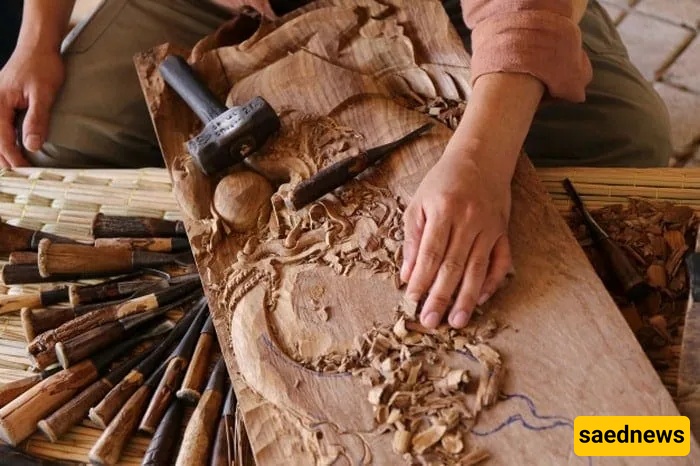
Wood carving creates raised floral and plant designs on wood. Walnut, boxwood, almond, and pear wood are commonly used. The strength and quality of the wood are essential for fine craftsmanship.
Pottery in Ardabil dates back to the Parthian era. Craftsmen use clay to create objects such as bowls, cups, statues, and jars. The pieces are fired in kilns, turning them red and producing unglazed but durable pottery.
Jajim weaving is common in Khalkhal and nearby villages. Traditionally used as floor coverings, today it is also used as blankets, bedspreads, cushions, mats, and decorative items. It is made of sheep wool and features motifs such as earrings, rings, and almond flowers.
This delicate craft involves decorating fabrics with floral and ornamental designs using colored threads and crochet techniques.
Chanteh is a small woven bag made from wool, similar to carpet weaving but smaller in size. It is often decorated with tassels and used as a traditional pouch or handbag.
Filigree involves crafting decorative objects and jewelry using thin metal wires of gold, silver, or copper. This ancient art dates back thousands of years and includes rings, necklaces, trays, cups, and other ornamental objects.
Saddlery is the craft of making leather horse saddles by hand. These finely crafted items are especially popular in Azerbaijan and neighboring regions.
A traditional art in Ardabil where leather surfaces are hand-painted with various colors. It is one of the most popular handicrafts in the region.
Salt bags are cylindrical woven containers used by nomads to store salt and minerals. They are decorated with natural motifs inspired by plants, animals, and landscapes.
Glass engraving involves carving decorative patterns into glass using special tools, producing beautifully textured and polished glassware.
Saddlebags are large double-sided woven bags used by nomads to carry goods on animals such as horses or donkeys. They are made of wool, goat hair, and cotton yarn.
German silver is an alloy composed mainly of copper, zinc, and nickel. It is used to make trays, samovars, and decorative objects. This craft has a long tradition in Ardabil and remains popular today.