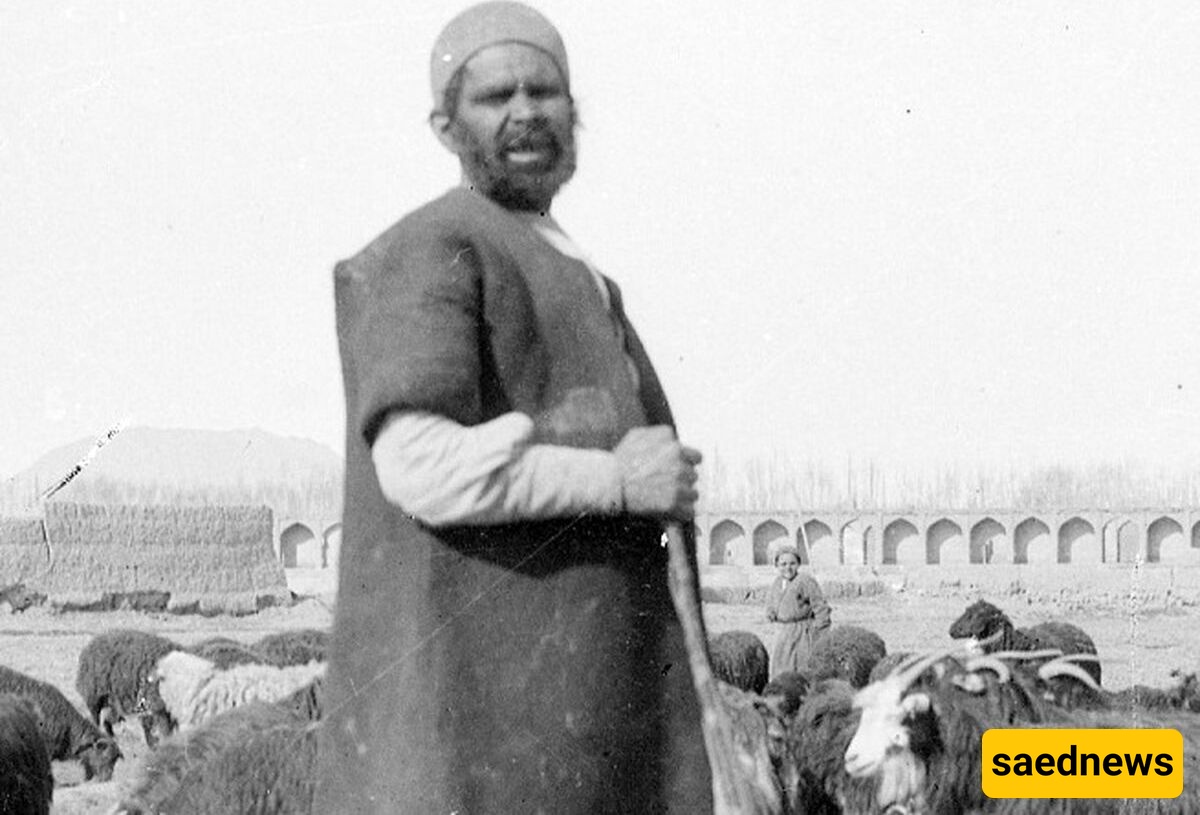
SAEDNEWS: A photograph of a shepherd standing beside his sheep with the Allahverdi Khan Bridge in the background, along with a group of Iranian soldiers dressed in the style of Austrian military uniforms; these images open two windows into Iran during the Qajar era.
According to the Saed News analytical news agency, the first image shows a group of soldiers dressed in the style of Austrian military uniforms. The deployment of Austrian military personnel to Iran was requested by the Iranian government in 1878.
Austrian instructors, together with their Russian counterparts, entered Iran in 1879, and this military regiment was established in 1880. However, the regiment had a short life and was disbanded between 1881 and 1882.
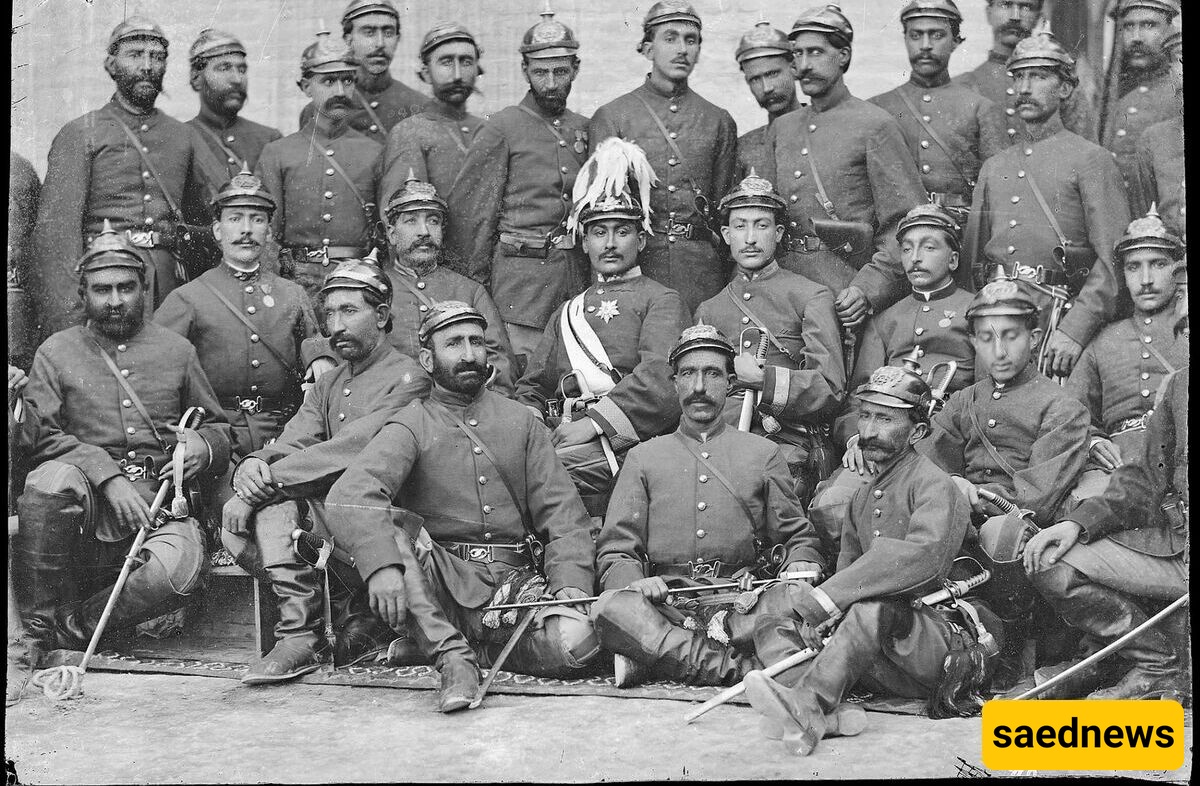
In this photograph, the soldiers are seated in three rows with one row standing. It appears that the person seated in the center holds a higher rank than the others. On the soldiers’ hats, the emblem of the lion and sun—symbol of the Qajar-era Iranian government—can be seen. Except for the high-ranking individual and a few others in the back row, most of the people are looking elsewhere and are not paying attention to the camera. The posture of the group is irregular and resembles more a casual group photograph than a formal military portrait.
The second image shows a shepherd beside the Zayandeh Rud River in Isfahan. The brick structure in the background is the main bridge over the river, known as Allahverdi Khan Bridge or Si-o-se-pol (the Bridge of Thirty-Three Arches).
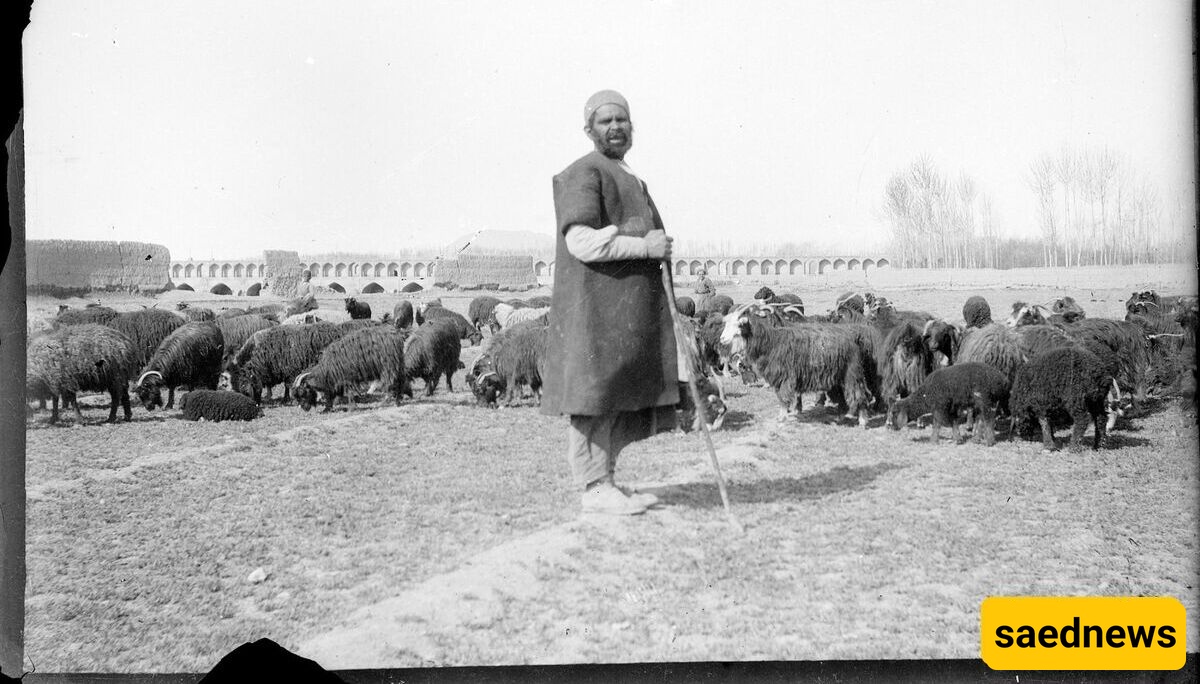
It appears that the main focus of the photograph is the shepherd and his flock; however, the photographer (Antoine Sevruguin) has composed the scene in such a way that part of the bridge is visible behind the standing figure of the shepherd.