SAEDNEWs: The ancient ruins of Mohenjo-daro (meaning “Mound of the Dead”), with a history spanning five thousand years, are considered the largest surviving city of the Indus Valley Civilization. Recently, a remarkable discovery has been made in this city—an unprecedented find not seen in more than 90 years.
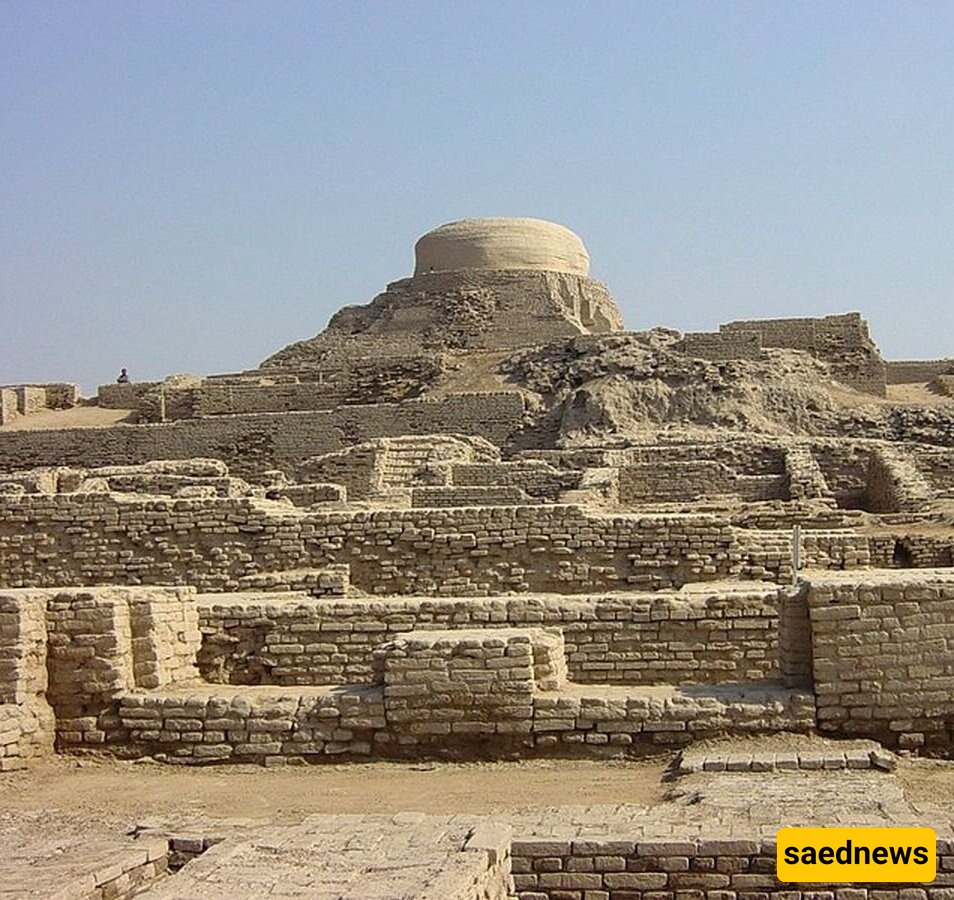
According to Saed News Agency, citing Faradid, during archaeological excavations in the ruins of Mohenjo-daro in Sindh Province, Pakistan, a pottery vessel filled with copper coins was discovered inside a stupa (a dome-shaped structure built as a Buddhist shrine).
Mohenjo-daro, or the “Mound of the Dead,” is an ancient city of the Indus Valley Civilization that flourished between 2600 and 1900 BCE. Built entirely of baked bricks, the city was first discovered in the 1920s.
Archaeologists have described the discovery of this coin-filled vessel as the first major find in the 5,000-year-old ruins of Mohenjo-daro in 93 years.
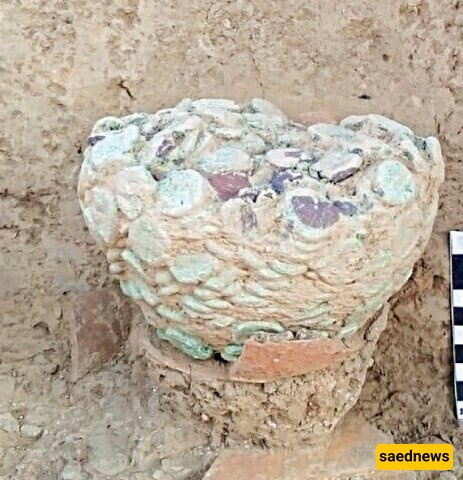
Dr. Syed Shakir Shah, director of the Mohenjo-daro archaeological site, confirmed that conservation workers came across the vessel containing coins on Wednesday while conducting maintenance work.
Shakir Shah stated that workers initially found the container during excavation but reburied it afterward. They later informed the relevant authorities, who then ordered the coins to be excavated again. Officials reported that the vessel, weighing about 5.5 kilograms, was subsequently transferred to a soil testing laboratory.
Sheikh Javed Sindi, a researcher at the site, noted that previously 4,348 copper coins had been excavated by Western archaeologists between 1922 and 1931. He said: “Therefore, the current discovery, made after 93 years, is highly significant.”
Shakir Shah told reporters that the coins are most likely from the Kushan Empire, dating back to the 2nd to 5th centuries CE.
He added: “We have transferred the coins to the laboratory and will certainly hire experts in the future to confirm the exact period, which may be determined through inscriptions on the coins. We must determine which Kushan dynasty these coins belong to.”
Rustom Baloch, head of the Soil and Water Testing Laboratory, also said that the cleaning and separation process for the coins would take at least one month. After this period, inscriptions on the coins are expected to become visible.
Ali Haider, a senior antiquities conservation expert, stated: “It is unlikely that this city remained completely abandoned between the end of the Indus period and the beginning of Kushan rule. This assumption is based on its strategic location and the protective function of its structures against floods.”
The Kushans ruled the region from around the 1st to the 3rd century CE and played an important role in connecting different regions through trade, diplomacy, and cultural exchange.
While evidence from coins and inscriptions such as Rabatak and Surkh Kotal clearly shows that the Kushans preserved and continued Iranian religious beliefs and practices, other inscriptions indicate that Kushan officials during the reign of King Kanishka and his successors supported Buddhism. However, the presence of fire altar motifs on previously discovered coins also reflects Iranian cultural influence.