SAEDNEWS: The Umayyad Caliphate was the second Islamic ruling system established after the death of the Prophet Muhammad. It was organized and governed by the Umayyad dynasty. The great ancestor of this family was Umayya ibn Abd Shams, and for this reason they were also known as the Banu Abd Shams.
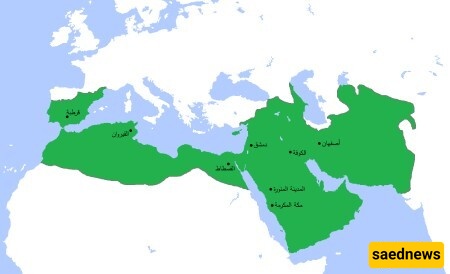
The Umayyad lineage, like that of the Prophet Muhammad, traces back to a man named Abd Manaf from the Quraysh tribe. From his two sons, one was Hashim, ancestor of the Hashemite family and the Prophet Muhammad, and the other was Abd Shams, ancestor of the Umayyad family.
It is said that Umayya was a Roman slave purchased by Abd Shams, who raised him as his own. Later, he was mistakenly considered the son of Abd Shams.
At the beginning of the 7th century CE, the descendants of Umayya were among the powerful families of Meccan Arabs. At that time, Muhammad ibn Abdullah from the Banu Hashim declared his prophethood. When he migrated to Medina in 622 CE and conflicts broke out with the Meccans, members of the Umayyad family fought on the Meccan side.
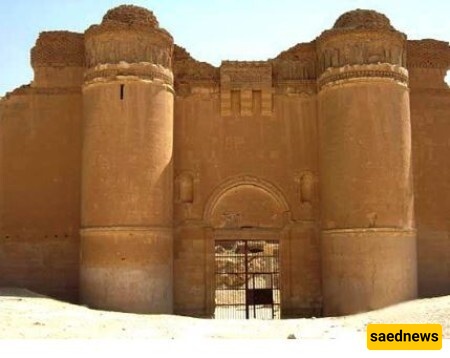
Among the Meccan leaders was Abu Sufyan ibn Harb, father of Muawiya, the first Umayyad ruler. Medina lay on the trade route to Syria, and trade with Syria was the main source of income for the Umayyads. By disrupting this route, the Prophet Muhammad weakened Abu Sufyan economically, which contributed to the decline of Meccan power. Shortly before the conquest of Mecca, Abu Sufyan accepted Islam.
This reconciliation between the two rival Quraysh families (Hashimites and Umayyads) later allowed the Umayyads to play a significant role in the emerging Islamic state.
After the Prophet’s death, Muawiya ibn Abu Sufyan later became a scribe of revelation and participated in early Islamic military campaigns in Syria (the Levant), including the conquest of Damascus.
During the early Islamic period, tensions between the Umayyads and Banu Hashim continued from pre-Islamic times. Abu Sufyan played a major role in battles such as Badr, Uhud, and the Trench. He eventually accepted Islam at the time of the conquest of Mecca.
The involvement of the Umayyads in governance began during the caliphate of Umar ibn al-Khattab, who appointed Muawiya as governor of Syria. Later, during the caliphate of Uthman ibn Affan (who was from the Umayyad clan), their political power significantly increased.

After the assassination of Uthman and during the caliphate of Ali ibn Abi Talib, Muawiya refused allegiance, demanding revenge for Uthman’s death. This led to major conflicts, including the Battle of Siffin.
When arbitration occurred after the battle, it weakened Ali’s position. Later, Ali was assassinated in Kufa. His son, Hasan ibn Ali, briefly became caliph but eventually made a peace treaty with Muawiya, handing over political authority under certain conditions.
In 661 CE (40 AH), Muawiya established Umayyad rule and declared that his objective had been political control rather than religious practice. He later declared that his agreement with Hasan was no longer valid and transformed the caliphate into a hereditary monarchy.
Muawiya opposed the Ahl al-Bayt and reportedly restricted the transmission of narrations about them. He also ordered public curses against Ali ibn Abi Talib in sermons across the Islamic territories, a practice that continued until the time of Umar ibn Abd al-Aziz.
Opponents of his rule, particularly supporters of Ali, were persecuted in various regions.
After Muawiya’s death in 60 AH, his son Yazid took power. Historical accounts describe his rule as marked by political violence and moral corruption.
During his reign:
Husayn ibn Ali was killed in Karbala along with his family and companions.
Medina was subjected to violence.
Mecca was attacked and the Kaaba was damaged by fire.
After Yazid, his son Muawiya II briefly ruled and criticized the actions of his predecessors before stepping down. Power then passed to the Marwanid branch of the Umayyads:
Marwan ibn al-Hakam
Abd al-Malik ibn Marwan
Al-Walid I ibn Abd al-Malik
Sulayman ibn Abd al-Malik
Umar ibn Abd al-Aziz
Yazid II ibn Abd al-Malik
Hisham ibn Abd al-Malik
Al-Walid II ibn Yazid
Yazid III ibn al-Walid
Ibrahim ibn al-Walid
Marwan II ibn Muhammad
This dynasty ruled for nearly 70 years. During this period, figures such as Al-Hajjaj ibn Yusuf played a major role in administration and military control.
Some later Umayyad rulers are described in historical sources as engaging in excesses and weakening religious governance.
In 132 AH (750 CE), the Abbasids, supported by forces from Khurasan under Abu Muslim al-Khurasani, overthrew the Umayyad Caliphate. Most members of the Umayyad family were killed.
One surviving prince, Abd al-Rahman ibn Muawiya, escaped and later established Umayyad rule in Andalusia (Al-Andalus), which lasted from 138 to 422 AH.