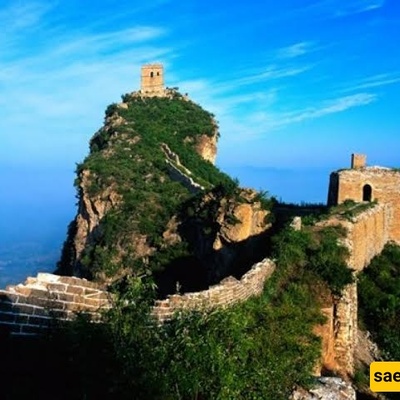
SAEDNEWS: The Great Wall of China: A National Symbol of Chinese Identity, Ancient Heritage, Fire Towers, Dukes, Qin Shi Huang, the Ming Dynasty, Jiayuguan, Gansu, Liaoning, World Heritage, and Tourism Destinations Including Badaling and Simatai.
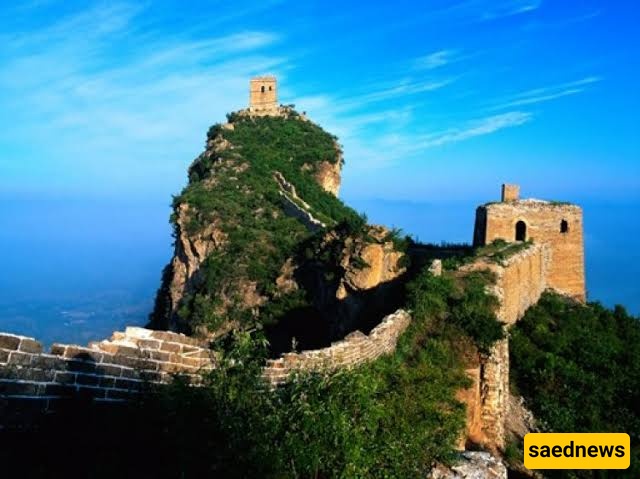
According to Saednews, The Great Wall of China (Chinese: 中国的长城) is one of the largest and most remarkable military defensive structures ever built. Stretching across northern China, it represents an extraordinary achievement in ancient engineering and military architecture.
The wall extends for approximately 7,000 kilometres according to the geographical account presented here. In 1987, it was officially inscribed on the UNESCO World Heritage List.
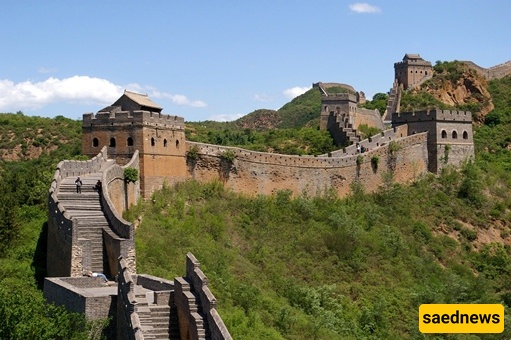
The origins of the Great Wall date back to the 9th century BC. Ancient Chinese rulers constructed defensive walls, border fortresses, and beacon towers to protect their territories against invasions from northern tribes. Beacon towers were particularly important because they allowed soldiers to communicate warnings about approaching enemies.
During the Spring and Autumn Period and the Warring States Period, different states and feudal rulers frequently fought against one another. To defend their territories, they constructed walls along natural geographical barriers, particularly mountainous regions.
In 221 BC, after unifying China, Emperor Qin Shi Huang ordered the connection of several existing defensive walls. This created an extensive defensive system along China's northern frontier. His primary objective was to prevent invasions and protect the agricultural lands and northern pastures from enemy attacks.
At that time, the wall extended approximately 5,000 kilometres.
During the Han Dynasty, following the Qin Dynasty, the defensive wall system was further expanded, reaching approximately 10,000 kilometres. Throughout more than two thousand years of Chinese history, successive dynasties continued building, repairing, and extending the Great Wall. Historical accounts describe its combined length as eventually reaching approximately 50,000 kilometres when different sections and defensive structures are included.
The section of the Great Wall that visitors can see today was mainly constructed during the Ming Dynasty (1368–1644 AD).
It stretches from Jiayuguan Pass in Gansu Province in western China to the banks of the Yalu River in Liaoning Province in northeastern China. Its route passes through nine provinces, municipalities, and autonomous regions, covering approximately 7,300 kilometres. The Chinese people traditionally refer to it as the Long Wall.
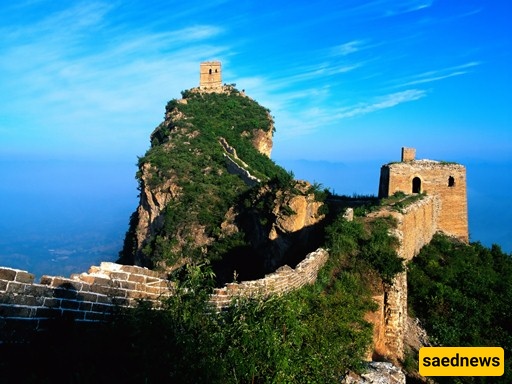
The Great Wall was constructed as a defensive military project, crossing mountains, deserts, grasslands, and marshlands.
Ancient Chinese builders adapted their construction techniques to the natural landscape. Their engineering methods demonstrated remarkable knowledge of geography, architecture, and military strategy.
The wall follows the rugged contours of mountain ranges, often overlooking steep cliffs. In many places, the natural mountainous terrain and the artificial wall form a single defensive barrier, making it extremely difficult for enemy forces to penetrate.
The Great Wall was generally constructed using large bricks and rectangular stones, with earth and rubble filling its interior.
Its average height was approximately 10 metres. The top was wide enough for four horses to travel side by side, while its width was generally between four and five metres. This provided sufficient space for transporting military supplies, weapons, and grain.
Along the inner side of the wall, stone railings and gates facilitated movement and access.
At regular intervals, builders constructed elevated platforms and beacon towers. These structures served several important purposes:
Military storage: Platforms were used to store weapons, ammunition, and food supplies.
Soldier accommodation: They provided resting places and temporary shelters for soldiers.
Defensive positions: During battles, soldiers could use them as strategic shelters and observation points.
Communication: Beacon towers were used to transmit warnings when enemy forces approached.
When an enemy attack was detected, soldiers lit fires on the beacon towers to alert nearby garrisons and warn the surrounding regions.
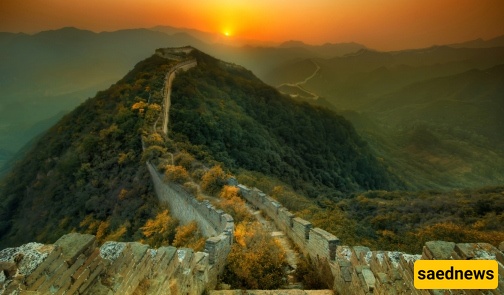
Today, the Great Wall no longer serves its original purpose as a major military defensive barrier. Nevertheless, its extraordinary architectural beauty and historical significance continue to attract admiration worldwide.
From a distance, the enormous wall can be seen winding across mountain peaks like a giant dragon moving through the landscape, creating one of the most spectacular views in China.
Up close, its impressive gates, massive walls, defensive platforms, watchtowers, and beacon towers reveal the remarkable architectural skills of ancient Chinese builders.
The structure blends harmoniously with the surrounding natural landscape, making it both an important historical monument and an outstanding example of ancient military engineering.
The Great Wall holds tremendous historical and cultural significance for China. There is a famous Chinese saying:
"He who has never climbed the Great Wall is not a true hero."
Visiting the Great Wall is considered a source of pride for both Chinese and international tourists. Many foreign leaders and distinguished visitors have also made a point of visiting this remarkable monument.
Several sections of the Great Wall have been particularly well preserved and are now among China's most popular tourist attractions.
Some of the most famous sections include:
Badaling: Located near Beijing, this is one of the most accessible and frequently visited sections of the Great Wall.
Simatai: Famous for its dramatic mountain scenery and distinctive ancient defensive architecture.
Mutianyu: Known for its beautiful surroundings, impressive restoration, and spectacular mountain views.
Shanhaiguan Pass: Located at the eastern end of the traditional Ming Dynasty wall, it is historically known as the First Pass Under Heaven.
Jiayuguan Pass: Situated in Gansu Province at the western end of the Ming Dynasty Great Wall, it was an important military stronghold.
These locations attract large numbers of visitors throughout the year.
The Great Wall represents the intelligence, determination, and enormous efforts of millions of Chinese people throughout ancient history.
Despite the passage of thousands of years, many sections of this extraordinary structure have survived, preserving their historical importance and architectural appeal.
It has become an enduring symbol of Chinese national identity, cultural heritage, perseverance, and engineering excellence.
In 1987, the Great Wall of China was officially recognised as a UNESCO World Heritage Site, reflecting its outstanding universal cultural significance.
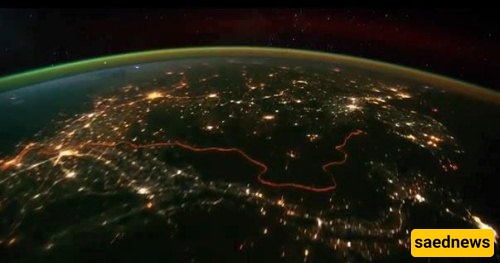
One of the most widespread myths about the Great Wall is the claim that it is the only human-made structure visible from outer space.
This statement has been repeatedly disproved, although it remains popular in public imagination.
In reality, many human-made structures can be observed from space, particularly when illuminated at night. However, identifying the Great Wall with the unaided human eye from Earth orbit is extremely difficult and generally impossible under ordinary viewing conditions.
None of the Apollo astronauts officially established the claim that the Great Wall could be seen from the Moon. Even astronauts orbiting Earth have found it difficult to identify the structure without assistance.
The misconception is believed to have originated decades before the first human landing on the Moon. It has sometimes been attributed to American travel writer Richard Halliburton.
One astronaut is also reported to have remarked:
"The Great Wall disappears from view at an altitude of approximately 180 miles."
This illustrates why the popular belief that the Great Wall is easily visible from space is misleading.
The Great Wall of China is far more than an ancient military fortification. It is a remarkable achievement of human engineering, a symbol of Chinese civilisation, and one of the world's most significant historical landmarks.
Its enormous scale, fascinating history, unique architecture, and breathtaking scenery make it an unforgettable destination for visitors and an enduring symbol of human determination and creativity.