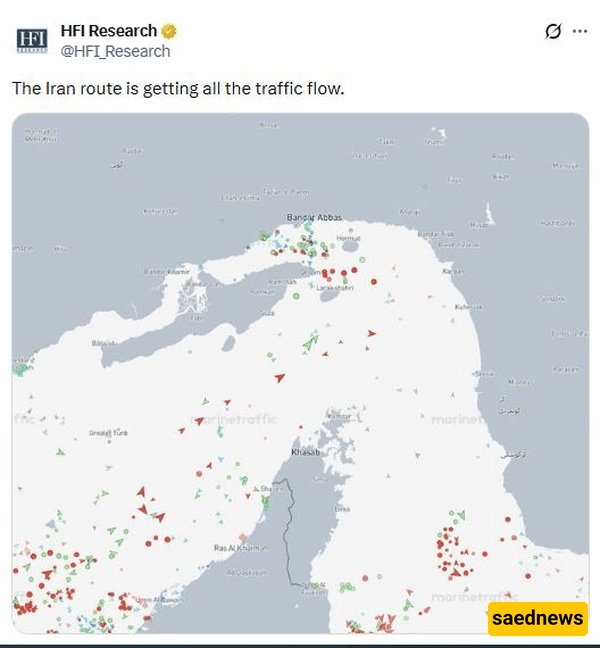
SAEDNEWS: A maritime tracking account reported that after two oil tankers were targeted along the Omani shipping route, vessels from other countries altered their course and moved toward Iranian waters.
According to Saednews political reports, an analysis of satellite imagery and maritime vessel-tracking data published by the open-source intelligence (OSINT) account Mench OSINT indicates that, following the reported missile strikes overnight, vessels from Japan, India, and several Western countries have altered their routes and are now navigating through the Iranian shipping corridor in the Strait of Hormuz.
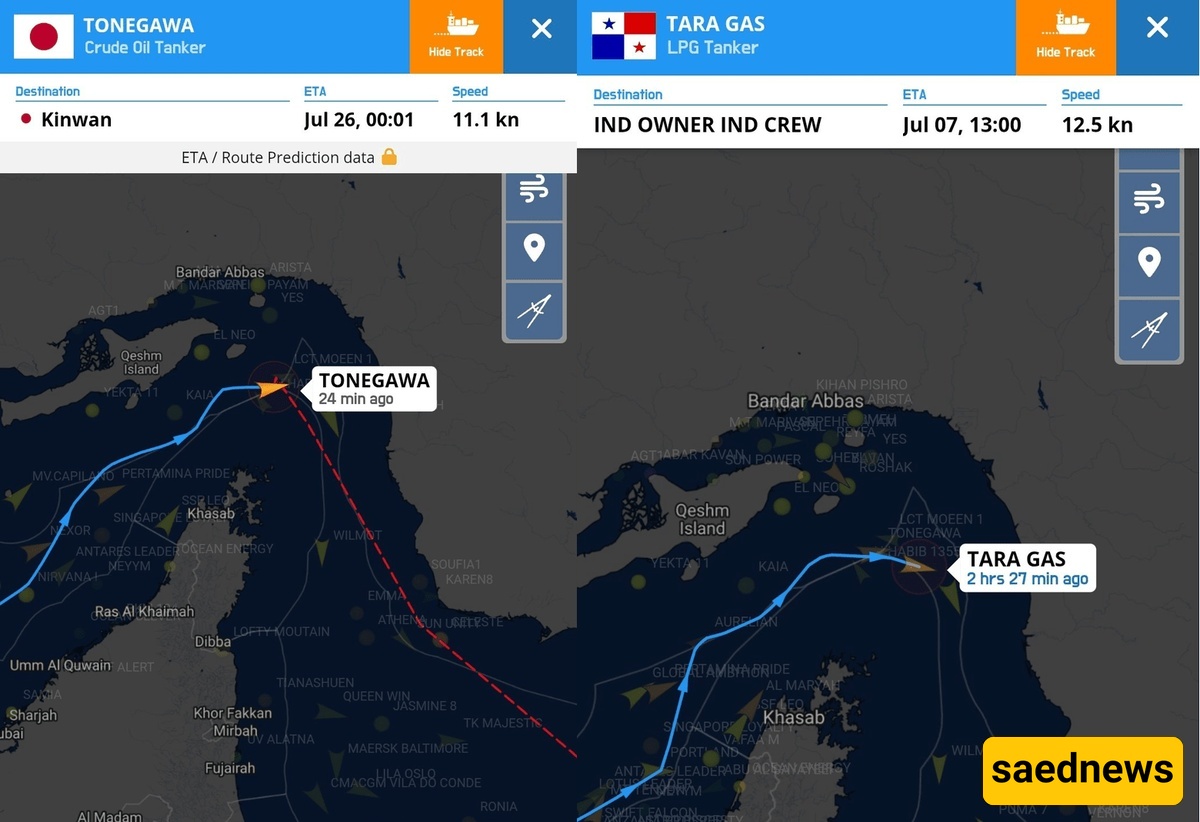
The analysis is based on satellite monitoring and ship-tracking data, which reportedly show a noticeable change in maritime traffic patterns after the incidents.
Earlier during the night, the United Kingdom Maritime Trade Operations (UKMTO) reported that a tanker traveling along a route near Oman—described as being under U.S. security protection—had come under attack. Meanwhile, Axios, citing U.S. officials, reported that at least two Iranian missiles struck vessels in the area.
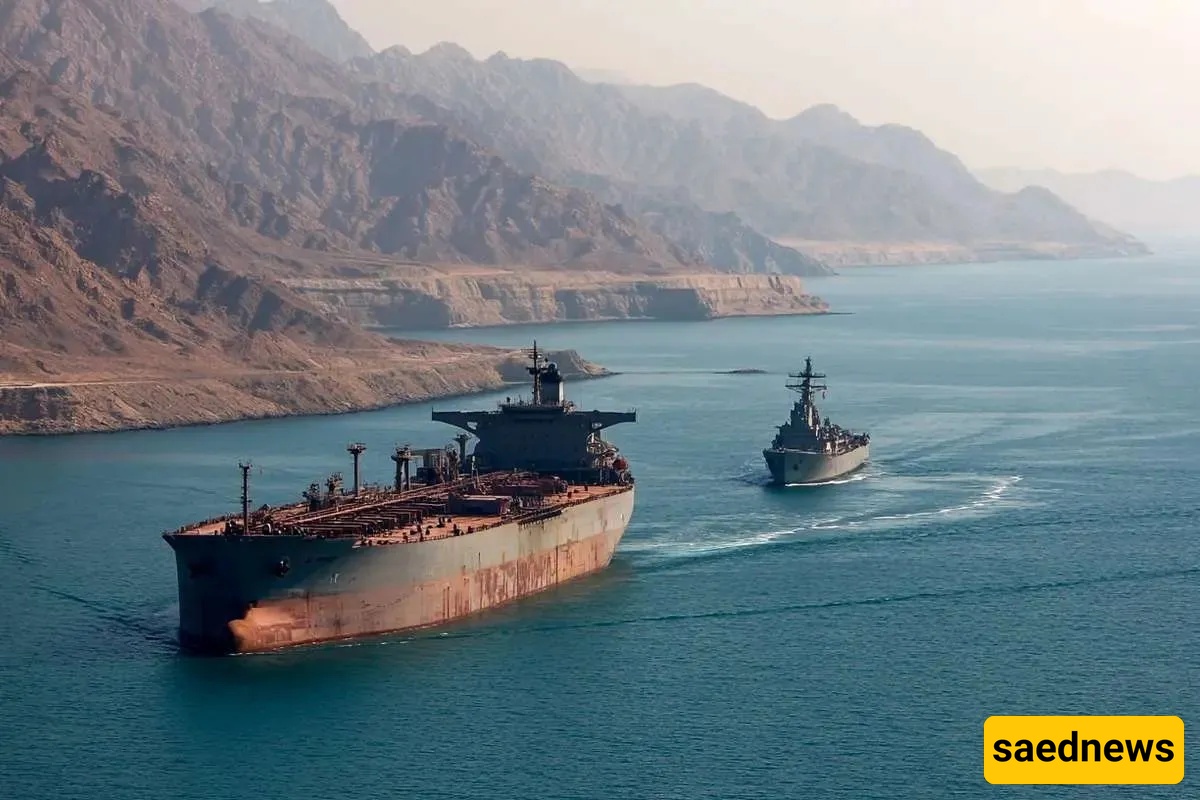
According to the maritime tracking analysis, two oil tankers were reportedly targeted during the incident—one associated with Qatar and the other with Saudi Arabia. The report claims that both vessels had switched off their Automatic Identification System (AIS) transponders while relying on external security protection.
Separately, the maritime research company HFR has stated, based on satellite monitoring, that commercial shipping traffic has now largely shifted toward the Iranian navigation route through the Strait of Hormuz.
The reported changes in vessel movements highlight the immediate impact that regional security developments can have on one of the world's most strategically important maritime chokepoints.