SAEDNEWS: Seyyed Hassan Khomeini stated that maintaining victory depends on supporting the overarching decisions of the system.
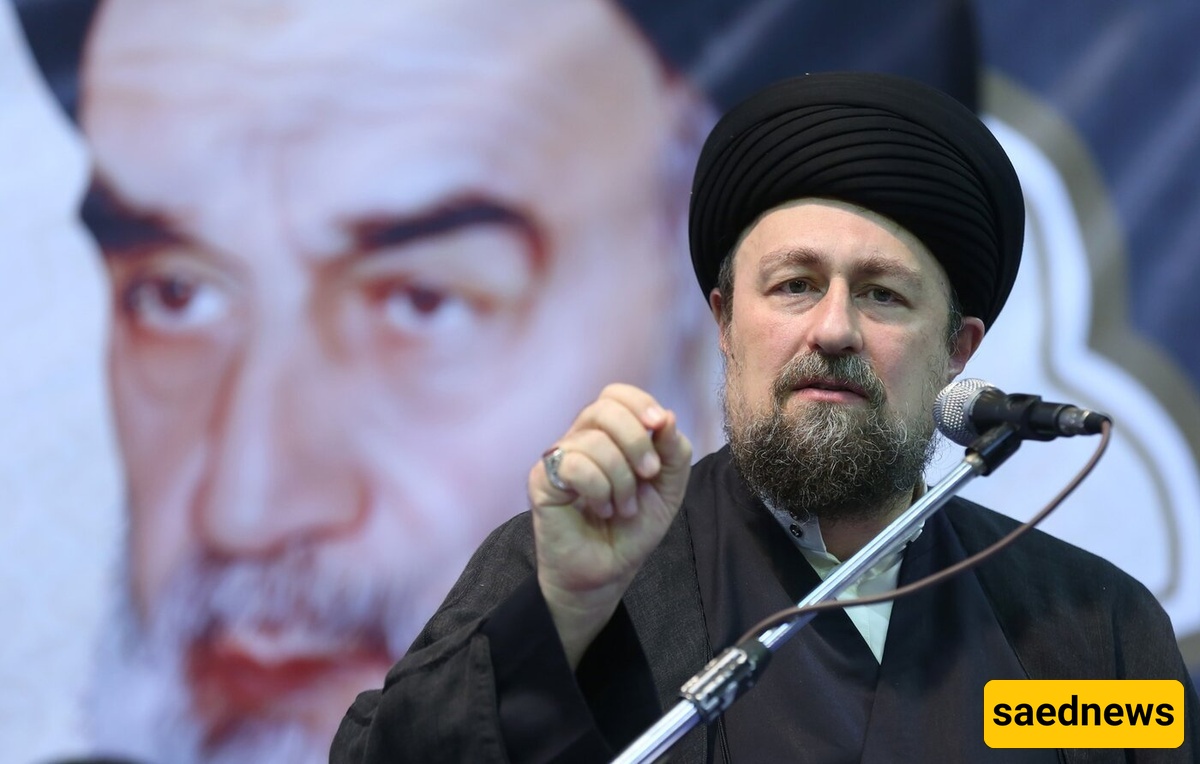
According to Saednews Quoting Jamaran news agency, Ayatollah Seyyed Hassan Khomeini met this morning with managers and relief workers of the Iranian Red Crescent Society. He thanked the organization for its services during the difficult days of war, stating:
“As an observer of your efforts, I say that one of the brightest periods in the work of this organization was its presence and efforts to ensure the health of the Iranian people during the third imposed war.”
Referring to various dimensions of the recent war, he added that a 70-day period has just passed, about which much can be said regarding its causes, the country’s resilience, battlefield developments, and its outcomes and impacts on the country, the region, and the world. He emphasized that in the future, this war will be regarded as one of the most significant periods in history, creating a major paradigm shift in the region.
He noted that despite all the bitterness of the events—including the martyrdom of the Leader of the Revolution, the Minab school tragedy, the sinking of the Dena vessel, and the martyrdom of commanders, civilians, officials, children, and women, as well as attacks on infrastructure in violation of international law—the “war of wills” demonstrated through the steadfastness of the Iranian people and the comprehensive defeat of the enemy will bring about a major transformation in the region.
He stated that, according to global consensus, victory has so far belonged to the Iranian nation and will continue to do so if divine grace allows. He outlined two conditions for preserving this victory: first, readiness for perseverance and avoiding fatigue or exhaustion, noting that despite economic and psychological hardships, the people’s vitality and resilience are exemplary. The second condition is public trust in the decisions of leaders and officials.
Emphasizing the importance of supporting national strategic decisions, he said that the Supreme Leader oversees all matters and final decisions are reviewed and approved within the proper process. Society, he stressed, must trust both the system’s decisions and the competence, strength, and experience of officials on the ground. He cautioned against “outbidding responsibility,” noting that many decision-makers today are either families of martyrs, veterans of war, or experienced commanders who have endured continuous hardship.
He concluded by highlighting the role of the Red Crescent Society in the recent war as one of its most distinguished achievements, also expressing appreciation for emergency medical services and the medical community, and wishing a bright future for society.