SAEDNEWS: The president, criticizing double standards in the international arena, said: “How is it that countries which themselves are involved in acts of terrorism, the assassination of scientists, and targeting innocent people, accuse others of terrorism?”
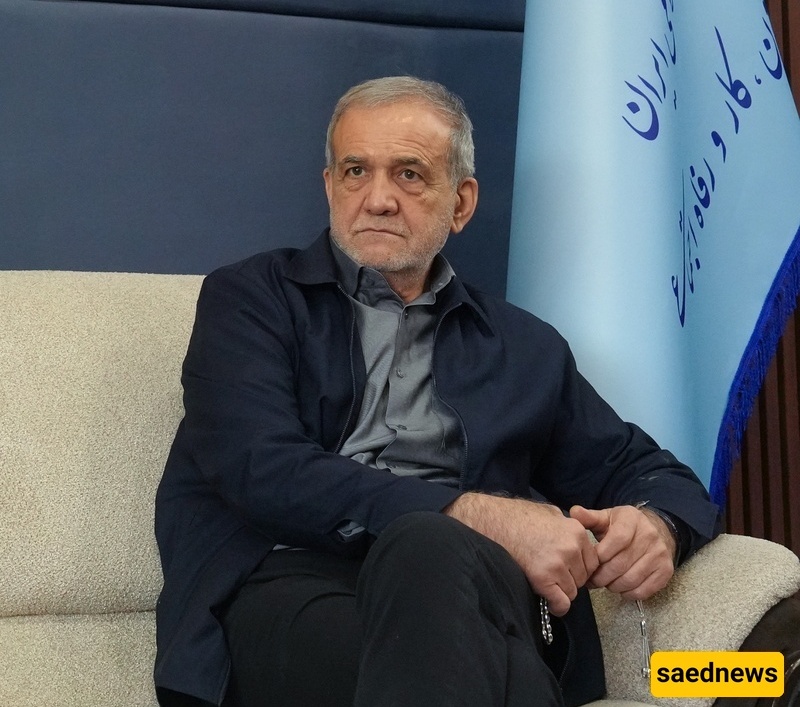
According to the political desk of Saed News Agency, Dr. Masoud Pezeshkian, during an oversight visit to the Ministry of Information and Communications Technology, met with the minister, deputies, and senior officials of the ministry. He expressed appreciation for the tireless efforts of managers and staff in the ICT sector and stated that the stability of communication networks and the continued delivery of public services under exceptional national conditions reflect the effective establishment of digital governance, managerial cohesion, and the efficiency of technical and executive structures in this field.
The President emphasized that the strong performance of the education, support, development, and operations sectors demonstrates that various components of the ministry, along with other executive bodies, are properly aligned and continue to pursue their missions in a targeted manner—even under crisis conditions.
Referring to the country’s recent situation, Pezeshkian noted that despite crises and wartime conditions over the past 40 days, Iran has experienced minimal disruption in infrastructure and communication services. This, he said, indicates the high resilience of national infrastructure and the coordinated efforts of executive managers at both operational and strategic levels.
He also addressed global economic and social instability caused by what he described as aggressive actions by the United States and the Israeli regime against Iran. He added that while many countries are facing widespread disruptions and public dissatisfaction due to the consequences of the conflict, the continuity of services in Iran reflects operational stability and effective management within the country’s executive structures.
Highlighting the importance of safeguarding human capital and advancing scientific and educational infrastructure, the President stated that adversaries are targeting Iran’s knowledge, expertise, and capabilities. In this context, he said, scientific centers, researchers, schools, and vital national infrastructure have been subjected to attacks.
Pezeshkian stressed that supporting the education system, ensuring equitable access to knowledge and skills, and strengthening educational infrastructure must remain top national priorities to prevent future generations from falling behind in development.
He further pointed to the critical role of dedicated experts and managers in maintaining national stability, noting that the presence of skilled, committed, and selfless personnel within the executive body—especially under wartime conditions—is a key factor in preserving the system’s effectiveness and resilience. He called for continued support of this human capital.
The President also underscored the role of the private sector in developing communication infrastructure, stating that the government is responsible for implementing smart policies to support these capacities and remove existing barriers.
In another part of his remarks, referring to recent attacks—particularly those attributed to the United States and Israel over the past 40 days—Pezeshkian raised fundamental questions challenging their legitimacy. He asked under what authority and legal justification such attacks were carried out against infrastructure, scientific centers, military commanders, scientists, and even students. He also questioned which principles of international law could justify targeting vital infrastructure, bridges, educational centers, and civilians.
Criticizing what he described as double standards in international affairs, the President remarked that countries involved in acts such as terrorism, assassinations of scientists, and targeting innocent civilians accuse others of terrorism.
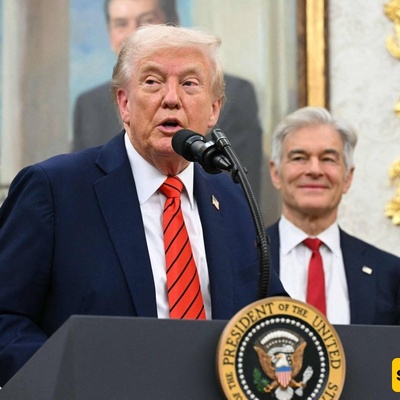
He also addressed controversial statements by the U.S. President regarding the destruction of Iranian civilization, stating that such claims reflect weakness and desperation rather than strength in the face of a great and historically rich nation.
In conclusion, Pezeshkian once again expressed gratitude for the efforts of the Ministry of Information and Communications Technology and emphasized the continuation of development, stronger cooperation between public and private sectors, and the preservation of national unity. He affirmed that, relying on domestic capabilities and national solidarity, Iran will continue its path of progress with strength and without disruption.