SAEDNEWS: Trump’s deputy is traveling to Islamabad for Iran peace talks while facing internal doubts, political pressure over failed expectations on the Strait of Hormuz, and limited negotiating leverage.
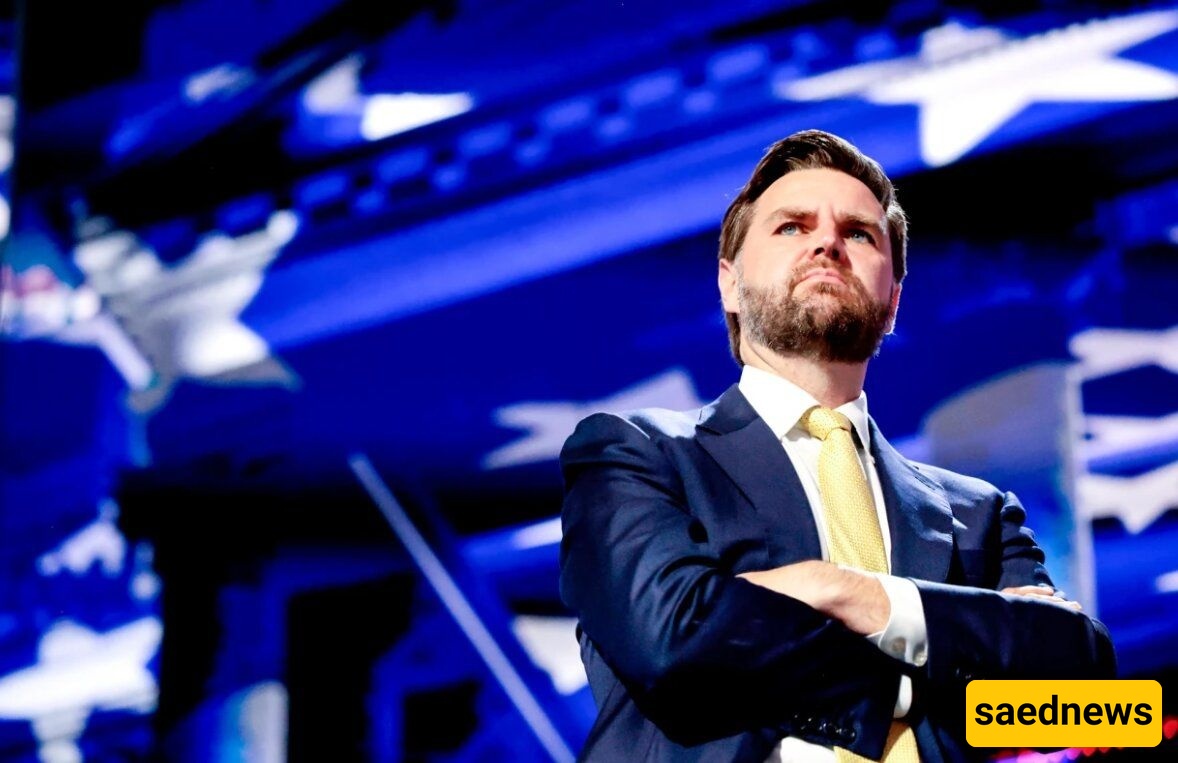
According to the political service of Saed News Agency, Andrew Roth writes in The Guardian that “Vance in Islamabad will face a difficult choice: either offer significant U.S. concessions to Iran in order to preserve the ceasefire and negotiate the reopening of the Strait of Hormuz — or effectively cut off negotiations and personally support a return to a war that is deeply unpopular among the American public.”
He further writes that as JD Vance arrives in Islamabad to negotiate a peace agreement with Iran, his first major mission in this conflict appears to be a “poisoned chalice.”
Vance, a vocal opponent of U.S. wars in the Middle East, will face Iranian negotiators who have been emboldened by their new control over the Strait of Hormuz and their resistance to what is described as the largest military attack by the United States and Israel in history.
Vance’s presence in the talks as Vice President would elevate the negotiations to the highest level since the 1979 Iranian Revolution.
According to Roth, Vance’s task is, on paper, straightforward: to bridge the gap between a fragile verbal ceasefire and a more durable peace. However, in Islamabad he will face a difficult decision — either make significant concessions to Iran to preserve the ceasefire and negotiate the reopening of the Strait of Hormuz, or effectively abandon the talks and personally support a return to war, which remains highly unpopular among Americans.
Roth notes that the outcome of these negotiations could have a significant impact on Vance’s potential 2028 presidential candidacy, as his credentials are already being questioned due to perceived inconsistency regarding opposition to war.
He adds that Vance entered the White House promising a more restrained foreign policy and an end to America’s “forever wars” in the Middle East — but the outcome of these negotiations could instead draw him into what may become the largest U.S. intervention in the region since the start of the Iraq War.
At the same time, it remains uncertain whether negotiations will even begin. Large-scale Israeli attacks on Lebanon and an apparent dispute over its inclusion in the ceasefire have angered Iranian leadership. Mohammad Bagher Ghalibaf, Iran’s parliament speaker and senior negotiator, has insisted that the United States must agree to the “release of frozen Iranian assets” as a precondition for talks — a demand Washington has not publicly accepted, which has become a sticking point.
As a result, these developments may represent only the first stage of a grueling process for Vance. Tehran’s negotiators are known for their prolonged and relentless bargaining style, which Araghchi has referred to as a “bazaar-style approach,” meaning continuous and tireless negotiation.
Thus, this would be their first opportunity in history to place a U.S. vice president under significant pressure to reach a deal.
According to Roth in The Guardian, former U.S. negotiators with Iran say Tehran’s control of the Strait of Hormuz has given it a powerful new leverage tool in talks with Washington. While the United States could walk away from negotiations in Islamabad, it cannot guarantee the free flow of maritime traffic through the Persian Gulf — leaving Iran with a key bargaining advantage, as potential fuel shortages and supply chain disruptions could destabilize the global economy this summer.