SAEDNEWS: Khuzestan Province has exceptionally talented people who produce a wide variety of handicrafts. If you travel to this province, don’t forget to take home some of Khuzestan’s artistic souvenirs.
According to Saednews, civilization and culture, shows that Khuzestan has continuously been regarded as one of the most suitable environments for the development and flourishing of handicrafts and various arts.
Most importantly, the ethnic and cultural diversity of the people of Khuzestan has led to remarkable variety in handicraft production in the province. The presence of nomadic tribes, who are considered guardians and preservers of traditional crafts and special arts, has contributed to the spread and diversification of handicraft practices in other regions as well.
Although today urban handicrafts are not as prosperous as in the past, there are still skilled artisans in various Iranian cities who possess very high expertise in producing handmade tools and products, and Khuzestan is no exception.
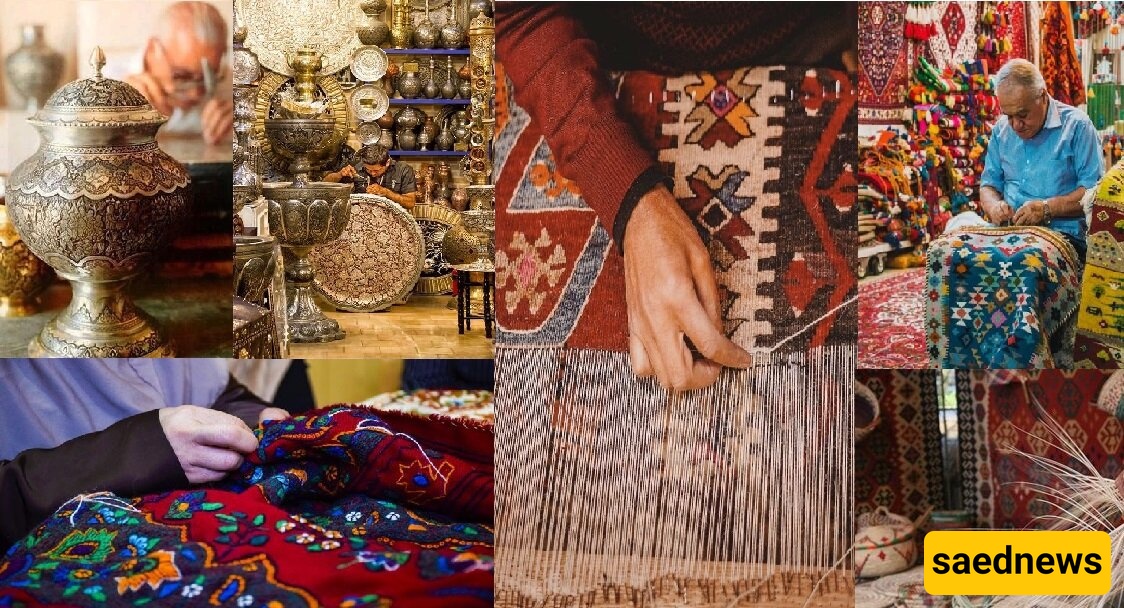
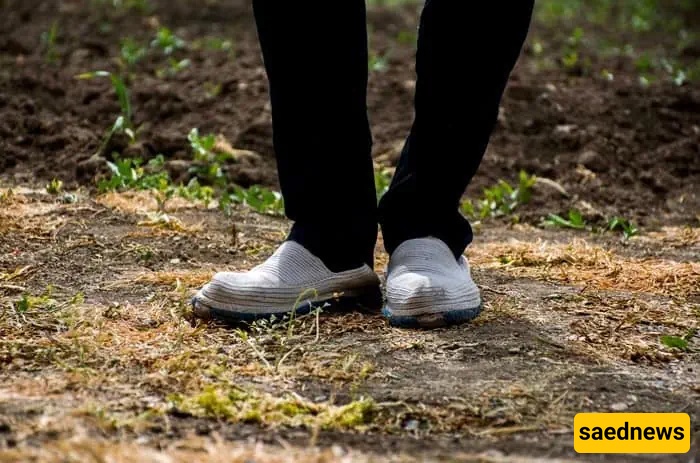
Among the well-known handicrafts of Khuzestan are carpet weaving, woodturning, engraving, enamelwork, traditional footwear sewing (giveh), and various types of weaving and textile production. In this section, join us to become more familiar with the arts of this region.
Traditional weaving in Khuzestan Province, especially in the cities of Dezful and Shushtar, has a long history. It can even be confidently said that “Qazbafi” (a type of weaving) in Shushtar dates back to very ancient times. For example, the covering of the Kaaba was reportedly made from silk woven in Shushtar, produced in two- and four-harness weaving styles. Products of this craft include jajim, zilu, bedspreads, mooj fabric, and various other textiles.
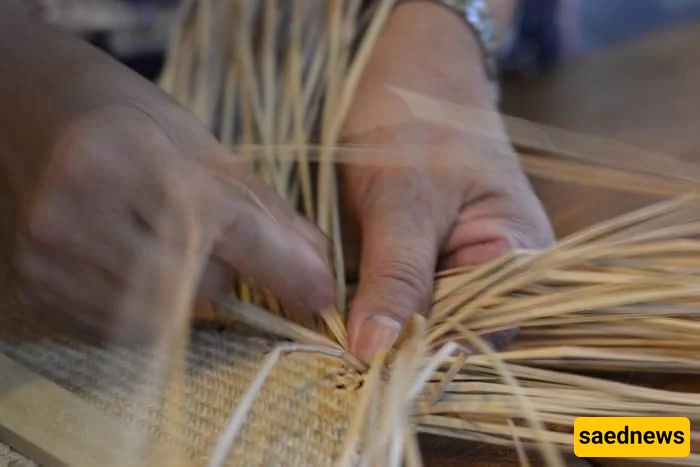
Kapo weaving is a distinctive handicraft of this province, made by wrapping the central and young stems of palm trees around a core stem. Its beauty is enhanced by colorful yarn decorations. The Shahiyon rural district in Dezful is the main center of kapo weaving. Kapos are usually produced as open or lidded baskets in various shapes and sizes.
“Mooj” is a type of handwoven fabric with different dimensions, known in many parts of Iran as chador shab or bedding wraps. In Khuzestan, especially in Behbahan, this weaving is common and is produced using traditional looms. Interestingly, Kurds also call it “mooj,” while Lurs refer to it as “mashté.”
In the Haftkel to Masjed Soleyman areas, Bakhtiari nomadic women and rural people weave strong striped kilims using worn-out clothing. These are used as coverings for black tents and for flooring.
They first cut old garments into narrow strips, then twist them into threads using a spindle, and finally weave them into durable and beautiful kilims.
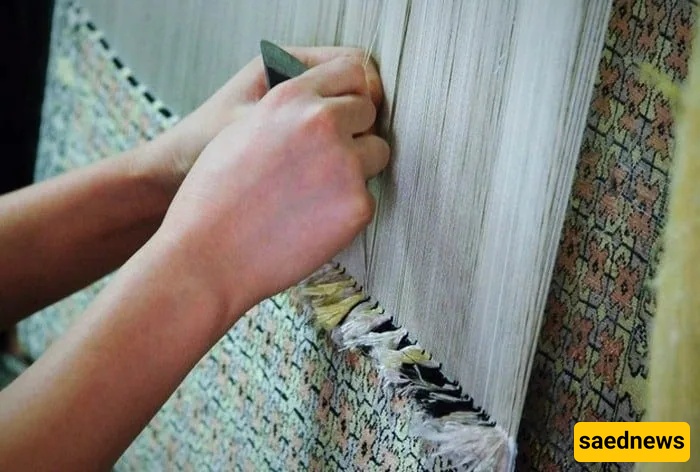
Ehrami or prayer rug is a traditional floor covering originally woven in sizes of about 90×70 cm. Today it is produced in various sizes, sometimes up to 3 meters as decorative runners. It has a long history in Khuzestan and is woven on traditional two-harness looms using wool and cotton yarn. Shushtar, Behbahan, and Dezful are important production centers.
Dezful, a historic city in Khuzestan, has long been known for its craftsmanship. Traditional markets still sell items such as hookahs, furniture, coat racks, cradles, and shoe cabinets made through woodturning.
Since Khuzestan is one of Iran’s main palm-growing regions, many artisans create useful products from palm leaves. They make baskets known as “zanbil,” including a famous type called “sele,” used for draining rice.
Products such as saddlebags, sacks, weaving straps, woolen cloaks (chogha), and other items—more than ten types in total—are produced by Bakhtiari nomads in northern Khuzestan and the Zagros foothills. All stages, from shearing wool to weaving, are done by the nomads themselves.
Silk weaving in Dezful uses artificial silk threads (viscose). Because of its delicacy, it is used to produce traditional Arab scarves (shalla). These fabrics are cut into specific sizes and sometimes sewn together to form larger scarves.
Due to the availability of raw materials in Khuzestan, muharrak art has gradually developed in the region and is taught in handicraft centers. It is similar to marquetry but simpler and faster to produce. The main material is wheat and barley stalks, which are glued onto fabric or flat surfaces to create decorative designs.
Behbahan is considered the main center of aba (traditional cloak) weaving and has a long history in this craft. Behbahan abas are of high quality and are made from camel wool and special sheep wool. They are exported not only within Iran but also to Gulf countries.
Mat weaving is a profitable handicraft in Khuzestan. Due to the abundance of palm trees, raw materials are widely available. Cities such as Khorramshahr, Abadan, Shadegan, and Dasht-e Azadegan are active in this field.
A delicate art performed on gold and silver, traditionally practiced by Mandaean craftsmen. Their works often feature designs inspired by palm trees, boats on the Karun River, and camel caravans. They create jewelry such as necklaces, earrings, rings, and bracelets. These works are both economically and artistically valuable.
Dezful holds the second rank in pewter craftsmanship. Common products include samovars, hookahs, rosewater sprinklers, pitchers, bowls, trays, and containers.
Metal products such as sickles, scissors, picks, and sugar cutters are produced in cities like Ahvaz, Dezful, Behbahan, and Masjed Soleyman. The process involves cutting, heating in furnaces, hammering into shape, and polishing.
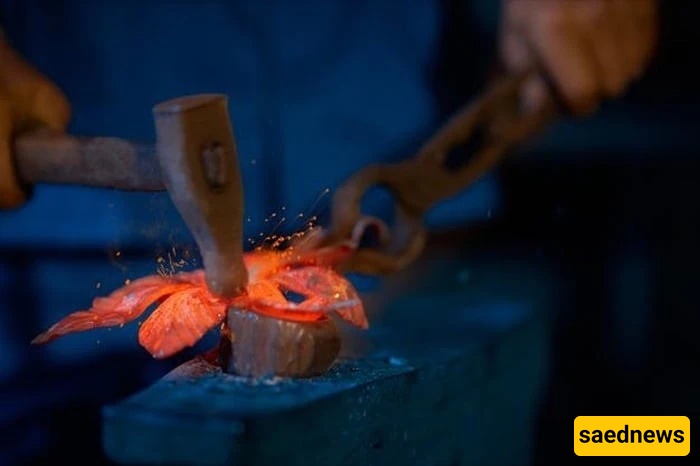
Engraving on metal is done by artisans who first design patterns, then fill vessels with molten pitch and ash. Using hammer and chisels, they create recessed designs, which are later decorated with enamel and fired in a kiln at about 350°C, forming a colorful glazed layer.
Due to the presence of nomads engaged in livestock farming, animal hides are abundant in Khuzestan. However, leather production is not highly industrialized, and most usage is limited to traditional needs such as making water bags, sacks, and occasionally drums used in folk music.