SAEDNEWS: Kurdistan is one of the top provinces for tourism and handicrafts. The region is home to highly skilled and artistic people who create a wide range of beautiful and distinctive handmade souvenirs.
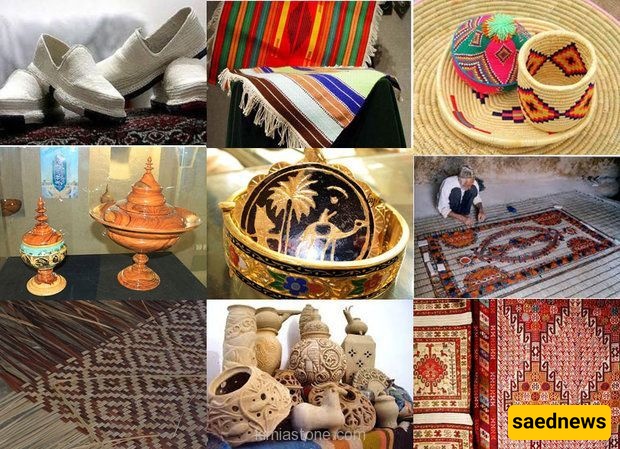
According to Saednews, Whenever we travel to different regions of Iran, one of the most important aspects for us is discovering the unique handicrafts of each area—creations that carry their own rich histories. Handicrafts are an inseparable part of a region’s culture and are considered valuable cultural heritage. Kurdistan, a western province of Iran, is one such place where handicrafts flourish in both its villages and cities.
It is worth noting that the local culture and lifestyle of the people play a significant role in the growth of these crafts. Natural and animal-based materials such as sheep’s wool and wood are widely used in production. The people of Kurdistan not only meet their daily needs through these crafts but also earn their livelihood from them.
One of the most prominent and well-known handicrafts of Kurdistan is the Senneh kilim, primarily woven in the city of Sanandaj. Its designs are inspired by Herati carpets and often feature floral and boteh (paisley) motifs. Most patterns are angular and somewhat bold, reflecting the rugged mountainous lifestyle of the region. “Senneh” is the old Kurdish name for Sanandaj.
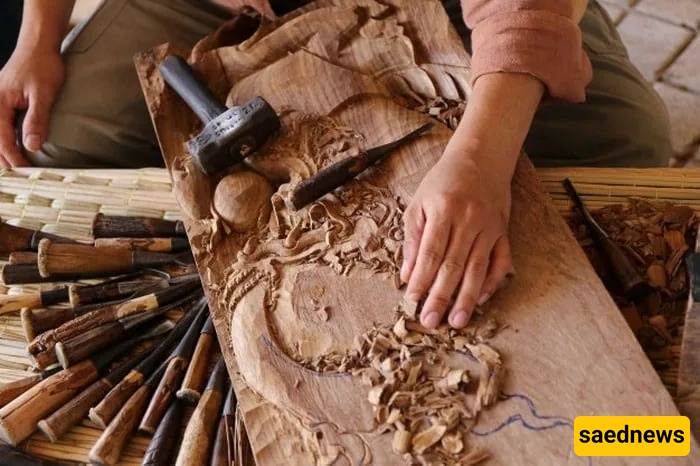
Fine wooden handicrafts are among the most important crafts of Sanandaj, with a history of over two centuries. Founded by Master Nematollah Nematian, this art uses woods like jujube and walnut, valued for their natural grains and beauty. Artisans mainly produce chessboards and backgammon sets, although items such as jewelry boxes, canes, and decorative tabletops are also crafted.
Mowj, also known as “Rakhtekhāb-pich,” is a handwoven woolen textile traditionally used as part of Kurdish bridal dowries. Although its production has declined due to limited support, it is still used as prayer mats, cushions, blankets, and covers for traditional seating.
Kurdish clothing is considered one of the most beautiful traditional outfits in Iran. Women’s dresses, with their long, colorful, and pleated skirts, are especially eye-catching and have even been recognized in international festivals. Despite their apparent similarity, each region has its own distinct style, allowing one to identify a person’s origin by their attire.
Felt-making is another popular craft in Kurdistan with deep roots in pastoral life. Due to its durability, felt is highly suitable for the mountainous climate, serving as insulation against heat, cold, and moisture.
Carpet weaving is a major handicraft in Kurdistan, with Sanandaj recognized as a key production center. Kurdish carpets are known worldwide for their quality and craftsmanship, and many artisans are actively engaged in this field.
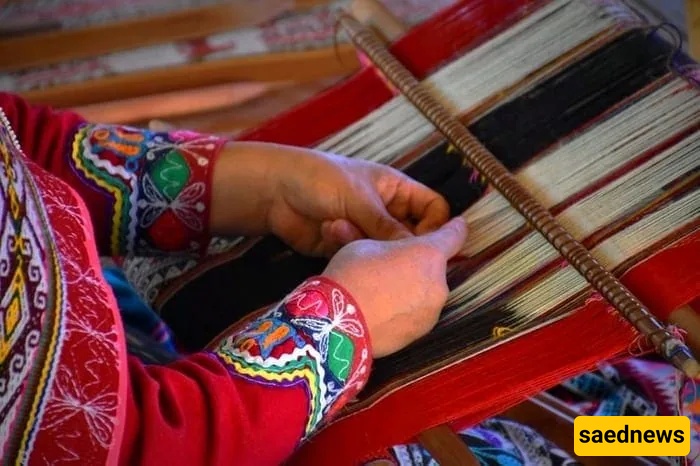
Jola refers to traditional weaving workshops found in Kurdistan and West Azerbaijan. The word “jola” in Kurdish means movement and activity, reflecting the dynamic motions of weavers at work. These workshops mainly produce traditional Kurdish men’s clothing using sheep and goat wool.
Wood carving has long been practiced in Kurdistan. Historical wooden doors from the Safavid era, found in Sanandaj and nearby villages, feature intricate carvings and inscriptions. Today, skilled artisans continue this tradition with creativity and precision.
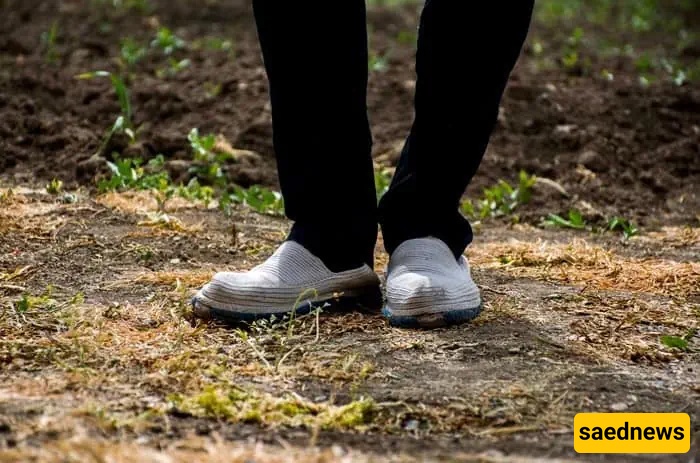
Kalash is a type of traditional Kurdish footwear made with a compressed fabric sole and a cotton upper. It is lightweight, flexible, and dates back over 1,500 years, originating in the Oramanat region. Today, it is still produced in areas such as Kermanshah, Kurdistan, and Baneh.
Tile-making has seen significant development in Kurdistan, especially since the 13th century AH. Historic buildings in Sanandaj, including Dar al-Ihsan and Dar al-Aman mosques, showcase beautiful mosaic tilework. This art reached its peak during the rule of Amanollah Khan Ardalan.
Ghavareh-bori is a traditional decorative craft used in old Sanandaj buildings, particularly in wooden windows with colored glass. The interplay of light and color through these intricate wooden patterns creates a dreamy and enchanting atmosphere.
Bijar kilim is another famous woven craft of the region, sharing similarities with Senneh kilims but featuring brighter colors. A notable characteristic is the use of animal motifs, reflecting the importance of livestock and the people’s close connection to nature.
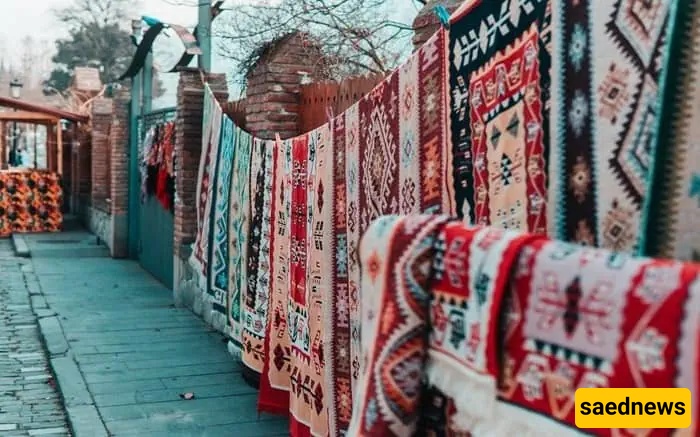
Jajim is a thick, double-sided handwoven fabric made from sheep’s wool. Its designs are typically inspired by nature and geometric patterns, and it is usually produced in six to seven vibrant colors.
One of the oldest handicrafts in Iran, shawl weaving is widely practiced in Kurdistan. These shawls, made from fine goat wool known as “Marakhuz,” are traditionally worn by men and suitable for both warm and cold seasons. This craft is especially common in the city of Armardeh in Baneh.
Hehvari, or Golovani, is a traditional scarf worn by women among the Lor, Kurdish, and Lak communities. Originating from Indian silk fabrics, these scarves are made of silk and decorated with patterns such as paisley and arabesque designs. They typically feature dark backgrounds with colorful motifs and are easily found in Sanandaj markets.
Due to the abundance of quality forest wood and a strong musical tradition, Kurdistan has become a center for crafting traditional musical instruments. Instruments such as the divan, violin, santur, tar, and daf are commonly produced and reflect the region’s deep cultural connection to music.