SAEDNEWS: China has announced 16 measures aimed at making it easier for foreign companies and professionals to do business and work in the Hainan Free Trade Port (FTP), the world's largest free trade port by area. The new policies cover key sectors, including energy trade and medical services.
According to Saednews, Under the new policies, foreign doctors who are legally authorized to practice medicine in their home countries will be eligible to obtain permits to provide medical diagnosis and treatment services in Hainan for up to three years. These permits may be renewed in accordance with relevant regulations.
The authorities also plan to introduce more flexible arrangements for foreign nationals regarding work permits, entry, and residence.
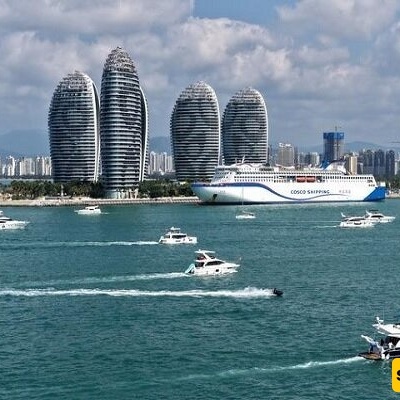
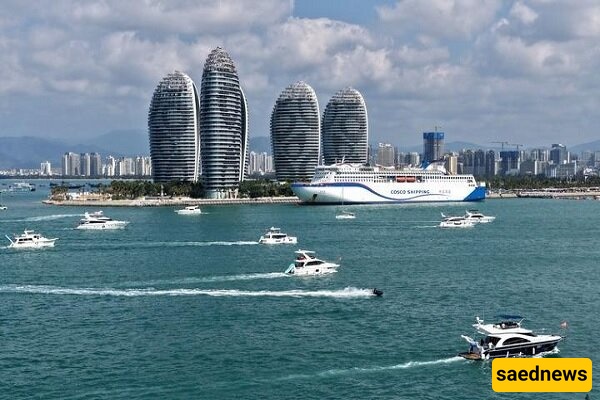
Located in China's southernmost island province, the Hainan Free Trade Port (FTP) launched island-wide special customs operations in December 2025. The initiative aims to facilitate the entry of foreign goods, broaden zero-tariff benefits, and create a more favorable business environment as China continues to advance its high-level opening-up strategy.
Under the latest measures, foreign companies will be permitted to access bonded facilities at Hainan's liquefied natural gas (LNG) import terminals. The FTP will also be supported in developing LNG futures delivery warehouse operations following the introduction of LNG futures contracts.
Additional initiatives include expanding offshore trade, broadening the categories of products eligible for bonded maintenance, and allowing qualified bonded remanufactured goods to enter pilot free trade zones in mainland China. The policies also encourage greater use of the Chinese yuan in emerging forms of barter trade and aim to strengthen economic and commercial ties between Hainan and the Hong Kong Special Administrative Region.
Photo: An aerial view of a container terminal at Haikou Port, Hainan Province, taken on June 17, 2026. (Xinhua/Pu Xiaoxu)
Remanufactured products imported into mainland China's pilot free trade zones will be subject to the relevant import duties, value-added tax and consumption tax. Such products must comply with the technical standards applicable to equivalent new products, meet regulations governing remanufactured goods, and carry clear identification indicating their remanufactured status.
The policy document also highlights the need to improve insurance services and products, particularly in international transportation and bonded maintenance.
These developments come as Hainan continues to record strong growth in foreign trade. According to provincial commerce authorities, the island's total imports and exports of goods reached 285.44 billion yuan (approximately 42.5 billion U.S. dollars) in the first nine months of 2026, representing a 49.8 percent increase compared with the same period last year. Trade in services also expanded by 11.7 percent, reaching 56.95 billion yuan.
During the same period, trade in maintenance and repair services more than doubled year on year to 3.31 billion yuan. This growth was largely driven by imports of aircraft materials and components, alongside revenue generated by aircraft maintenance services.
Data from the State Administration for Market Regulation further indicate that the number of newly registered foreign-invested enterprises in Hainan increased by 38.6 percent year on year during the first half of 2026.
These measures form part of China's wider strategy to deepen international economic engagement and promote high-standard opening-up. China has also outlined plans to expand pilot liberalization initiatives in sectors including value-added telecommunications, biotechnology and wholly foreign-owned hospitals, while continuing to simplify procedures for cross-border trade and investment.
The policy circular was jointly issued by the Ministry of Commerce, the National Development and Reform Commission, the Ministry of Ecology and Environment, and the General Administration of Customs.