Saed News: Rafael Grossi stated that Iran’s next nuclear agreement will be very different, emphasizing that transferring Iran’s uranium stockpiles abroad is difficult.
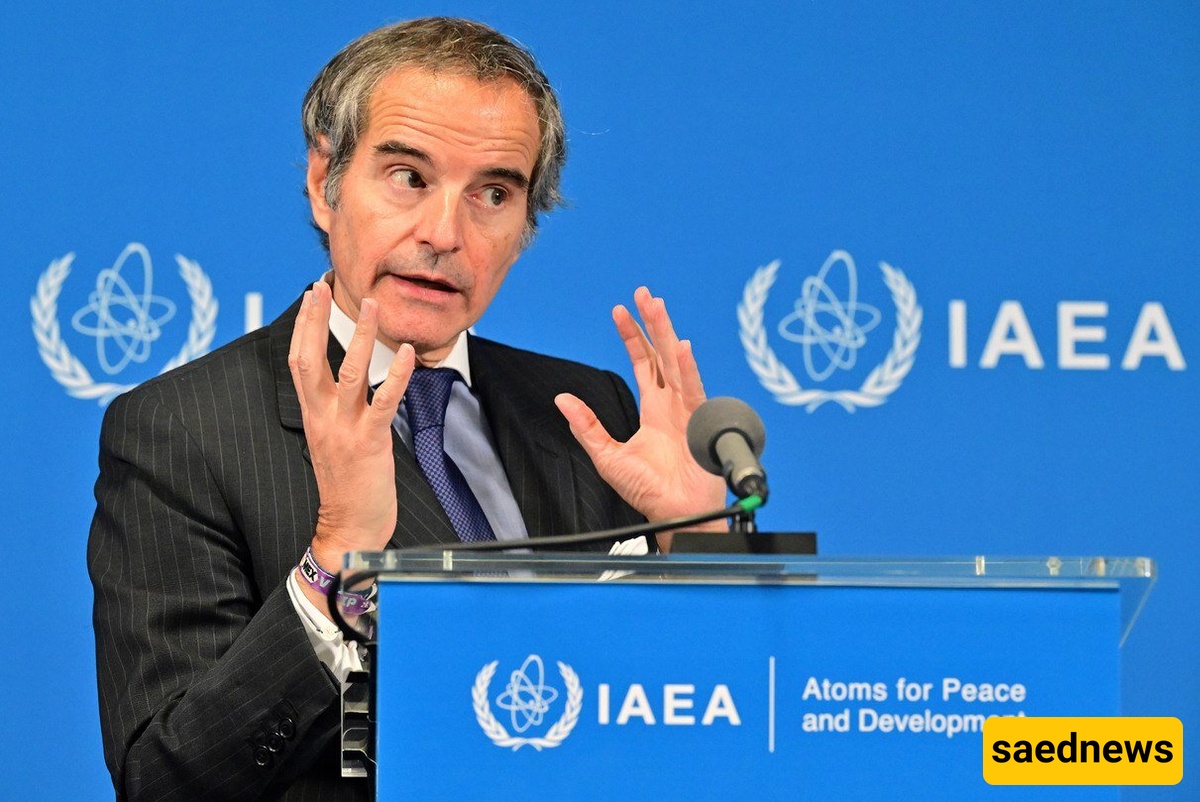
According to SAEDNEWS, Rafael Grossi, Director General of the International Atomic Energy Agency (IAEA), while noting that the issue of Iran’s nuclear program is not currently part of ongoing negotiations, said in remarks that appear to be a response to Trump’s expectations that transferring Iran’s uranium stockpiles abroad is a technically complex and sensitive matter that would be possible with the help of the Agency, although he said this is only one of the options under discussion regarding the fate of Iran’s uranium.
The IAEA Director General, in an interview with Al Jazeera, stated that transferring Iran’s enriched uranium stockpiles abroad is “difficult but not impossible.”
He emphasized that transporting Iran’s uranium stockpiles out of the country is very sensitive and technically complex.
On this matter, he said: “Such an operation is not easy, because (this material) is in gas form, highly polluting, and it is not a simple operation.”
According to him, several options are currently being discussed, including transferring uranium abroad or diluting it to a lower enrichment level, which is under discussion. Although the Agency is not directly involved, its assistance would make the process possible and efficient.
Grossi, referring to the fact that future Iran–US negotiations over Iran’s nuclear program will lead to an agreement different from the 2015 nuclear deal, said: “We are now in a very different situation. First of all, this is very important because this agreement, if it happens, will be for the post-war conditions and with the background of physical damage (to Iran’s nuclear facilities). In addition, Iran’s technology and capacity have grown significantly, so all previous benchmarks, including the specific number of centrifuges and the amount of enriched uranium, were outdated technology. Now they have very fast and new machines. Therefore, whatever the JCPOA was, we now need something else.”
Donald Trump, the President of the United States during his first term, withdrew from the nuclear deal, considering it insufficient in addressing concerns regarding Iran’s nuclear program. Although under this agreement, the strictest monitoring and verification measures by the Agency were implemented in Iran.
Iran, during Trump’s second term, gave diplomacy with the United States two chances, although Trump, with the participation of the Israeli regime in the middle of these negotiations, carried out aggressive attacks against Iran’s national sovereignty and territorial integrity, rendering the talks inconclusive.
Tehran officials, referring to Iran’s right to enrichment for peaceful purposes as a member of the Non-Proliferation Treaty (NPT), emphasize that any nuclear agreement with the United States must be in line with Iran’s national interests and legitimate rights.
Grossi’s remarks about Iran’s uranium stockpiles come amid Tehran–Washington negotiations mediated by Pakistan to reach a post-war agreement. Both sides have said that significant progress has been made in the process of reaching this agreement, although some issues still require further review to finalize it.
Violations of the ceasefire by the United States, including the blockade of Iranian ports and repeated withdrawals by Donald Trump’s administration, have created challenges for finalizing this agreement.
Despite Donald Trump making claims during these negotiations about the fate of Iran’s uranium stockpiles, no decision has yet been made, and Tehran insists that any discussion about Iran’s nuclear program is not currently on the table at any level and will be postponed to a time after the war in a defined negotiation opportunity.