Saed News: American media outlets wrote that the resignation of Trump’s Director of National Intelligence was not merely a personal decision and that months of internal tensions had existed.
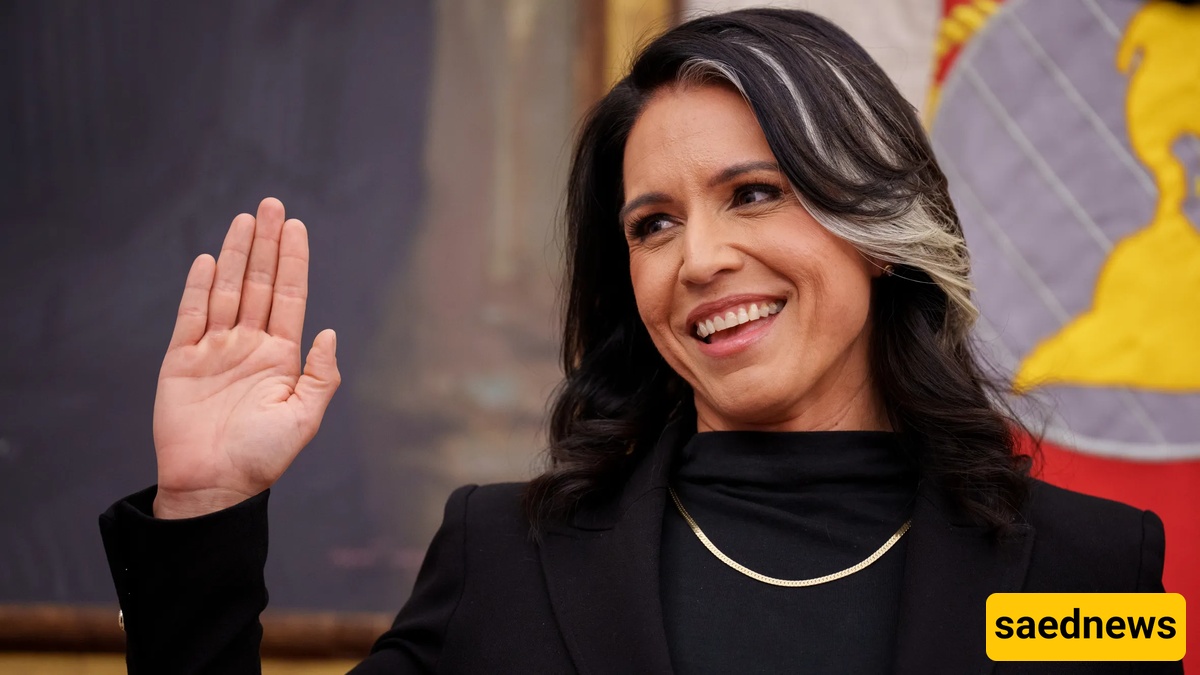
According to SAEDNEWS, the resignation of Tulsi Gabbard, the Director of National Intelligence in Donald Trump’s administration, has once again revealed deep divisions within the U.S. government over foreign policy, particularly regarding Iran. Gabbard announced in an official letter on Friday, May 22 (2 Khordad), that she was stepping down due to her husband’s diagnosis with a rare form of bone cancer, and that June 30 would be her last working day.
However, American media reports indicate that this resignation was not solely a personal or family decision, and that months of tension and disagreement with Trump lay behind it.
According to The New York Times, Gabbard repeatedly stated in congressional hearings that Iran did not pose an immediate nuclear threat and that its enrichment program had been “destroyed” after U.S. attacks. However, Trump rejected this assessment and publicly said: “I don’t care what she says.” This was seen as a clear sign of declining trust from the U.S. president in his intelligence chief.
CNN also reported that in recent months Gabbard had drifted away from the administration’s political line due to her anti-war stance and opposition to escalating military tensions. The network added that a video in which she warned the world was closer than ever to nuclear destruction angered Trump’s inner circle and placed her “outside the official line of the government.”
At the same time, NBC News reported that Gabbard was effectively sidelined from key decision-making processes related to Iran and Israel, and that internal divisions within the MAGA movement over potential military confrontation with Iran had intensified. The outlet described a growing rift between anti-war and pro-war factions within Trump’s camp.
The Guardian had previously revealed that Trump had even discussed replacing Gabbard with his advisers in April 2026. The main reason for this dissatisfaction was said to be her support for Joe Kent, her former deputy, who had resigned due to opposition to war-driven policies against Iran.
American analysts believe Gabbard’s departure signals a reduced tolerance within Trump’s administration for dissenting views in national security policy. Gabbard, who initially entered the administration as an anti-war figure critical of U.S. military interventions, was gradually sidelined as the White House shifted toward a more aggressive approach toward Iran.
Critics say this development shows that in Trump’s current administration, even professional intelligence assessments can lead to the removal of senior officials if they do not align with the president’s political outlook.
Trump thanked Gabbard on Truth Social and described her as “great,” but sources close to the White House told U.S. media that her influence and position had steadily declined in recent months.
Many political observers now see Gabbard’s resignation as a symbol of the gap between Trump’s campaign promises of ending wars and the reality of his administration’s more aggressive policies—especially toward Iran—a gap that critics say is becoming increasingly visible.