Saed News: In an era of endless praise for self-knowledge, there is a thin line between “liberating insight” and “paralyzing rumination,” which can turn the most intimate human bonds into a laboratory for constantly dissecting pain.
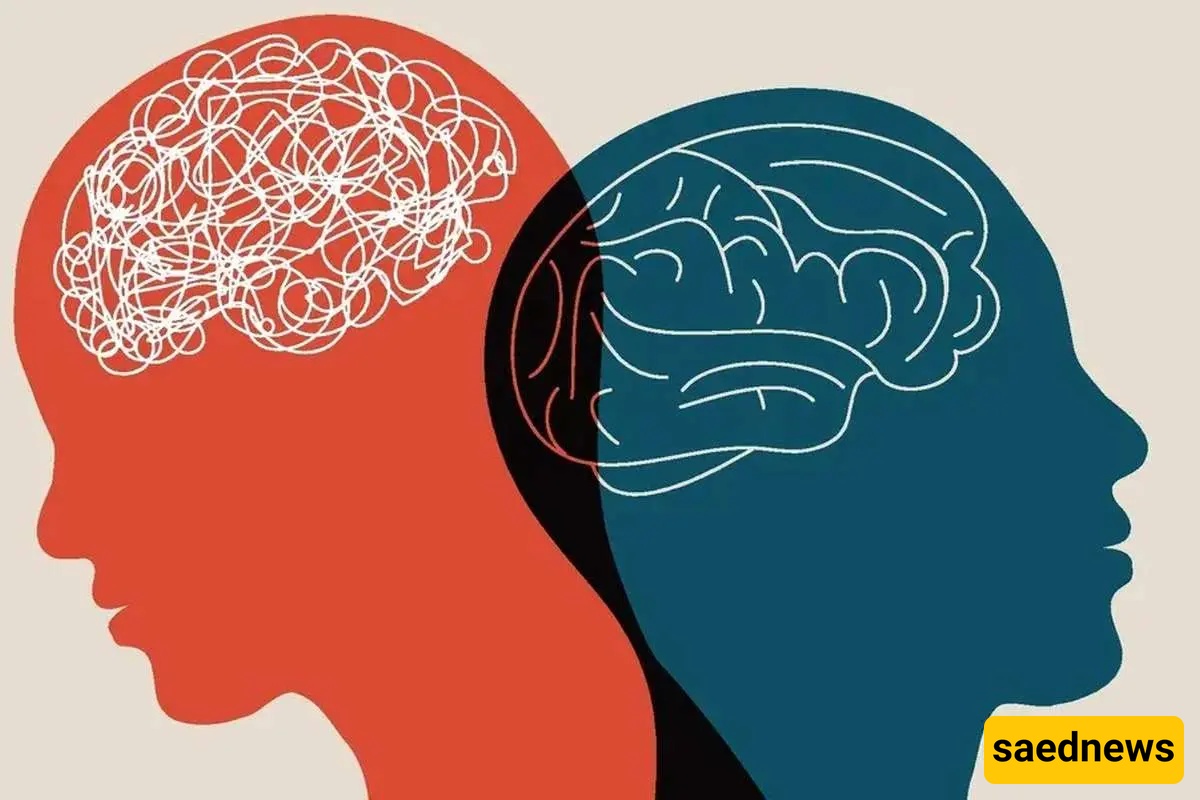
According to SAEDNEWS, citing Forbes, in modern psychology, “self-awareness” is perhaps the most celebrated human trait. From psychotherapy clinics to best-selling books, we are constantly reminded that “an unexamined life is not worth living,” and that the key to a thriving and stable emotional relationship lies in a deep and strict understanding of our own psychological mechanisms. The message seems simple and clear: the more aware you are of your inner world, the more successful you will be in love.
However, scientific evidence and decades of research reveal a counterintuitive problem hidden in plain sight. Contrary to popular belief, self-awareness is not always a smooth road to happiness; rather, it can act like a double-edged sword that introduces complex challenges into romantic relationships.
One pioneering study in this field, published in 1999 in the journal Personality and Social Psychology, introduced a phenomenon researchers called the “Self-Absorption Paradox.” The findings showed that high levels of internal self-awareness are not necessarily associated with better mental health. In fact, while highly self-aware individuals have a more accurate and detailed understanding of themselves, they also experience higher levels of psychological tension and anxiety.
This is not a random flaw; it is a documented feature of the human mind. Nowhere is this paradox more influential than in our close and intimate relationships. Based on scientific findings, we explore three reasons why self-aware individuals often find love not easier, but more difficult.
Confusing “Insight” with “Change”: The Trap of Psychological Vocabulary
Self-aware individuals are highly skilled at labeling what happens inside them. They can identify behavioral patterns, map their emotional triggers, and precisely describe their defense mechanisms. But the core problem is this: the act of naming and identifying creates a false sense of relief that is mistaken for real progress.
Research published in a psychology journal distinguishes between “insight” and “rumination.” While true insight predicts better mental health, rumination (persistent, repetitive focus on negative thoughts) is a strong predictor of poor psychological outcomes.
In romantic relationships, it is often this ruminative focus that keeps people stuck. For example, imagine a “psychologically aware” partner who says during an argument: “I know I withdraw and become avoidant when we fight; it’s just my attachment style.” Yet after this admission, they continue the same avoidant behavior for years.
This person may have mastered psychological terminology, but has not changed their behavior. For their partner, this can feel even worse than ignorance—because once a problem is named, there is no excuse for inaction. Highly self-aware individuals sometimes spend so much time labeling patterns that they never reach the stage of behavioral change.
Rigid Internal Standards: When Satisfaction Turns into an Ideal
When you clearly understand your values, needs, and vision of a “healthy relationship,” you unconsciously activate a constant internal comparison system. You continuously compare your current relationship with the one you believe you “deserve.”
This process is rooted in Objective Self-Awareness Theory. According to this theory, when attention turns inward, we automatically compare our current state to internal standards of correctness. Any perceived gap generates negative emotions. The key point is that the more self-aware you are, the more frequently and precisely this comparison occurs.
A 2017 study showed that while reflection can bring meaning to life, it can also intensify the negative effects of rumination on well-being. In real life, this appears as a self-aware partner who meticulously records every small gap in the relationship: every unmet emotional need and every moment of imperfect intimacy.
Meanwhile, their less self-aware partner may feel completely satisfied, unaware of these shortcomings. This imbalance creates one of the most painful dynamics in modern relationships: the burden of awareness almost always falls on the more perceptive partner. In simple terms, knowing exactly what you want is a gift—but it also means knowing exactly what you are not getting.
Watching Emotions Instead of Experiencing Them
Another hidden cost of high emotional awareness is constant self-monitoring. Highly self-aware individuals often observe their own emotional reactions rather than fully experiencing the moment with their partner.
A 2024 study published in Scientific Reports examined aspects of emotional self-awareness. It found that individuals who pay excessive attention to their emotions but lack clarity about their meaning can become trapped in a negative feedback loop. They intensely observe their emotions but struggle to move through them.
This can be seen in someone who, after a difficult argument, can write three pages of deep analysis in a journal but remains strangely silent or emotionally frozen during the argument itself. They are not “closed off” in the traditional sense; rather, they are so focused on observing themselves that they cannot respond naturally.
Their partner may interpret this as emotional coldness or overthinking, while the self-aware person feels isolated. Watching yourself feel is not the same as actually feeling—and in relationships, the gap between these two is where unnecessary loneliness grows.
None of these findings suggest that self-awareness is a flaw in love. On the contrary, research shows that we often stop halfway through the process. True insight—the kind that leads to understanding and change—is the only factor that consistently predicts better psychological well-being.
The problem is never awareness itself; it begins when awareness becomes an end rather than a tool. This happens when understanding replaces action, observation replaces feeling, and naming a problem replaces the difficult work of changing it.
The most powerful move a self-aware person can make in a relationship is not simply understanding themselves better, but applying that understanding in real life. Self-awareness without action is a heavy burden; with action, it becomes a bridge that can transform an ordinary relationship into an exceptional one.
To move forward, one must step out of the world of analysis and words into the lived reality of emotions and small behavioral changes. Only then can awareness bring partners closer together rather than pushing them apart.