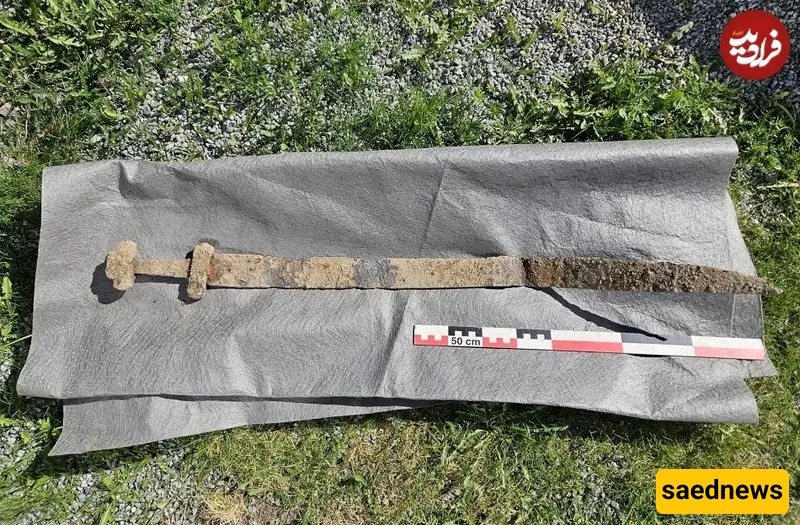
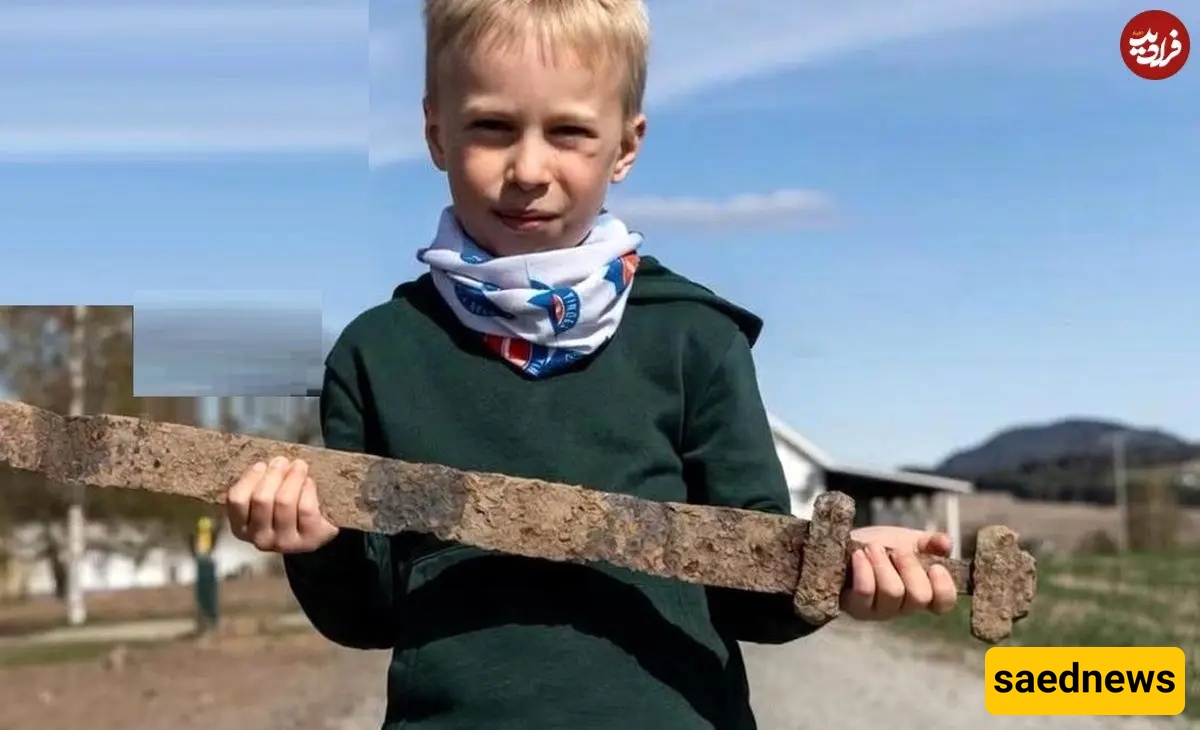
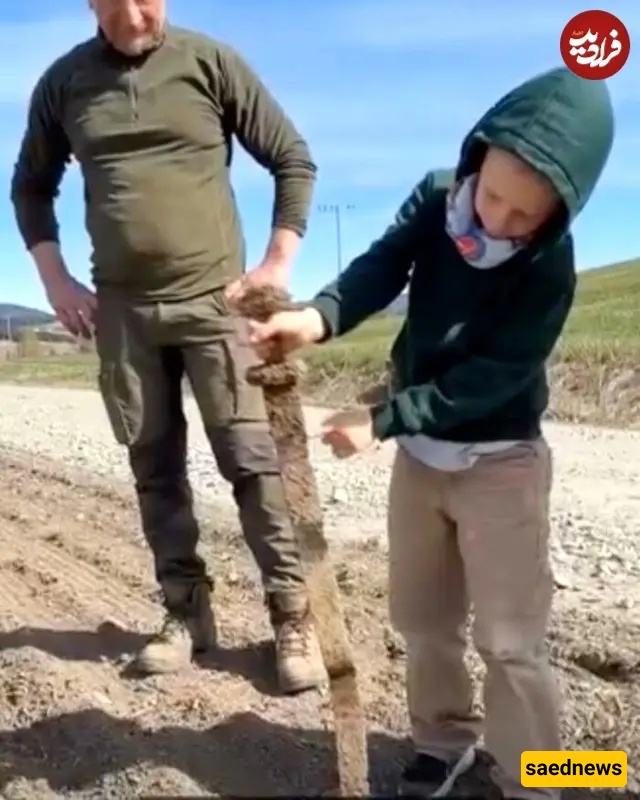
SaedNews: Six-year-old “Henrik Refsnes Mortodt,” while on a trip with his classmates, saw a piece of rusted metal sticking out of the ground. Out of childish curiosity, he picked it up to see what it was, thinking it was just a piece of scrap iron or an old broken tool. But the object was actually a historical sword.
According to SAEDNEWS, citing Faradeed, school teachers contacted regional archaeologists after this discovery and reported the matter. Initial examinations showed that the weapon is a single-edged sword; a type of sword that was usually made during the Merovingian period, between 550 and 800 AD, in Scandinavia. Archaeologists believe this sword likely belongs to the late part of that era or the early Viking Age—before double-edged swords, which later became the common Viking weapon, became widespread.
Although the sword’s iron has suffered corrosion and rust over the centuries, its overall condition is described as very good. The sword’s hilt is now hidden under a thick layer of rust and soil, but the shape of the grip and guard closely resembles Type F swords in the famous classification of “Jan Petersen,” a researcher who in his classic book titled “The Viking Swords of Norway” in 1919 presented the main classification system of Viking swords. Type F swords generally belong to the first half of the 9th century AD.
The sword has now been transferred to the Museum of Cultural History in Oslo, where preservation operations and specialized examinations will be carried out. Experts are expected to use X-ray imaging and metallurgical tests to gain more information about the manufacturing method, exact age, and how this weapon was used.