SAEDNEWS: Recent reports suggest that several of the United States’ traditional allies declined requests from former U.S. President Donald Trump to participate in military actions aimed at securing or “opening” the Strait of Hormuz.
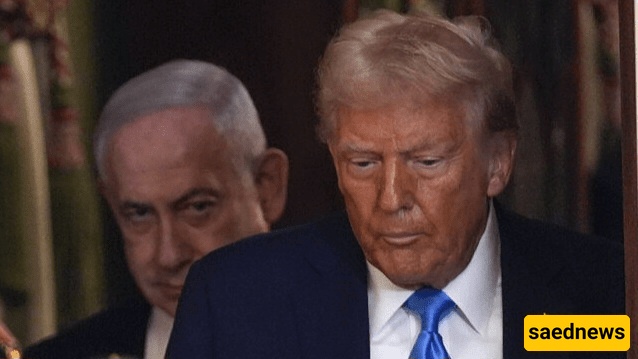
According to SAEDNEWS, .European NATO members including the United Kingdom, Germany, and Italy reportedly rejected the proposal, while France indicated that its naval forces would remain in a defensive posture in the eastern Mediterranean rather than participate in operations in the Gulf.
The responses from European governments reveal a clear reluctance to escalate tensions in one of the world’s most strategically sensitive waterways.
A spokesperson for the German chancellor emphasized that the situation was not a NATO matter, stating that the conflict involving the United States and Israel did not obligate the alliance to intervene in the Strait of Hormuz. Analysts and former U.S. officials echoed this view, noting that the NATO charter contains no provision requiring member states to join wars initiated by another member, especially if they are considered offensive rather than defensive.
British officials expressed a similar position, arguing that the current conflict is tied to the actions of the United States and Israel and should not be treated as a NATO-wide war.
Strategic and Economic Concerns
Behind the diplomatic language lies a practical calculation. Many European governments believe that further escalation in the Persian Gulf would carry serious risks without offering clear benefits. The Strait of Hormuz is one of the most critical energy corridors in the world, and any military confrontation there could disrupt global oil and gas supplies.
Even a limited conflict in the area could trigger a major energy shock, pushing fuel prices higher and destabilizing global markets. European economies, already strained in recent years by energy disruptions linked to the Russia–Ukraine war, are particularly sensitive to such risks.
Germany, for example, has faced major industrial pressures after reducing reliance on Russian gas, and policymakers are wary of another energy crisis triggered by instability in the Gulf.
Military Risk in the Region
Another factor influencing European hesitation is the military reality in the region. Iran has repeatedly demonstrated its capacity to challenge naval operations in the Strait of Hormuz. For many governments, entering a direct confrontation in that narrow waterway could quickly escalate into a broader and more dangerous conflict.
From their perspective, involvement could turn the strategic chokepoint into a highly volatile battlefield.
Calculating the Consequences
Ultimately, the reluctance of Washington’s partners reflects a broader strategic calculation: escalating conflict in the Strait of Hormuz could ignite a global energy crisis, destabilize regional security, and drag additional countries into a war whose consequences would be difficult to control.
For many U.S. allies, avoiding that scenario appears to outweigh the benefits of supporting a more aggressive military approach in the Gulf.