SAEDNEWS: A member of the central council of Iran’s Construction Party (Kargozaran-e Sazandegi) said: The leadership and crisis-management strength of Ayatollah Khamenei at critical moments is recognized by political analysts, and any talk of threatening him is far bigger than the mouth—and the fragile authority—of figures like the U.S. president.
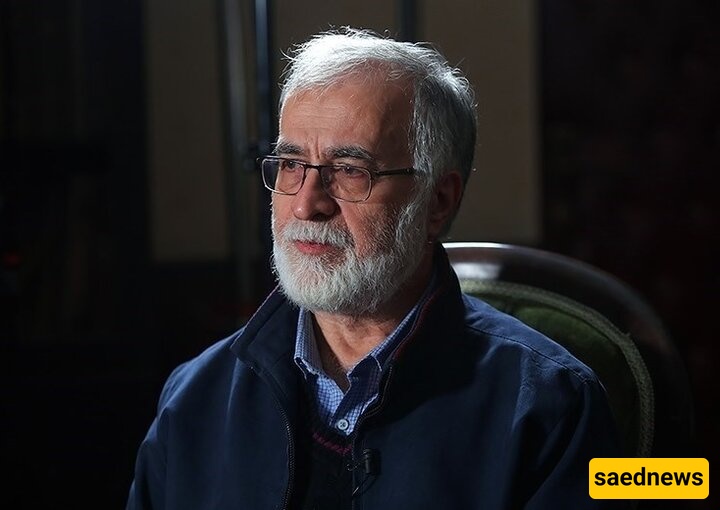
According to SAEDNEWS, Mohammad Atrianfar, a member of the central council of the Kargozaran-e Sazandegi Party, in an interview with the political reporter of Fars News Agency, referred to what he described as baseless remarks made by the U.S. president against the Leader of the Islamic Revolution, and said:
“The reality is that for 35 years, the highest-level management of the country—guidance and leadership of national affairs—has been entrusted to the strong and capable shoulders of Ayatollah Khamenei. This is a unique experience in Iran’s history that has been visible through him and continues today.”
Atrianfar, who is also a member of the government’s information council, added that Ayatollah Khamenei, as the Leader of the Islamic Revolution, is recognized—alongside his personal experience and special circumstances—as a symbol of resistance and a champion in the struggle against global arrogance led by the United States.
He continued:
“The strength of his leadership and management in crucial moments is something political analysts pay attention to, and speaking of threatening him is far bigger than the mouth—and the vulnerable prestige—of people like the U.S. president.”
Atrianfar further stated:
“The truth is that after the victory of the Islamic Revolution, the lifetime of Imam Khomeini (may he rest in peace) did not provide Iran enough time to fully stabilize the Islamic system. It was natural that a newly established political system would face challenges ahead, and opportunities were limited.”
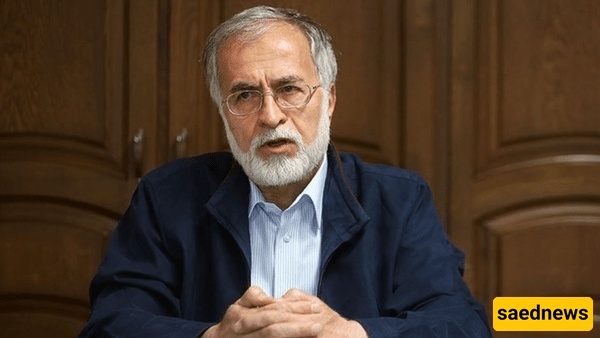
He added that after the leadership transition, a historic opportunity was created for Ayatollah Khamenei, allowing the new political system to gain greater stability and stronger institutional grounding. According to Atrianfar, this opportunity was unique not only in Iran and the region, but even on a global scale for leadership after Imam Khomeini.
He emphasized that one of Ayatollah Khamenei’s major characteristics is the breadth of his personal capabilities within the country’s management structure.
Atrianfar continued:
“The Leader possesses outstanding qualifications and strong moral and personal traits that many analysts and politicians—at the level of senior leadership—emphasize. This matter is so evident that even his enemies, although they may not openly admit it, still unconsciously bow to his leadership capacity deep within their thoughts and mindset.”
The reformist political figure also said that the Leader’s self-confidence during crises—especially during war and difficult periods—shows his effective leadership power. He described one of his key traits as a fast and efficient response to crises, and pointed to what he described as a recent major attack:
“For example, in the recent incident of the U.S. and Israel’s aerial military aggression against the country—which is considered one of the biggest crises in Iran’s history—despite the fact that a large part of the senior military leadership was lost in a single night, he was able to quickly rebuild this major loss and manage the command vacuum on the ground.”
Atrianfar added that, in his view, such characteristics are rare and uncommon for a complete leader, both in Iran’s history and even globally.
He then referred to Iran’s political and social situation and said that regarding issues recently raised in the country, despite all criticisms and challenges, all political factions—both left and right—ultimately recognize the Leader as the main pillar of the system and the one who brings crises to an end.
According to him, political tribalism—once a major concern—has become less significant, and today all groups acknowledge the necessity of supporting Ayatollah Khamenei’s leadership to help Iran pass through upcoming crises.
He concluded by saying that in this context, as a national and historic duty, the country’s officials and security authorities are working to protect national security and Iran’s territorial integrity. He stated that this major national responsibility is supported by all people and political currents, and that under current conditions, supporting the Leader as the anchor and backbone of the country’s “ship in crisis” has become more important than ever.