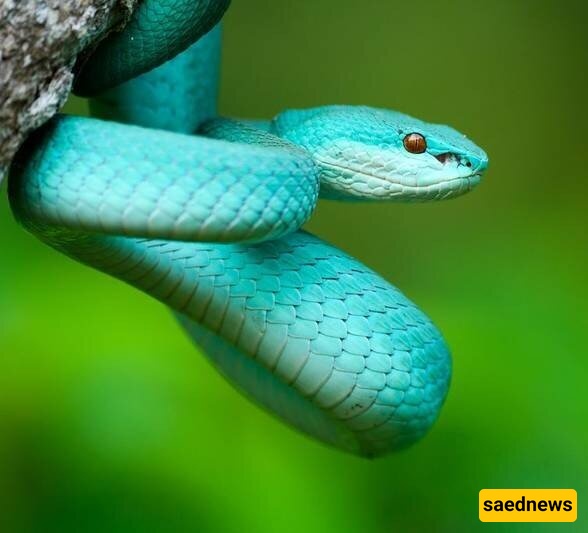
SAEDNEWS: The University of Michigan is recognized as the home of the world’s largest collection of snakes. This collection is, in fact, a valuable treasure trove of information, providing extensive knowledge about wildlife and the ways in which different animal species survive or become extinct.
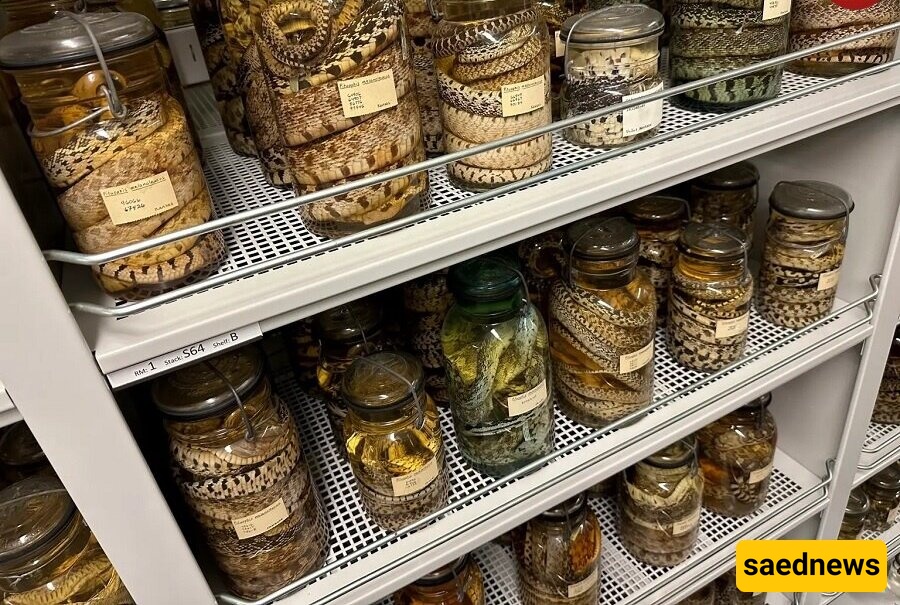
According to Saed News Agency, citing Faradid, Oregon State University has recently donated 45,000 reptile and amphibian specimens to the UM Zoology Museum. More than 30,000 of these specimens were snakes, nearly doubling the university’s research collection. The collection is not open to the public but is accessible to scientists around the world.
The museum is not a traditional dusty display space. Curators describe hundreds of jars filled with snakes and salamanders preserved in alcohol, along with frozen tissue samples, as “active and vibrant.” Dan Rabosky, the museum curator and evolutionary biologist, explains:
“These specimens are a biological time capsule. Researchers can use them to understand the genetics and diseases of animal populations from past decades. Why does this matter? If we want to understand how things have changed over time—such as the spread of disease in animal populations—one of the most important types of data comes from these biological time capsules.”
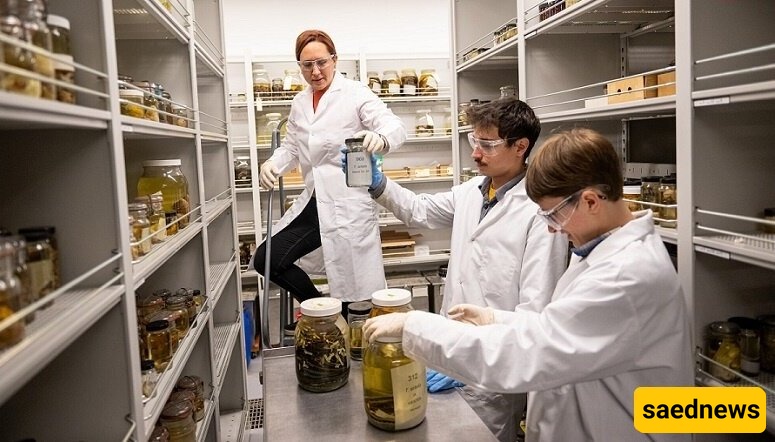
After the arrival of the new specimens, students spent part of a day unpacking and opening them for the first time. Drew Hoer, one of the students, said while lifting a large container filled with preserved snakes: “It’s like Christmas. It’s really great!”
PhD student Hailey Crowell, while pulling a thick water snake from a jar, added: “That one is huge—I think it’s the monster of snakes!”
The collection, which spans around 50 years, reveals how different species have changed following natural disasters. Events such as climate shifts, landscape changes, forest fires, habitat destruction, or changes in water availability can all be studied through these specimens, allowing scientists to track long-term impacts on populations.
Having practical access to wild animal populations over time, compared to laboratory studies, provides a rare research opportunity.
Rabosky notes that the collection allows scientists to understand how species evolve over time and adapt to long-term changes such as climate shifts.
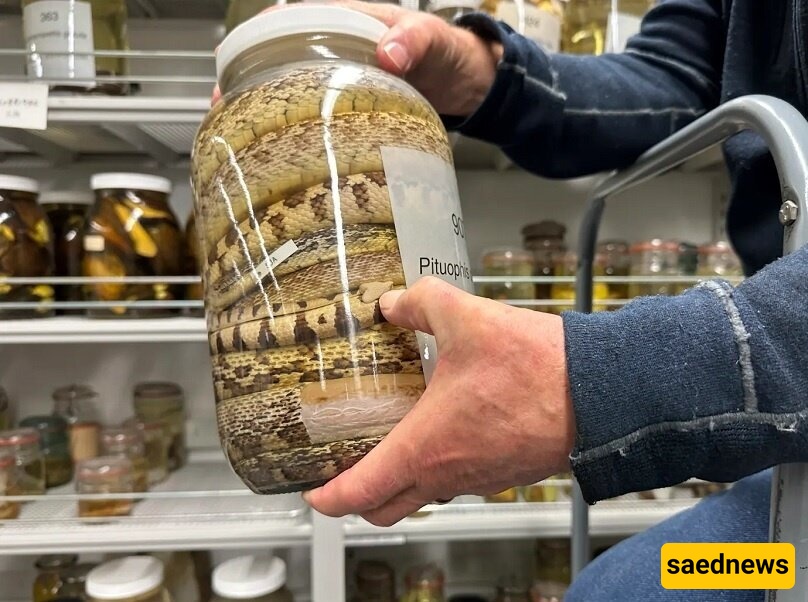
“Although our collection is mostly snakes, its significance is much broader. We can use them as models to understand complex biological processes. Some of the best science happens when researchers use insights from seemingly random organisms—like snakes or other species—to answer big questions, such as how diseases spread. These insights may even help us better understand disease transmission in human populations.”
Far from being a simple storage archive, the collection functions more like a massive scientific instrument—comparable to a telescope or a particle accelerator.
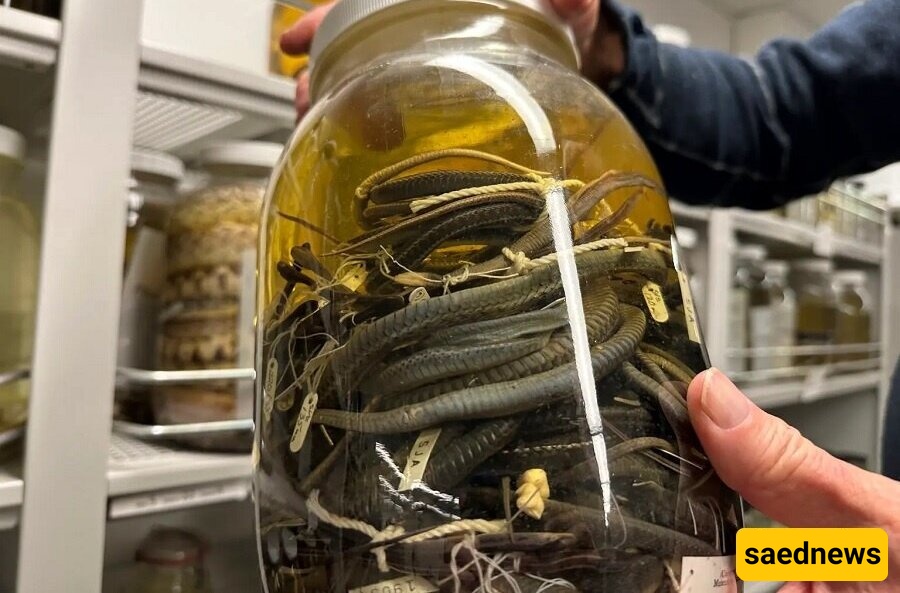
While medical science often relies on laboratory animals like mice, what we learn in controlled environments does not always translate directly to the natural world. This snake collection allows researchers to address major questions about the origins of life patterns, how animals adapt to changing conditions, how new species form, and why snakes are so successful despite lacking limbs.
The collection represents decades of work by two recently retired professors from Oregon State University.