SAEDNEWS: Boiling potatoes is a simple yet precise cooking skill. In this guide, you’ll find a helpful cooking-time chart for whole and cut potatoes, the proper way to boil them, signs that they are fully cooked, and essential tips for perfect results.
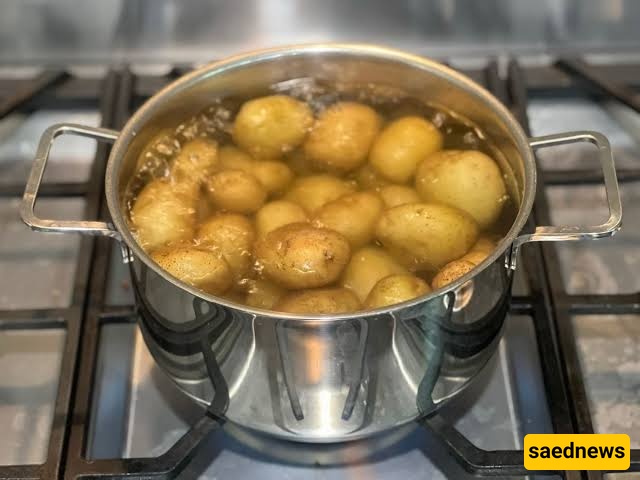
According to Saednews, Boiling potatoes may seem simple, but many people end up with potatoes that are soft and mushy on the outside while still firm and undercooked in the center. This usually happens because of improper cooking methods, uneven potato sizes, or using the wrong heat level. To achieve potatoes with an evenly cooked and perfectly tender texture, it is important to know how long they should be boiled. In this comprehensive guide, we will explain everything you need to know about boiling potatoes, from diced pieces to whole potatoes.
If you are wondering how many minutes potatoes should be boiled, the table below provides a useful guide. The cooking times are measured from the moment the water reaches a boil. Once the water starts boiling, reduce the heat to a gentle simmer and begin counting the cooking time. Keep in mind that factors such as room temperature, the type of pot, and the amount of water can change these times by a few minutes.
Potato Size or Preparation | Approximate Cooking Time |
|---|---|
Small diced potatoes, about 2 cm | 10–12 minutes |
Medium-sized potato pieces | 12–15 minutes |
Halved potatoes | 15–20 minutes |
Small whole potatoes | 15–20 minutes |
Medium whole potatoes | 20–30 minutes |
Large whole potatoes | 30–40 minutes |
These cooking times are approximate. If you are making mashed potatoes, it is better to cook them until they are slightly softer than usual. However, if you are preparing potatoes for a salad or another dish where they need to maintain their shape, stop cooking a few minutes earlier to prevent them from falling apart.
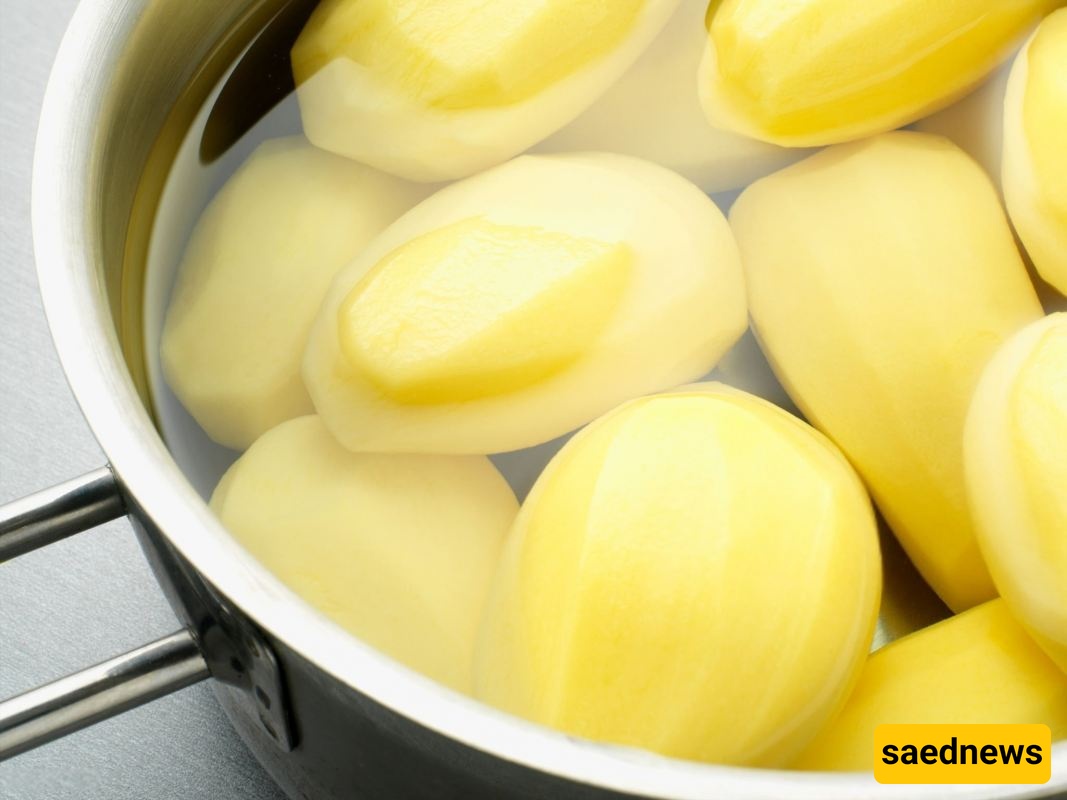
To get consistently good results, it is important to follow a few basic principles when boiling potatoes. If you follow the steps below, you can avoid potatoes that are either undercooked or overly soft.
Before doing anything else, rinse the potatoes under cold water and use a vegetable brush to remove dirt, soil, and other impurities from the surface. This step is important even if you plan to peel the potatoes because surface dirt can be transferred to the flesh while peeling.
If you want to boil the potatoes whole, choose potatoes that are similar in size. Small potatoes cook faster than large ones, so removing them all from the pot at the same time can result in some being undercooked while others become too soft.
For faster and more even cooking, you can also peel the potatoes and cut them into equal-sized pieces. Pieces measuring about 2–3 cm are ideal for mashed potatoes, potato patties, and many homemade dishes.
Place the potatoes in a pot and add enough cold water to cover them by approximately 2–3 cm.
Starting the cooking process with cold water helps the potatoes cook more evenly. When potatoes are placed directly into boiling water, the outer surface is exposed to high heat immediately and can become soft before enough heat reaches the center. This is one of the main reasons potatoes sometimes remain firm or raw in the middle.
Place the pot over medium-high heat and bring the water to a boil. Once it starts boiling, reduce the heat so that the water maintains a gentle simmer.
A vigorous boil can cause the potatoes to bump into one another, crack, or break apart. Begin counting the cooking time once you reduce the heat.
For diced potatoes, start checking for doneness around the 10-minute mark. For medium whole potatoes, begin testing around 20 minutes.
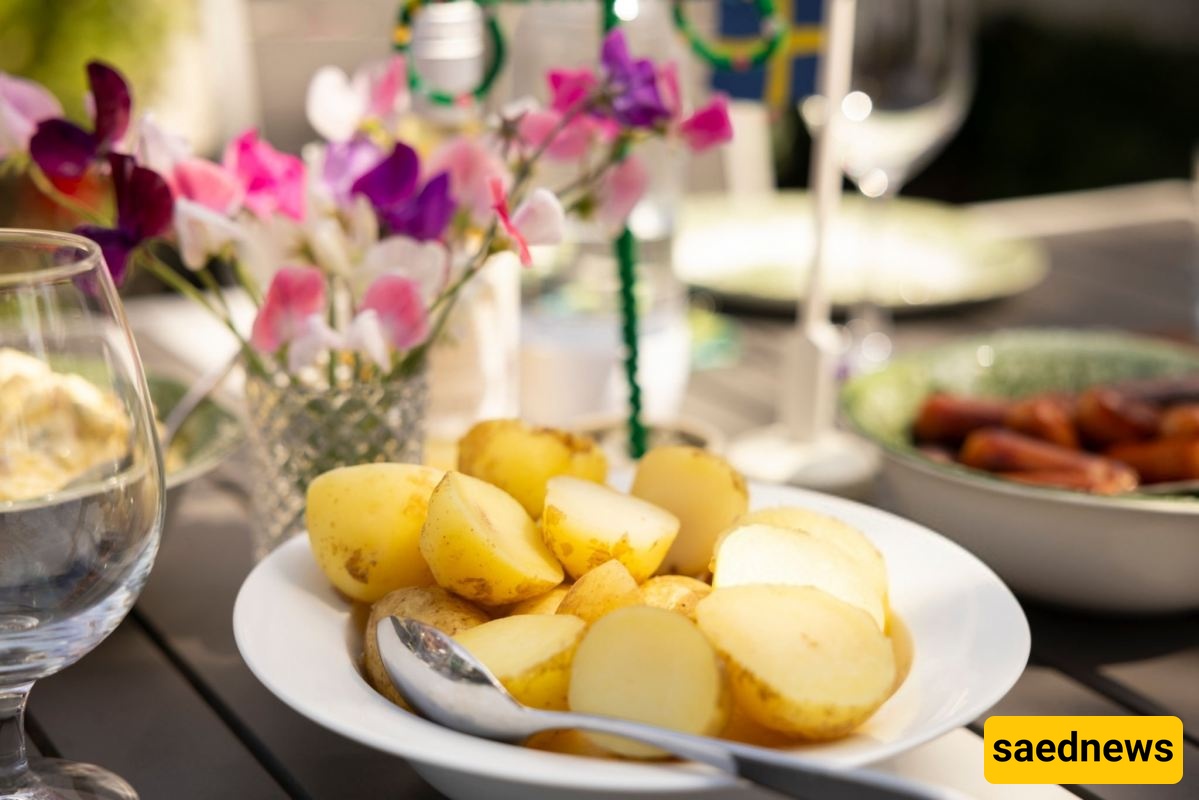
Once the potatoes are fully cooked, drain them immediately. Leaving cooked potatoes in hot water can make them watery and excessively soft.
If you plan to mash the potatoes, leave them in the warm, empty pot for about 1–2 minutes after draining. This allows excess steam and moisture to escape and helps produce lighter mashed potatoes with a better texture.
Many people rely only on cooking time, but this is not always reliable. The best way to determine whether potatoes are cooked is to test them with a fork, wooden skewer, or the tip of a thin knife.
Insert the utensil into the thickest part of the potato. If it slides in smoothly without much resistance and comes out easily, the potato is fully cooked.
If you feel resistance when inserting the knife into the center, the potato needs more cooking. Let it simmer for another 3–5 minutes and test it again.
For a final check, you can cut one potato in half. The center should have an even color and texture, without any hard, glassy, or raw-looking section.
This depends on how you plan to use them.
Boiling potatoes with their skins on helps them retain their structure and absorb less water. This method is especially useful for potato patties, Olivier salad, and dishes where you want the potatoes to contain less moisture.
Another advantage is that the skin is often easier to remove after the potatoes have been cooked.
If saving time is your priority, or if you are preparing mashed potatoes, peeling and cutting the potatoes before boiling is generally more convenient.
You can add a small amount of salt to the cooking water to improve the flavor of the potatoes. For a medium-sized pot, approximately ½ to 1 teaspoon of salt is usually enough.
If the potatoes will later be used in a dish containing salty ingredients such as pickles, cheese, or salty sauces, reduce the amount of salt in the cooking water to prevent the finished dish from becoming too salty.
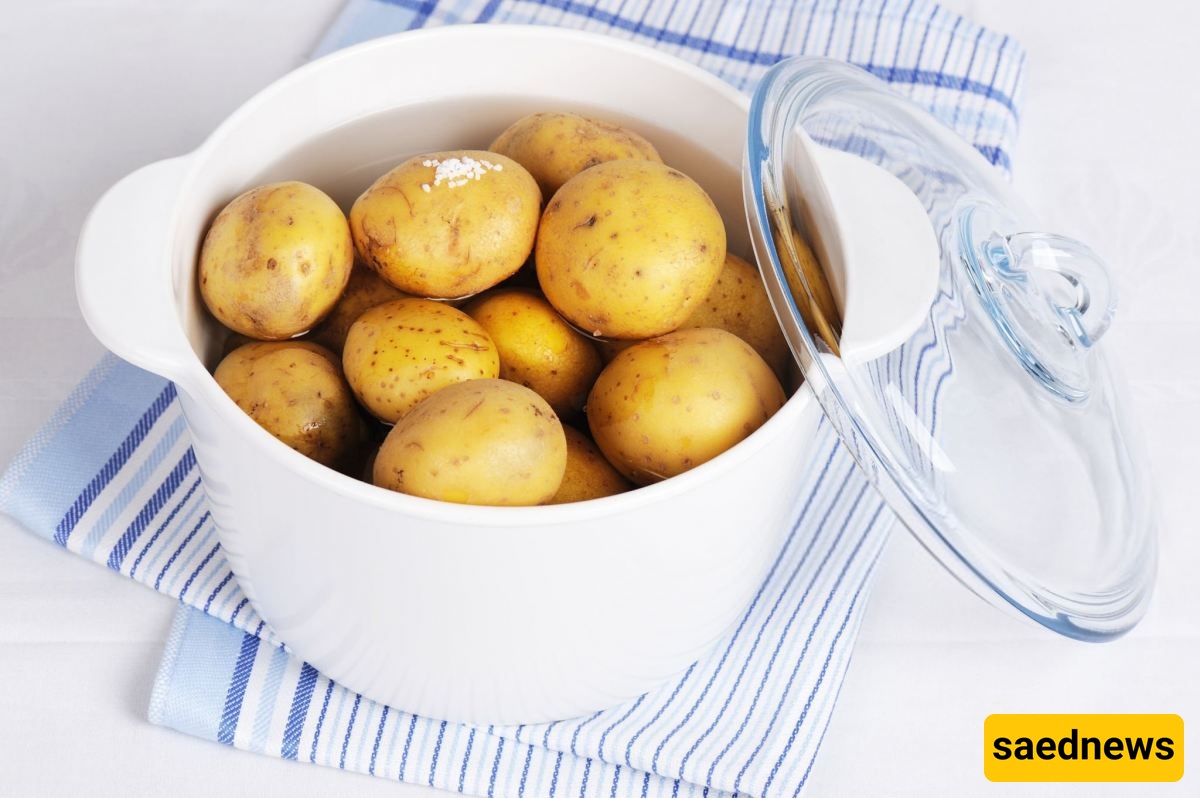
Here are the most important points to remember:
Choose potatoes or potato pieces that are similar in size.
Start measuring the cooking time after the water reaches a boil and the heat has been reduced.
Always start cooking potatoes in cold water for more even results.
Do not rely on cooking time alone; always test the potatoes with a fork or knife.
Test the thickest part of the potato to determine whether it is fully cooked.
Drain cooked potatoes promptly to prevent them from becoming watery or overly soft.
For mashed potatoes, cook them until they are softer and more tender.
For salads and dishes where the potatoes need to hold their shape, remove them from the water while they are still slightly firm.
The ideal boiling time depends mainly on the size and preparation of the potatoes. Small diced potatoes generally take 10–12 minutes, while medium whole potatoes may require 20–30 minutes. Large whole potatoes can take 30–40 minutes.
The most reliable test is not the clock but the texture: when a fork or thin knife slides easily into the thickest part of the potato, it is ready to use.