SAEDNEWS: This article introduces various methods for starting a fire while camping, from simple matches and lighters to friction-based techniques and modern tools such as magnesium fire starters.
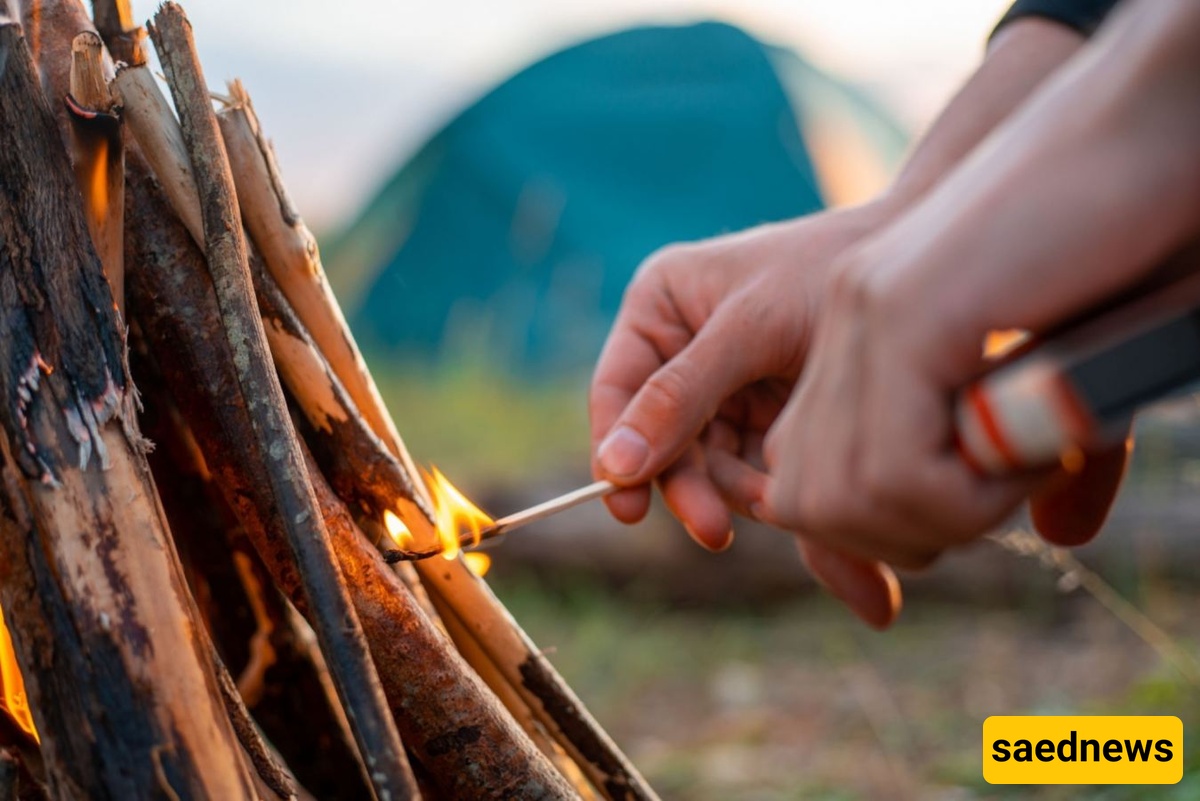
According to Saednews, Starting a fire at camp is one of the most fundamental and essential skills for any outdoor enthusiast or camper. A fire provides more than just warmth and light—it can also be used for cooking, drying clothes, keeping certain wildlife at a distance, and creating a sense of comfort and security in the wilderness.
However, starting a fire outdoors, especially in challenging weather conditions, can be difficult. Learning different campfire-starting techniques, from traditional methods to modern tools, allows you to enjoy the outdoors while staying prepared and safe.
In this comprehensive guide, we will explore different fire-starting methods step by step and cover the key principles that can help you succeed.
Before trying any fire-starting method, it is important to understand the basic principles of combustion. Every fire needs three essential elements to burn:
Oxygen
Heat
Fuel
This is known as the fire triangle. If any one of these elements is missing, the fire will eventually go out.
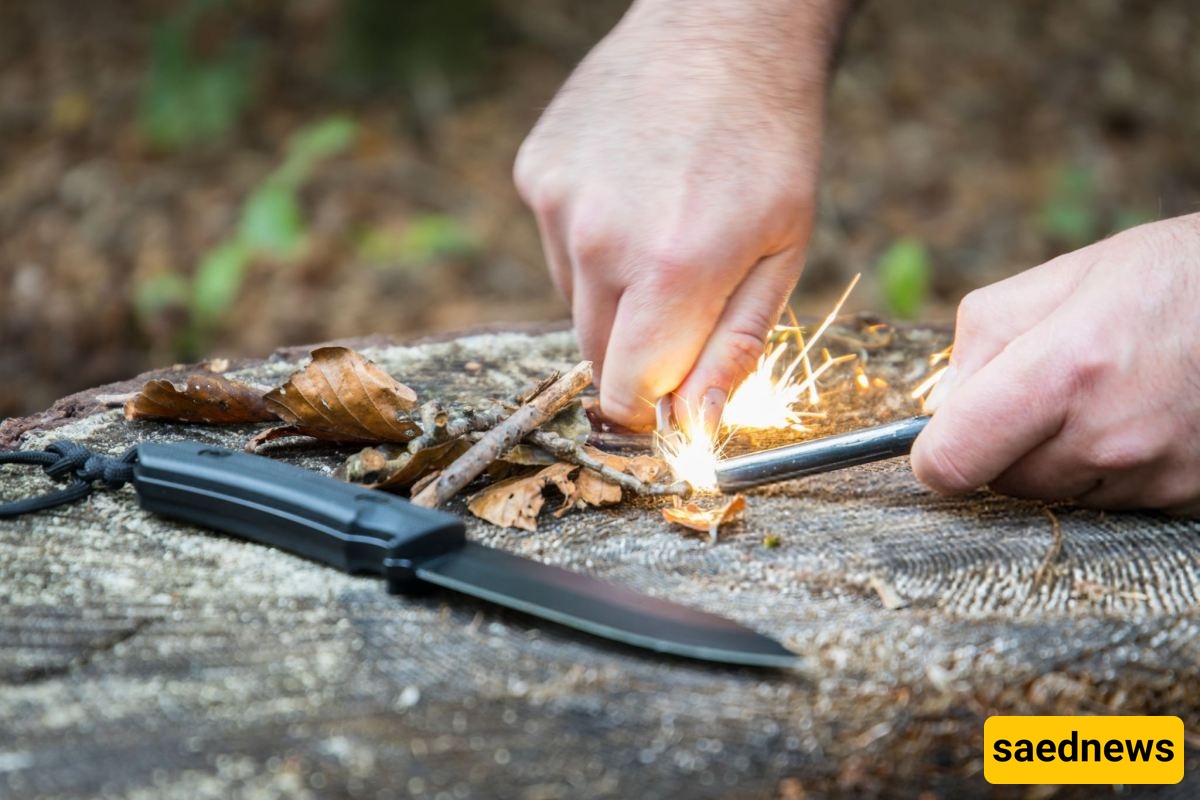
Before starting, prepare three types of materials:
Tinder consists of materials that catch fire quickly from a small flame or spark. Good tinder materials include birch bark, dry plant fibers, dry moss, fine wood shavings, clothing lint, cotton balls coated with petroleum jelly, and even thin wooden toothpicks.
Tinder should be completely dry and preferably fibrous so that it can catch and hold a flame easily.
Kindling consists of small pieces of wood that ignite relatively quickly and transfer heat to larger pieces of fuel. Dry conifer branches, such as pine, as well as thin sticks about the thickness of a finger, are excellent choices.
Break or cut the kindling into pieces approximately 10–15 cm (4–6 inches) long.
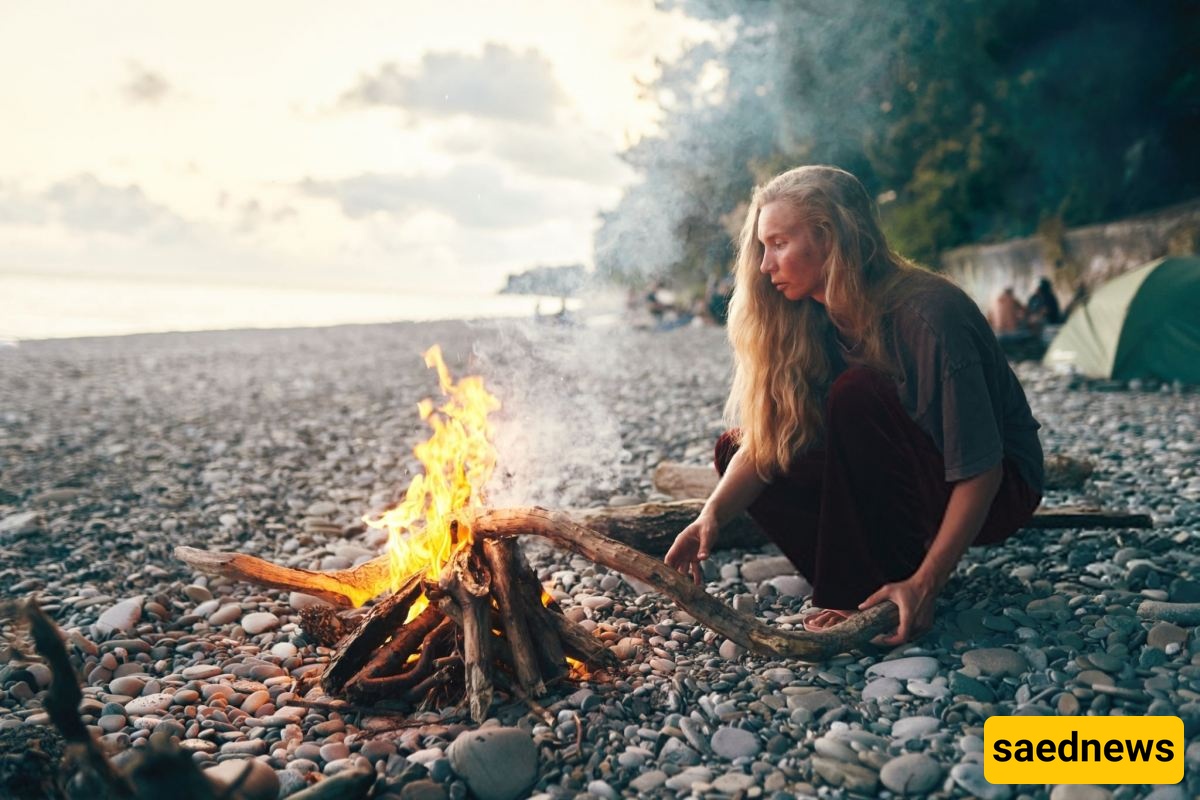
Firewood consists of larger, thicker pieces of wood that keep the fire burning for a longer period. Ideally, the wood should be dry and approximately wrist-thick or larger.
Avoid green or wet wood whenever possible, as it produces excessive smoke and burns poorly.
Always choose a safe location for your fire. Clear away dry leaves, grass, branches, and other flammable materials. If appropriate and permitted, surround the fire with a designated fire ring or a safe arrangement of stones.
Traditional techniques form the foundation of outdoor fire-making skills. They require very little equipment and can be particularly valuable in emergency situations.
Matches and lighters are among the easiest and most practical ways to start a campfire. However, ordinary matches can become useless when exposed to moisture, so waterproof or stormproof matches are a better choice for outdoor use.
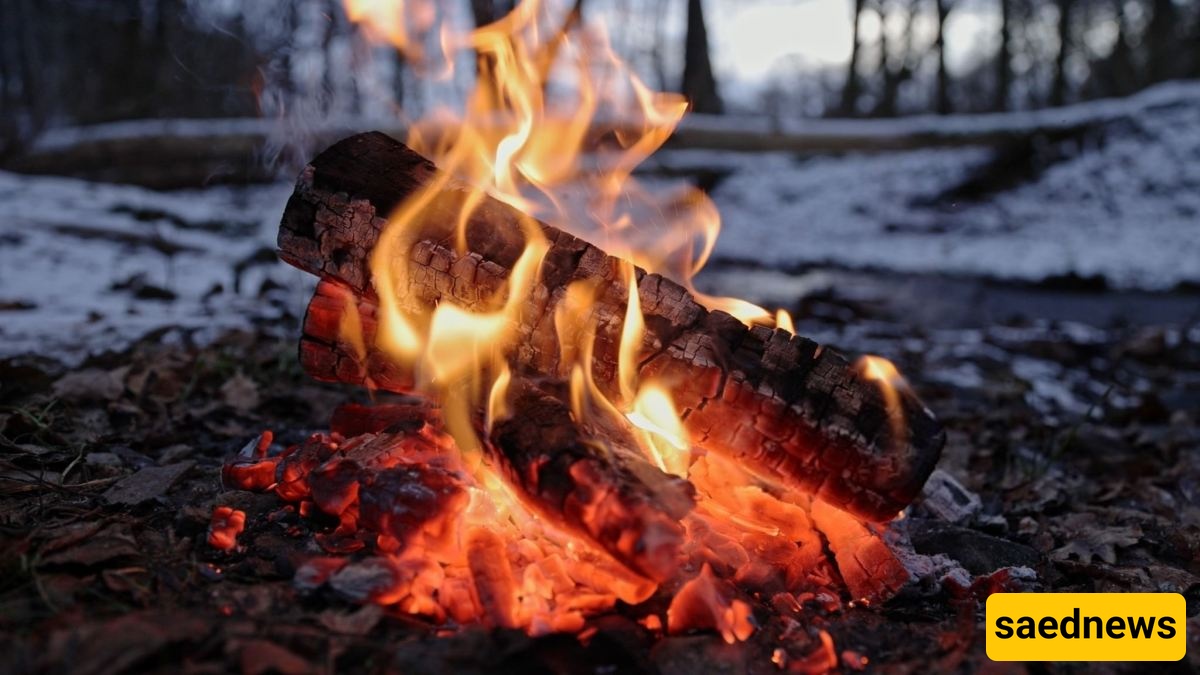
A simple approach is:
Gather a small amount of tinder and shape it loosely like a bird's nest.
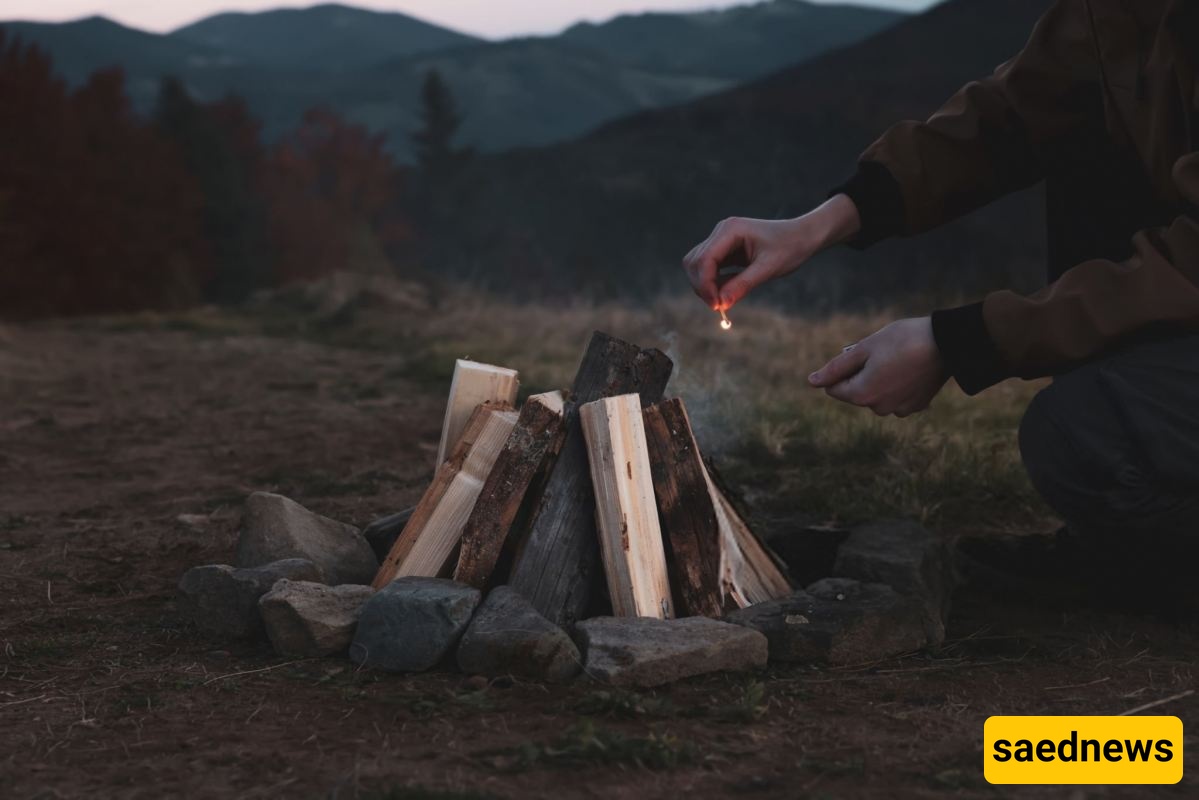
Light the match and immediately place the flame underneath the center of the tinder.
Gently blow on the tinder to help the flame grow.
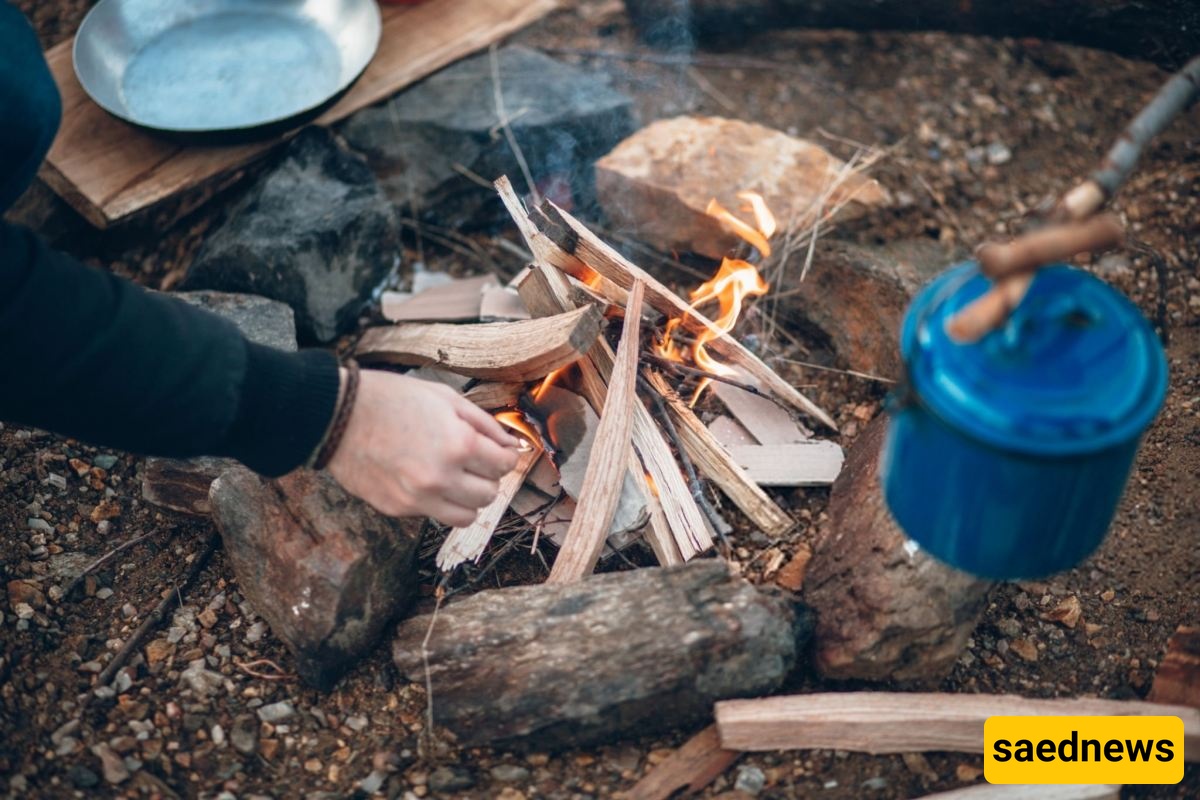
Once the tinder is burning steadily, gradually add small pieces of kindling in a loose crisscross or teepee arrangement.
If you are using a gas lighter, remember that cold temperatures can weaken its flame. Keeping the lighter warm in a pocket before use can help. Jet-flame lighters can also perform better in windy conditions.
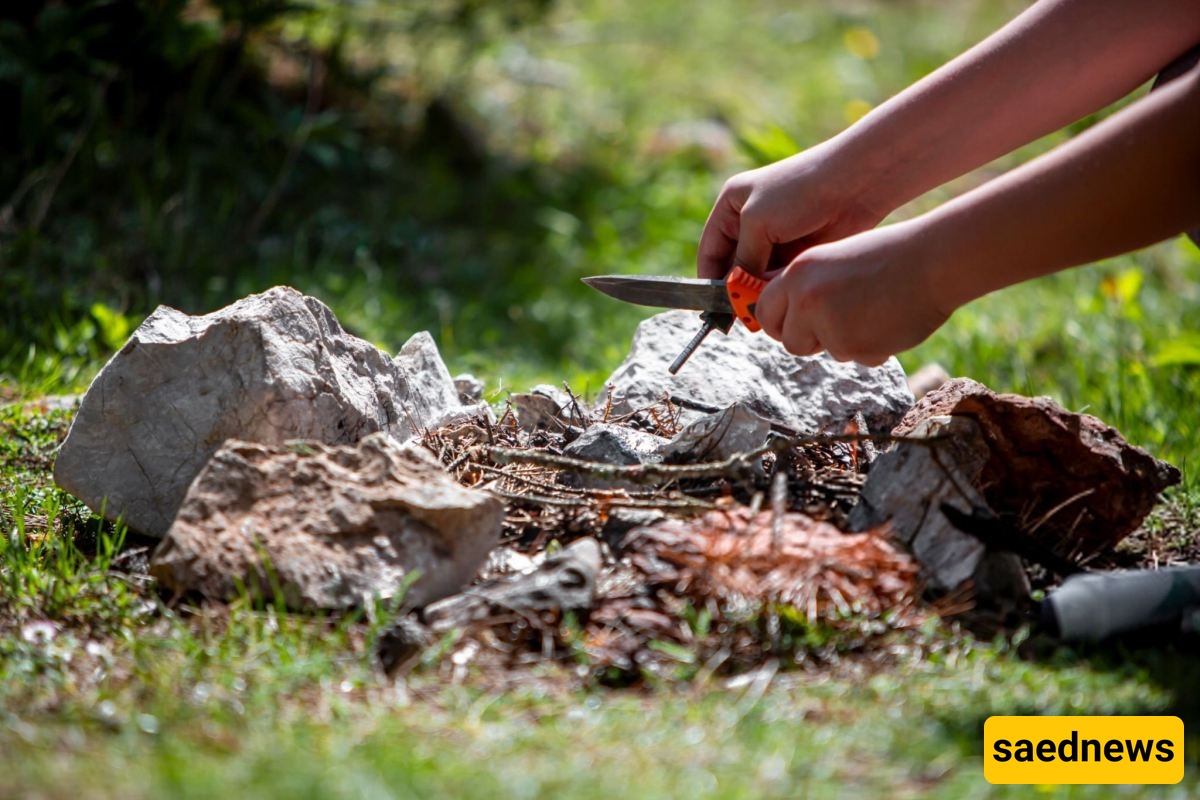
Using flint and steel is one of the oldest known fire-starting techniques. Modern ferrocerium fire starters provide a similar principle while producing extremely hot sparks.
To use a spark-based fire starter:
Prepare very dry tinder, such as char cloth or another fine, easily ignited material.
Position the fire starter so that sparks can land directly on the tinder.
Strike the ferro rod firmly with a striker or suitable metal edge.
Direct the sparks toward the tinder until it begins to glow or ignite.
Carefully transfer the glowing tinder into a larger tinder bundle and gently blow on it to encourage a flame.
Spark-based fire starters can work in windy conditions and remain useful even when other ignition methods fail, provided the tinder itself is kept dry.
Friction fire is one of the most challenging and traditional fire-starting techniques. It works by creating enough heat through friction between two pieces of wood to produce a glowing ember.
It requires practice, patience, suitable wood, and proper technique.
With the hand-drill method, a wooden spindle is rapidly rotated against a softer wooden baseboard. A notch is cut into the baseboard to allow hot wood dust to collect.
As the spindle is rotated repeatedly with increasing pressure, the dark wood dust eventually becomes hot enough to form a glowing ember.
The bow drill is a more advanced version of the friction method. A curved wooden bow and cord are used to rotate the spindle while downward pressure is applied from above.
One hand holds the spindle in place using a bearing block, while the other moves the bow back and forth. The goal is to maintain fast rotation while applying controlled pressure.
For friction-fire techniques, dry wood is essential. Traditionally suitable woods may include willow, linden, juniper, and poplar for the baseboard, with harder woods such as oak or walnut used for the spindle.
Traditional techniques are useful skills, but modern equipment can make starting a fire considerably faster and more reliable. These tools can be especially useful when time is limited or weather conditions are difficult.
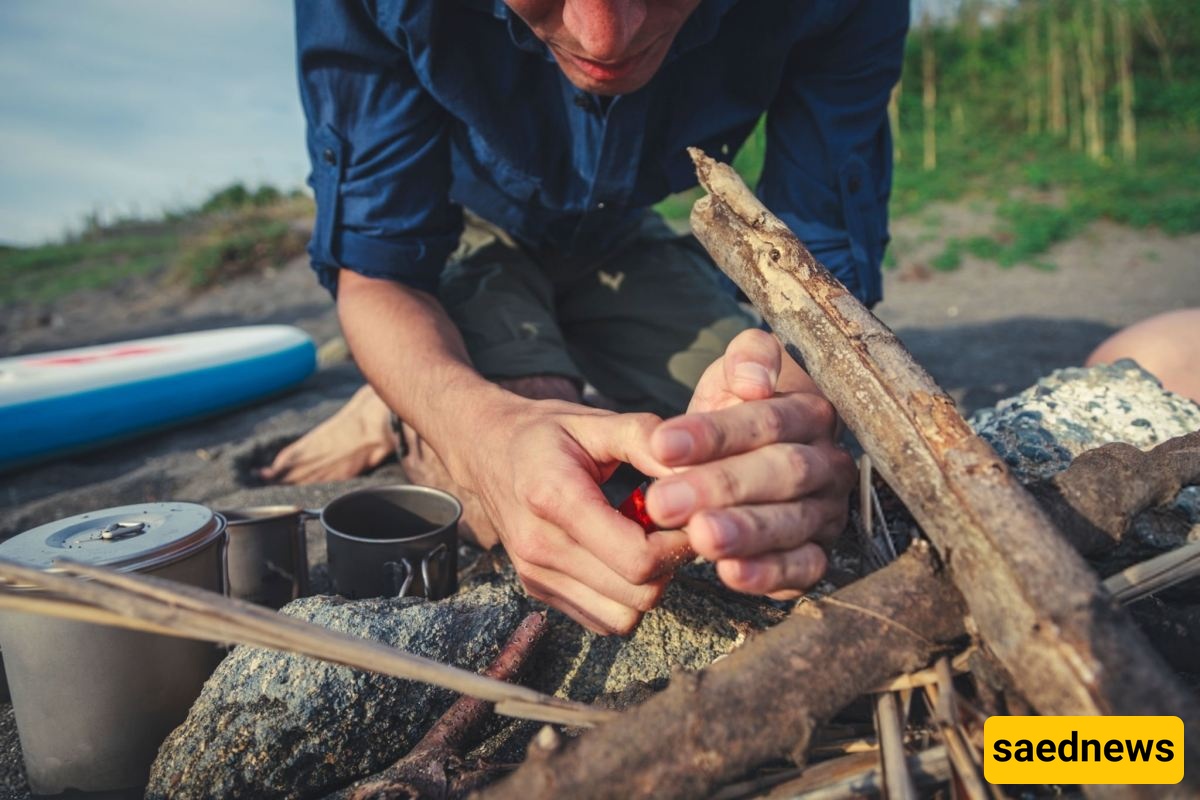
Modern ferrocerium rods produce extremely hot sparks when scraped with a striker. Unlike traditional flint-and-steel systems, ferro rods can continue producing sparks even when the rod itself is wet.
To use one:
Scrape the surface lightly to remove any oxidized material.
Prepare a small amount of very fine, dry tinder.
Position the striker against the rod.
Pull the striker firmly and quickly so that the sparks land directly on the tinder.
Once the tinder begins to glow or ignite, gently feed it with air and gradually add kindling.
Because ferro rods are lightweight, durable, and capable of producing thousands of sparks, they are popular pieces of emergency and outdoor gear.
Jet or turbo lighters produce a narrow, pressurized flame that is more resistant to wind than a conventional lighter flame. Many use butane and generate a relatively high-temperature flame.
Piezoelectric models are convenient because they do not rely on traditional flints for ignition.
To start a fire, bring the flame close to several points around the tinder until it catches. Their main disadvantages are limited fuel capacity and reduced performance in very cold conditions, so carrying a ferro rod as a backup is a good idea.
Commercial fire-starting pastes, wax-based products, and solid fire-lighting tablets are designed to help start fires in damp conditions.
A small amount can be placed beneath or around the tinder and ignited with a match or lighter.
These products can be useful when wood is damp, but they should always be handled according to their instructions, kept away from children, and used in a way that minimizes environmental impact.
A battery and fine steel wool can demonstrate how electrical resistance generates heat.
If using this technique, extreme care is necessary because steel wool can become extremely hot and ignite surrounding materials quickly.
Once a small section begins to glow, it can be carefully transferred to prepared tinder and gently fanned to encourage combustion.
Because this method involves heat and rapidly burning material, it should only be attempted with appropriate safety precautions.
Nature itself can provide many useful fire-starting materials. Knowing where to find them can make a major difference when carrying limited equipment.
Birch bark contains natural oils that allow it to burn readily. Thin, dry pieces can make excellent tinder.
Avoid stripping living trees unnecessarily. Whenever possible, use loose bark that is already available on the ground or use designated fire-starting materials.
Dry fibers from certain plants can be processed into fine tinder. Materials such as dry yucca fibers and other fibrous vegetation can work well when properly prepared.
Dry pine needles and fallen leaves can burn quickly and may help establish an initial flame. However, they should generally be treated as short-burning tinder rather than long-lasting fuel.
On a sunny day, a magnifying glass can focus sunlight onto a small area of very dry tinder. With enough concentrated heat, the tinder may begin to smoke and eventually ignite.
This technique requires strong, direct sunlight and very dry, dark-colored tinder. Success can be difficult under cloudy conditions.
Starting a fire outdoors comes with significant responsibility. Following basic safety practices can help prevent serious accidents and wildfires.
Many parks, forests, and protected areas restrict or completely prohibit open fires during dry seasons or periods of high fire danger.
Always check local regulations and fire restrictions before lighting a fire.
Whenever possible, use an established fire ring or designated fire pit.
Keep the fire well away from tents, vegetation, dry materials, and other flammable objects. Follow the specific clearance requirements of the area where you are camping.
Always have enough water available to extinguish the fire completely. A shovel can also help spread and mix ashes and embers.
When you are finished, thoroughly soak the fire with water, stir the ashes and coals, and soak them again until everything is completely cold.
Strong winds can carry sparks and embers surprisingly far. In dry conditions, this can quickly turn a small campfire into a wildfire.
If conditions are windy or a fire ban is in effect, do not light an open fire. Consider using an approved camping stove instead.
Never leave a fire unattended or assume that it has gone out simply because there are no visible flames.
Pour water over the fire, stir the ashes and coals, and continue adding water until there is no remaining heat.
A simple rule to remember is: If the ashes and coals are too hot to touch safely, the fire is not ready to be left behind.
In sensitive or protected areas, a camping stove is often a better choice than a wood fire.
If fires are permitted, use appropriate fallen and dry wood rather than cutting living trees. Never break green branches unnecessarily.
After the fire is completely extinguished, leave the area as close as possible to its original condition.
Rain, snow, and damp ground can make fire-starting considerably more challenging. Preparation becomes especially important in these conditions.
The key to starting a fire in wet weather is keeping your tinder dry.
Store tinder in a waterproof bag or sealed container before heading out. Waterproof fire-starting kits and sealed containers are particularly useful.
Cotton balls coated with petroleum jelly can also serve as effective emergency tinder when properly stored and handled.
Wet wood can make fire-starting difficult. Look for naturally protected wood beneath dense vegetation or other sheltered areas.
Splitting larger pieces of wood can expose a drier interior. Dead standing wood can sometimes be considerably drier than wood lying directly on wet ground.
Always make sure collecting wood is permitted in the area.
If the ground is wet, create a small raised platform from relatively dry, thick pieces of wood.
Place the tinder and kindling on top of the platform. This helps separate the fire from the wet ground and allows more air to circulate underneath.
Instead of simply piling wood around the flame, arrange several pieces in a loose log-cabin pattern.
Place two pieces parallel to each other, then place two smaller pieces perpendicular across them, repeating the pattern upward.
Leave an open space in the center for the tinder. This structure can provide some protection from wind while allowing the fire to gradually ignite the surrounding wood.
Many beginners struggle to start a fire even when they have good equipment. These are some of the most common problems:
Common Mistake | Solution |
|---|---|
Packing tinder too tightly | Leave enough space for air to circulate. Tinder should be loose and fluffy. |
Adding kindling too early | Let the tinder establish a steady flame before adding small sticks. |
Blowing too hard | Blow gently and steadily. Excessive airflow can scatter the flame or tinder. |
Adding large logs too soon | Give the fire enough time to build heat before adding thick wood. |
Constantly rearranging the fire | Allow the developing fire to stabilize instead of repeatedly disturbing it. |
Charcoal can be used as a fuel once a fire is already established. However, dry tinder and kindling are generally still needed to create the initial flame and heat.
Wood may be more damp in the early morning and evening. During the warmer part of the day, look for dry wood and protect your collected fuel from rain and ground moisture.
No. Some plants and trees can produce hazardous smoke when burned.
Avoid burning unfamiliar or potentially toxic species. Use wood that you can confidently identify as safe for burning, particularly when cooking over the fire.
If water is genuinely unavailable, soil or sand can help smother a fire. Carefully cover and mix the remaining embers until they are completely cold.
However, water is the preferred method whenever it is available and permitted.
Starting a campfire is a skill that combines knowledge, patience, preparation, and practice. From a simple match to a bow drill or ferrocerium fire starter, different techniques can be useful in different circumstances.
But no fire-starting method replaces a solid understanding of fire safety.
Before lighting a fire, ask yourself one important question:
Do I really need a fire?
Sometimes a headlamp, warm clothing, and a small camping stove can meet your needs while reducing the risk of wildfire and minimizing your impact on the environment.
Treat fire as a powerful tool rather than something to use casually. Follow local regulations, respect the environment, and always make sure your fire is completely extinguished before leaving.
With preparation and practice, you can become more confident in your outdoor skills while enjoying nature responsibly.
Stay safe, respect the wilderness, and leave every campsite better protected for the next visitor.