SAEDNEWS: Armor weaving is an ancient art, with roots stretching deep into history. Join Saed News to explore and get acquainted with this remarkable craft.
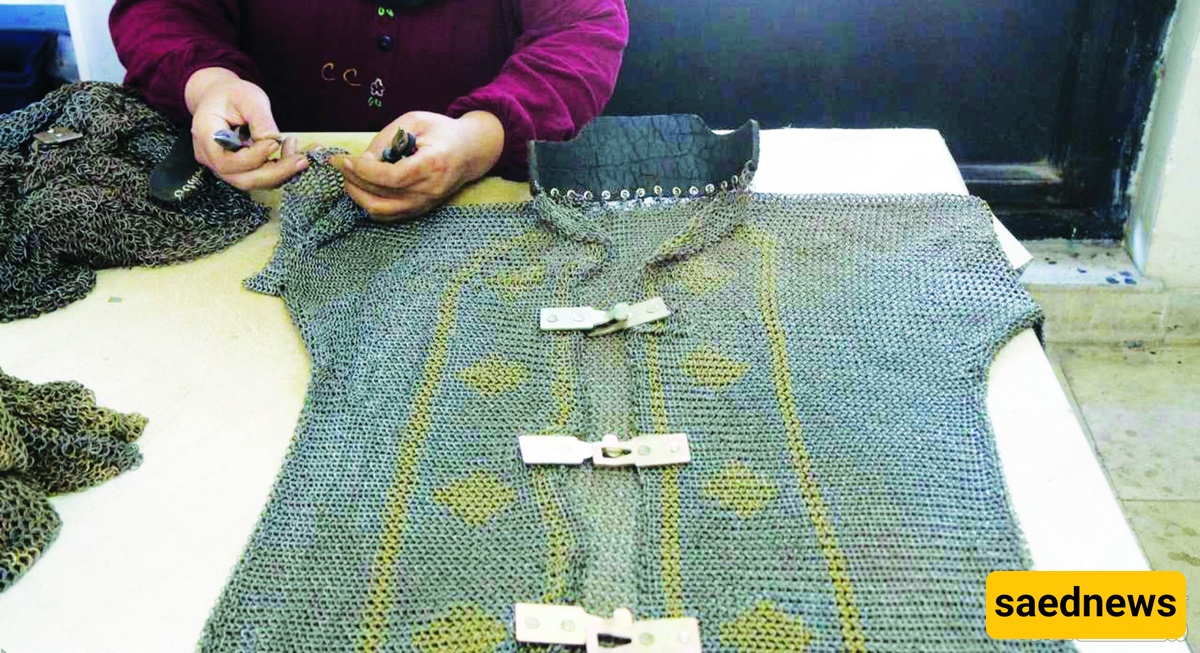
Since ancient times, handicrafts have held a special place as both an enjoyable art form and a source of income. Over time, with the thought, creativity, and skill of artisans, this craft has undergone significant developments, reaching its esteemed status today. Among these arts, armor weaving (chainmail making) held particular prominence even among many prophets and the infallible Imams (peace be upon them). In fact, it is believed that the first practitioners of this art were the prophets themselves. The Qur’an also makes multiple references to this craft, such as mentioning the art of armor-making practiced by Prophet David (peace be upon him) in several chapters.
Armor weaving involves interlacing metal wires according to the pattern of garments and helmets. It is considered one of humanity’s most ancient crafts. Unfortunately, its exact origin cannot be precisely determined. However, oral traditions and certain poems indicate that Prophet David (peace be upon him) practiced metalwork to produce battle attire.
Required Tools and Materials:
Metal rods (sizes 1–7): Used to twist metal wires (iron, copper, brass) into rings suitable for weaving.
Special wires for armor weaving: Typically iron, copper, brass, steel, or galvanized metal, usually 1 mm in diameter (also available in sizes 0.8, 1, 2, 5 mm).
Drill: Used to fix rods with special wrenches, allowing the wires to be twisted into coils.
Cutter: Used to cut coiled wires.
Pliers: Essential for weaving prepared rings according to individual sizing.
Wire cutters: For trimming excess metal rings and wires.
Rivets: Small pins used to join pieces or secure the weave.
Rivet machine: Attaches rivets to the armor.
Special wrenches: For replacing rods on the drill and installing cutter blades.
Diamond blade: Used in pressing and cutting wires.
Production Process:
Selecting Materials: First, choose the wire type and thickness according to the desired product. Materials include copper, brass, iron, or 1 mm wire (also 0.8, 1, 2 mm, etc.).
Coiling the Wire: Using a drill and specialized rods, wires are twisted into springs. The drill is stabilized on the workbench, and the rod diameter is chosen based on the ring’s inner size. Once the drill runs, the wire coils around the rod to form springs.
Cutting Rings: Springs are cut using a fixed cutter on the workbench, producing individual rings—the building blocks of the weave.
Preparing Rings: Two pliers are used to straighten and prepare the rings for weaving.
Creating Units: Each basic weaving unit contains five rings—four rings inside one central ring.
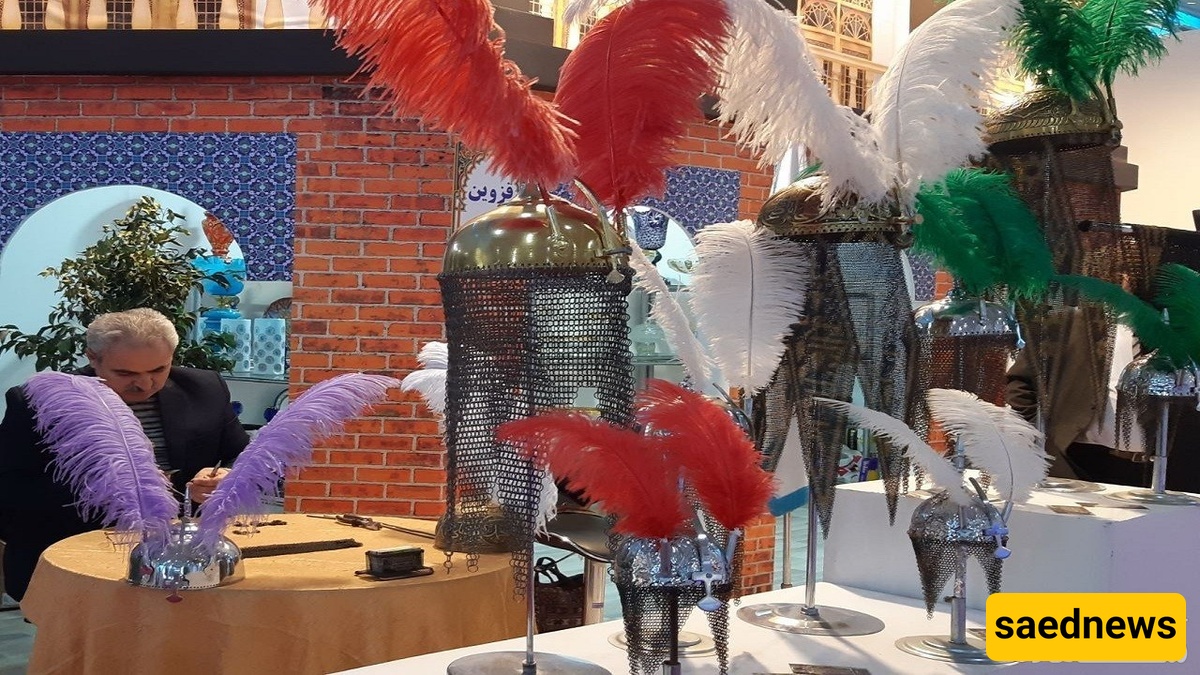
Expanding the Weave: By connecting units, a solid weave is formed, which can be shaped into armor or helmets using proper patterns. For example, 26 units may be used to create armor for adolescents.
Adding Decorative Patterns: Colored metals can be incorporated to create designs—for instance, brass or copper wires can highlight patterns on iron bases.
Joining Pieces: Rivets are used to attach woven parts together. Pre-made rivets are available in the market.
For participants in traditional passion plays (Ta’zieh) to truly embody their roles, selecting the right clothing, tools, and armor weight is crucial. The devotion to Imam Hussain (peace be upon him) inspires Iranians to dedicate all their resources, ensuring that commemorative rituals are carried out with utmost grandeur and reverence.