SAEDNEWS: The way an onion is cut can affect how strongly its aroma is released. Cutting creates more damaged cells, allowing volatile compounds to escape more quickly. The size, direction, and method of cutting can therefore influence the onion’s noticeable smell.
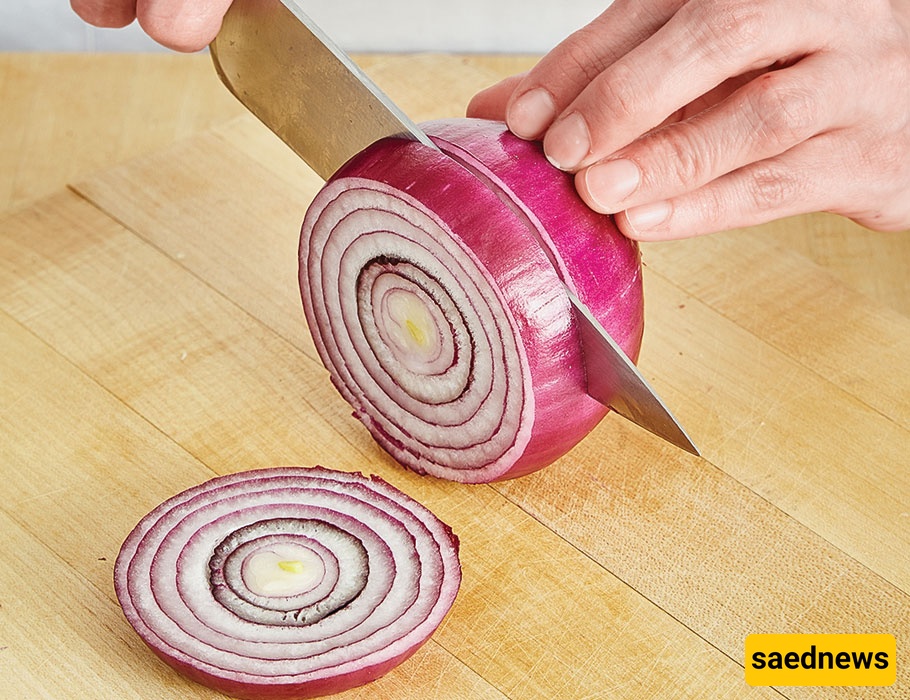
According to SAEDNEWS, onions contain natural compounds that remain separated inside their cells until the onion is cut or crushed. Cutting damages these cells and allows enzymes to interact with other compounds, producing volatile substances that spread into the surrounding air. The more cell structures are disrupted, the more quickly these compounds may be released.
Finely chopping an onion usually breaks more cells than making a few large slices. As a result, smaller pieces can release more volatile compounds over a larger surface area. This can make the onion smell stronger immediately after cutting, especially when it is chopped very finely.
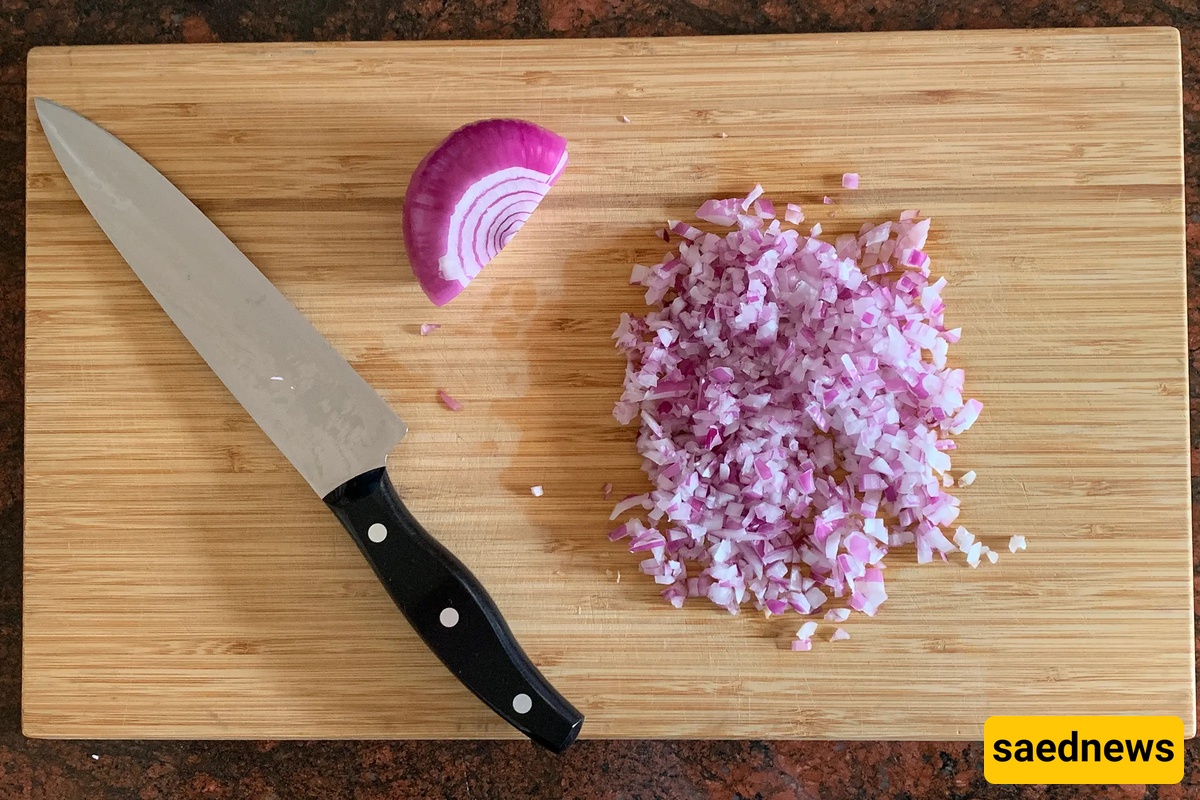
The direction and technique used for cutting can influence how much the onion’s internal structure is damaged. Smooth, controlled cuts may disturb fewer cells than repeated chopping or crushing. Large slices generally expose less damaged tissue at once, so their aroma may seem milder compared with finely minced onion.
If a milder onion aroma is preferred, cutting the onion into larger pieces and using a sharp knife can help limit unnecessary cell damage. Preparing the onion shortly before cooking may also reduce the time volatile compounds have to spread through the air. Cooking then changes many of these compounds, producing a softer and different aroma.