SAEDNEWS: Fried onions are one of the most popular toppings and flavor enhancers in Iranian cuisine. In this article, you’ll learn a simple yet professional method for making perfectly golden, crispy fried onions at home. We’ll also explore their potential benefits for heart and cardiovascular health.

According to Saednews, Crispy fried onions are one of the most traditional and beloved toppings in Iranian cuisine. Their rich aroma and delicious flavor can completely transform a dish and bring a comforting, homemade touch to the table. Among the many varieties of fried onions, crispy onion strings hold a special place. Thinly sliced onions are fried in plenty of oil until they become golden, glossy, delicate, and wonderfully crunchy.
Crispy fried onions are an excellent flavor enhancer and can also be used as an elegant topping for a wide range of dishes, including stews, soups, salads, rice dishes, and even sandwiches. In this guide, we will explain how to make perfectly crispy fried onions step by step, along with practical tips for achieving a beautiful golden color and crunchy texture at home.
You only need two main ingredients, but choosing them carefully makes a difference:
Onions: As needed, preferably yellow or white onions
Oil: Enough for deep-frying, such as vegetable frying oil
For evenly cooked and attractive fried onions, try to choose onions that are similar in size. Yellow onions have a balanced flavor and develop a beautiful golden color when fried. White onions can also be used and tend to have a slightly sweeter flavor.
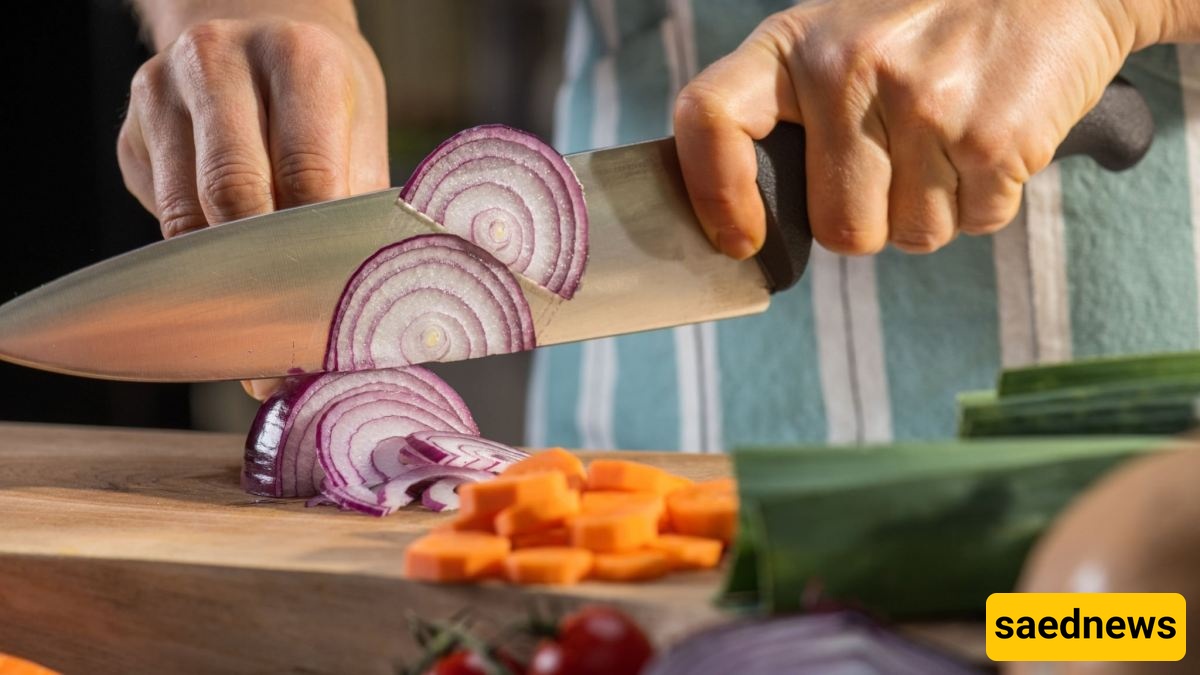
The first and most important step is slicing the onions correctly. Peel the onions and wash them thoroughly. If you want to reduce eye irritation while cutting, place the onions in the refrigerator for a few minutes beforehand.
Slice the onions into thin, even strips. Ideally, the slices should be around 3 to 5 millimeters thick. If they are too thick, the inside may not cook properly. If they are too thin, they can burn quickly in the oil.
You can make the strips slightly thinner or thicker according to your preference, but keeping the slices as uniform as possible is essential for even cooking.
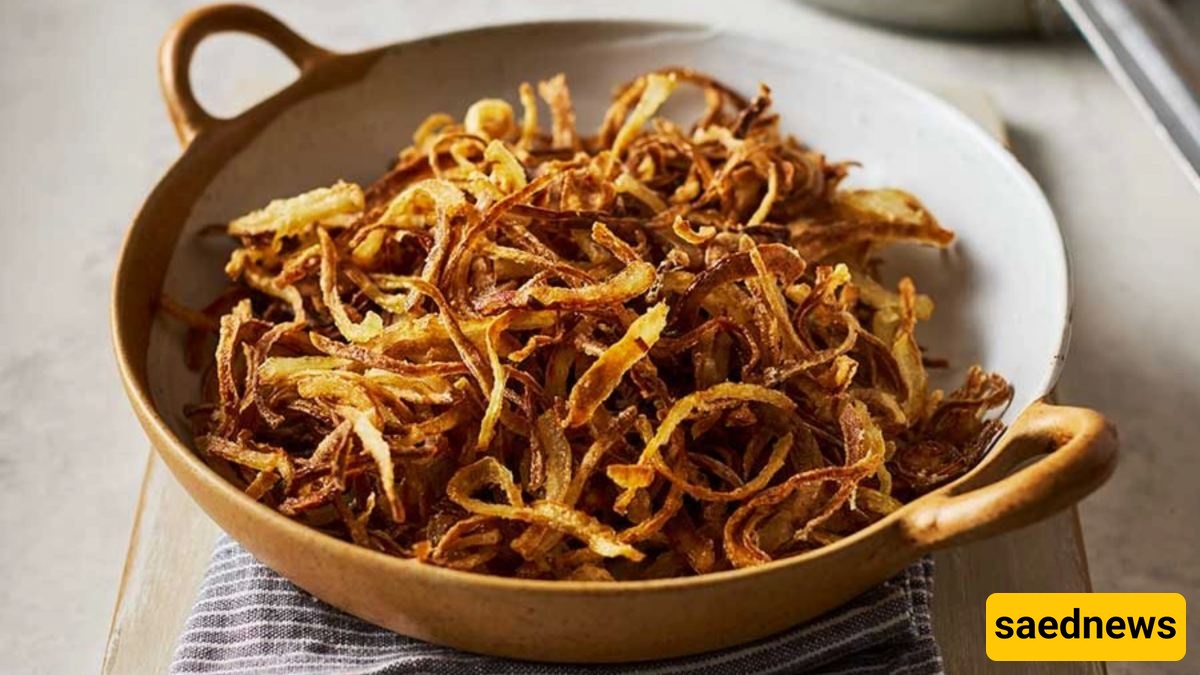
Choose a suitable deep skillet or saucepan and place it over medium heat. Add enough oil to allow the onions to move freely and remain mostly submerged without sticking to the bottom.
Heat the oil thoroughly, but do not let it begin to smoke. The ideal temperature for frying crispy onions is approximately 170–180°C (340–355°F).
Carefully add the sliced onions to the hot oil. Be cautious, as moisture from the onions can cause the oil to splatter.
Fry the onions for about 5 minutes, until they soften and begin to take on a little color. Then reduce the heat and continue frying gently for another 3–4 minutes, until the onions become golden and crisp.
Reducing the heat at this stage is important. It allows the moisture inside the onions to evaporate gradually, helping them become crisp without burning.
Stir the onions frequently while frying so they brown evenly on all sides. As soon as they reach the desired golden color, remove them from the oil immediately using a slotted spoon.
Transfer the onions to a plate lined with paper towels to absorb excess oil.
That's all it takes to make delicious homemade crispy fried onions.
Although the basic method is simple, a few techniques can make a significant difference. These tips can help you achieve onions that are crisp, golden, light, and longer-lasting.
Yellow onions are generally an excellent choice for crispy fried onions. Red onions can also work beautifully and add an attractive color to dishes.

Red onions can be especially appealing as a garnish for salads and pasta. However, very watery onions may be less suitable for deep-frying because their higher moisture content can prevent them from becoming properly crisp.
Several factors affect the final texture.
The first is temperature and cooking time. After the initial frying, lowering the heat and allowing the onions to cook slowly helps remove moisture without burning them.
Another useful technique is coating the onions lightly with flour or cornstarch. This absorbs some of the surface moisture and creates a thin, crisp coating during frying.
For this method, soak the sliced onions in cold water for approximately 15–30 minutes. Drain them thoroughly and dry them completely with a clean kitchen towel or paper towels.
Once the onions are completely dry, sprinkle a small amount of flour or cornstarch over them and gently toss until they are lightly coated.
Fry the onions in hot oil until golden and crisp. This method produces delicate, crunchy onion pieces that can also retain their texture for longer.
You can add different spices to your crispy fried onions depending on how you plan to use them.
Good options include:
Turmeric
Red pepper
Paprika
Ground cumin
Barbecue seasoning
If you are using flour or cornstarch, mix the spices with the coating before adding it to the onions. This helps distribute the seasoning more evenly.
Salt and black pepper can also be added toward the end of cooking to enhance the flavor.
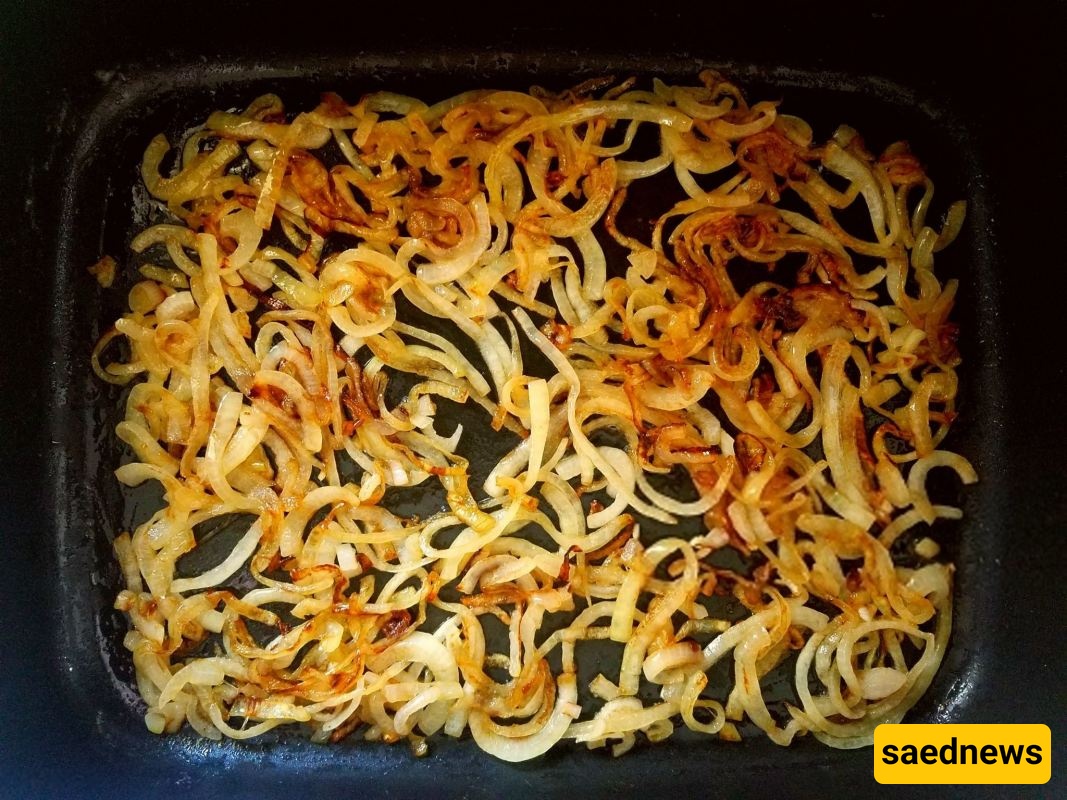
If you prefer a lower-fat option, you can prepare crispy onions in the oven. While this method may not produce exactly the same texture as deep-frying, it can still result in a flavorful and lighter topping.
Toss the sliced onions with a small amount of olive oil and your preferred seasonings. Spread them in a single layer on a baking sheet lined with parchment paper.
Preheat the oven to 180°C (350°F) and bake the onions for approximately 20–30 minutes, or until they become golden and crisp.
Turn or stir the onions halfway through cooking so they brown evenly on both sides.
Keep a close eye on them toward the end, as thin onion slices can go from golden to burnt quite quickly.
For a more colorful topping, try using red onions. Once fried, red onions can develop attractive pinkish-purple tones that work especially well as a garnish for salads, pasta, and other light-colored dishes.
The cooking method is essentially the same as for yellow onions. However, because red onions can lose some of their color during cooking, use a slightly lower heat and avoid over-frying them.
For deep-frying onions, choose an oil with a relatively high smoke point, such as:
Vegetable frying oil
Sunflower oil
Canola oil
Extra-virgin olive oil is generally not the best choice for this type of deep-frying because its smoke point is lower and it can burn more easily.
Avoid overheating the oil. If it begins to smoke, lower the heat or remove the pan from the heat briefly.
A simple way to check whether the oil is ready is to drop in a small piece of onion. If tiny bubbles immediately form around it, the oil is generally hot enough for frying.
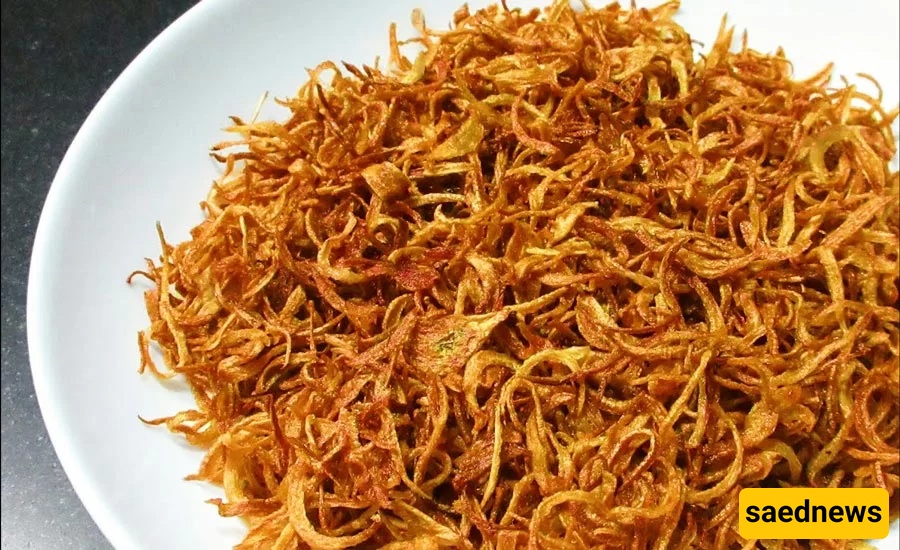
For the best texture, allow the fried onions to cool completely before storing them. Keep them in a clean, dry, airtight container and protect them from moisture.
Moisture is the biggest enemy of crispiness, so make sure the onions are thoroughly drained and cooled before placing them in storage.
The key to making excellent crispy fried onions is uniform slicing, the right oil temperature, and careful control of the heat. Avoid overcrowding the pan, stir the onions regularly, and remove them as soon as they reach a deep golden color.
Remember that the onions will continue to darken slightly from residual heat after they are removed from the oil. Taking them out a little before they become too dark can help prevent a bitter, burnt flavor.
With these simple techniques, you can prepare golden, crunchy fried onions at home and use them to add texture, aroma, and flavor to everything from traditional Iranian dishes to modern salads, soups, and sandwiches.