SAEDNEWS: Armenia: A Land of Heavenly Natural Beauty and Breathtaking Attractions – Exploring Yerevan and Armenia’s Must-See Destinations
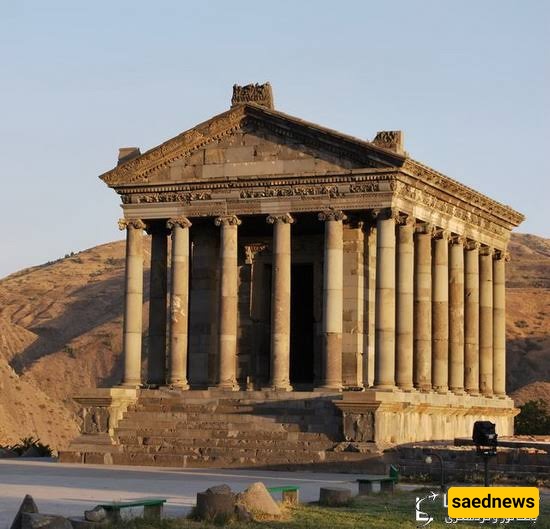
According to Saednews, We pack our bags and set off for a country that was once part of Iran, a country known for its skilled and industrious people. When Armenia gained its independence, the Iranian poet and composer Aref Qazvini celebrated the event in one of his songs with the following line: “We remained, and Armenia became independent.” And so, we begin our journey to Armenia, one of the countries of the South Caucasus, with Yerevan as its capital.
Armenia can be described as a lost paradise. The country's native name in Armenian is Hayk, which evolved during the Middle Ages into Haykistan through the addition of the Persian suffix -stan, meaning “land of.”
According to tradition, the name derives from Hayk, the legendary founder of the Armenian people and a descendant of Noah. According to the writings of Movses Khorenatsi, an Armenian historian, Hayk defeated Bel, the King of Babylon, in 2492 BC and established the Armenian people in the Ararat region.
Armenian is the official language of Armenia.
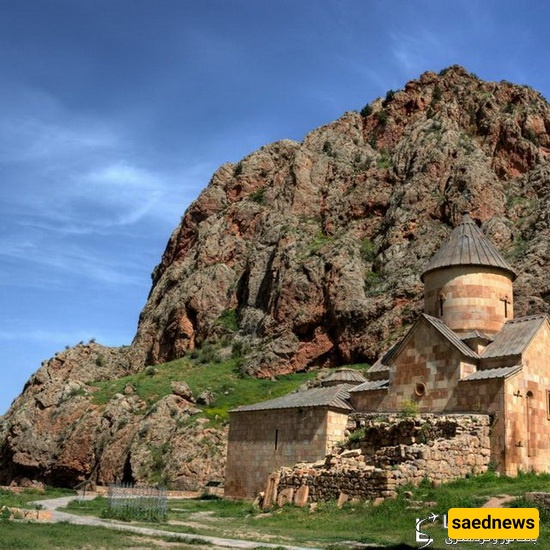
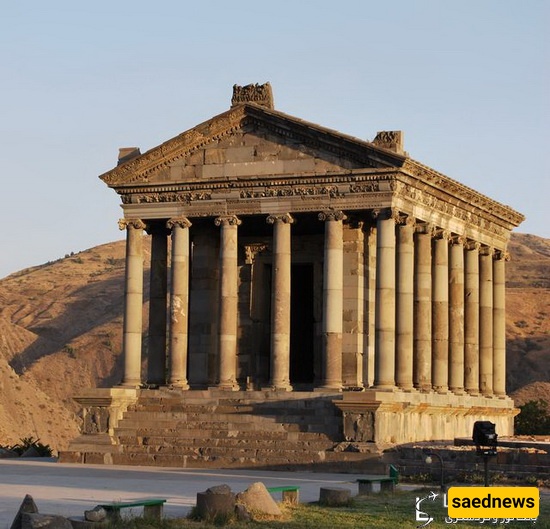
One of Armenia's most important tourist attractions is Garni Temple, located near the Garni River. The temple's origins date back to the time of Hayk Nahapet, and it was named after Garnik, Hayk's great-grandson.
The Garni River is located in Kotayk Province, approximately 28 kilometres southeast of Yerevan. Thanks to its unique natural climate and geographical conditions, this area served as a summer retreat and private hunting ground for Armenian kings throughout different historical periods.
The word Geghard means “spear.” The monastery may have received this name because the upper part of its structure resembles a spearhead. It is situated in the historic Geghard Valley.
The monastery was constructed in two different periods and consists of two main sections.
In the early 13th century, the area belonged to the Zakarian family, one of the wealthiest families in Armenian history. Under their patronage, the monastery's outer church was built in 1215.
Later, the Proshyan family purchased the property from the Zakarians and commissioned a nun and an architect to construct the inner church.
The inner church, consisting of three main sections, was completed in the late 13th century. One of these sections serves as the mausoleum of the Proshyan dynasty. Carved directly into the rock, the construction of the inner church took approximately ten years, from 1340 to 1350.
Located approximately 25 kilometres from Yerevan, Etchmiadzin is the seat of the Supreme Patriarch and Catholicos of All Armenians. The city's history dates back to the 3rd and 4th centuries AD, and it is considered the fourth-largest city in Armenia.
One of Etchmiadzin's most remarkable attractions is its cathedral, which bears a resemblance to Vank Cathedral in Isfahan, Iran.
According to historical accounts, during the reign of Shah Abbas, many Armenian scholars and ministers living in Iran decided to return to Armenia. It is said that Shah Abbas, after seeing his own image depicted on the walls of Etchmiadzin Cathedral, decided to commission the construction of a similar church in Isfahan. This church later became known as Vank Cathedral.
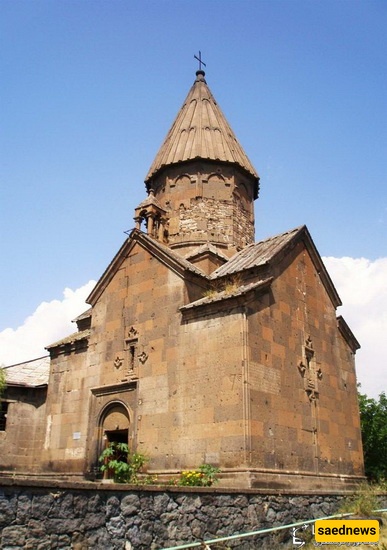
In the northeastern part of Vayots Dzor Province lies a city renowned for its breathtaking natural beauty, fresh air, and sparkling mineral water springs. Its name is Jermuk.
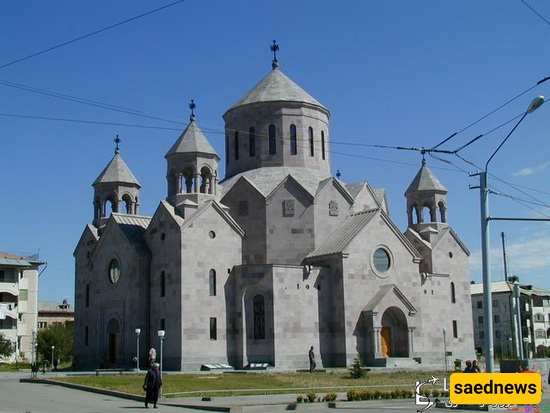
One of the city's most distinctive features is the presence of natural drinking-water springs throughout the area, with water temperatures ranging from 30°C to 70°C.
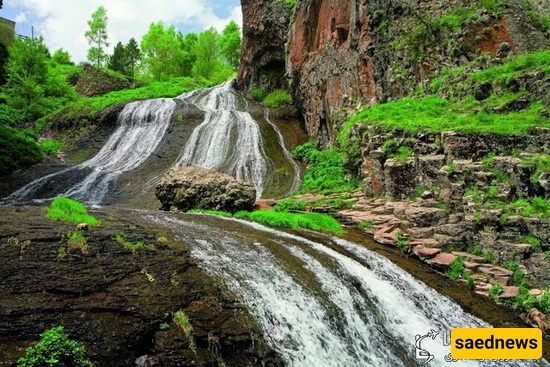
Jermuk's beautiful landscapes, mineral-rich waters, and pleasant natural surroundings make it an appealing destination for visitors seeking relaxation and a connection with nature.