SAEDNEWS: The Ancient Origins of the Islamic Lunar Months: A Reflection of Arabian Life, Beliefs, and Society

According to Saednews, The Islamic lunar calendar is the foundation of religious timekeeping for Muslims around the world. The fasting month of Ramadan, the Hajj pilgrimage in Dhul Hijjah, the mourning ceremonies of Muharram, and Eid al-Fitr in Shawwal are all determined by this calendar. Yet few people stop to consider where the twelve familiar names of the lunar months originated or what stories lie behind them. Names such as Safar, Rabi, Jumada, Rajab, and Sha'ban are more than calendar labels; they reflect the lifestyle, beliefs, and social environment of the ancient Arab tribes of the Arabian Peninsula.
This article explores the origins of the Islamic lunar months, from their linguistic roots to their social and historical significance, revealing how an ancient calendar has preserved its identity and meaning throughout the centuries.
The lunar calendar is based on the Moon's orbit around the Earth. Traditionally, each month begins with the sighting of the new crescent moon and continues until the next crescent appears. For this reason, a lunar month lasts either 29 or 30 days.
The twelve months together form a year of approximately 354 days, making the lunar year around eleven days shorter than the solar year.
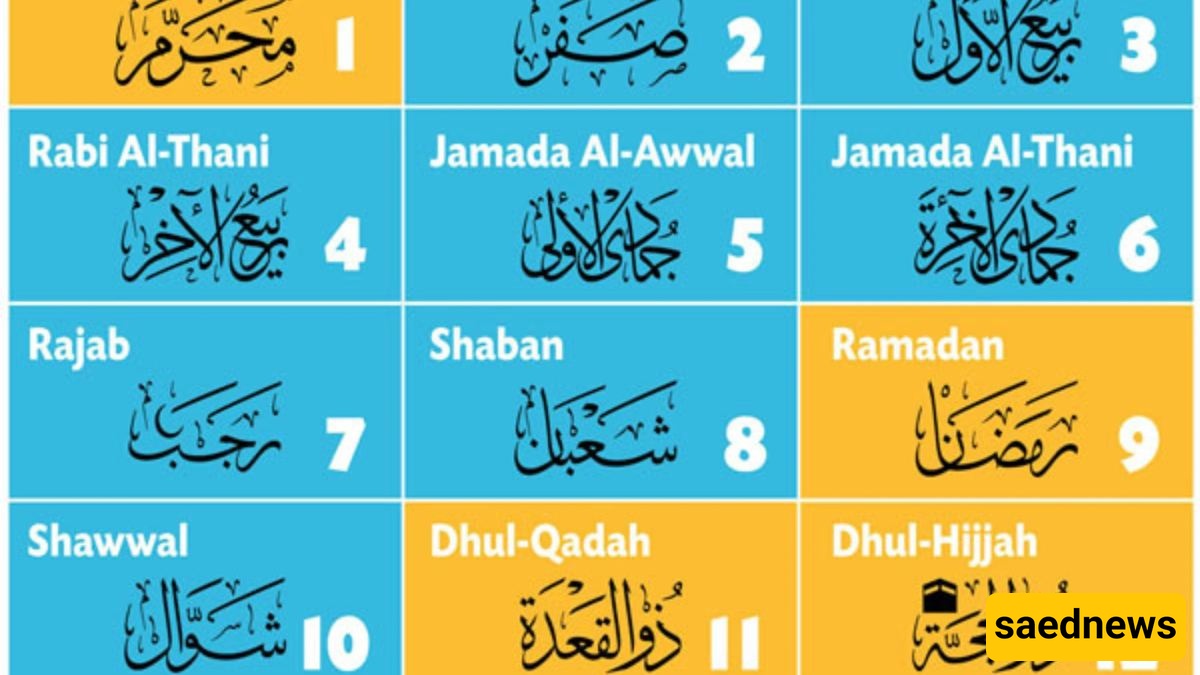
This relatively small difference has a significant consequence: the lunar months gradually move through all the seasons over time. As a result, names that were originally associated with particular seasons no longer correspond to those seasons today. Rabi, for example, may occur during summer, while Jumada may fall in autumn.
Understanding this seasonal shift is essential to understanding the historical origins of the month names.
The Holy Quran emphasizes the twelve-month structure of the calendar in verse 36 of Surah At-Tawbah:
"Indeed, the number of months with Allah is twelve months." (Quran 9:36)
Arabic dictionaries, pre-Islamic poetry, and historical accounts provide valuable insights into the origins of the lunar month names.
Most traditional explanations connect these names to four major aspects of ancient Arabian life:
Climate and natural conditions: Cold, heat, dry weather, and seasonal winds.
Tribal and social activities: Migration, settlement, warfare, and peace.
Economic activities: Trade, markets, and the availability of water and grazing land.
Religious beliefs and practices: Sacred months and pilgrimage rituals.
It is important to note that not every explanation is universally accepted. Linguists and historians disagree about the origins of certain month names, and some have proposed multiple interpretations.
Nevertheless, the general picture is clear: these names reflect the everyday experiences of people who lived in the deserts and oases of ancient Arabia.
Before examining the twelve months individually, it is important to understand the concept of the four sacred months.
In pre-Islamic Arabia, four months were traditionally regarded as sacred: Dhul Qadah, Dhul Hijjah, Muharram, and Rajab. During these months, warfare and bloodshed were prohibited or avoided.
This tradition helped ensure the safety of trading caravans, pilgrims, and merchants traveling across the Arabian Peninsula. Islam preserved the sanctity of these months and reaffirmed their importance in the Quran.
The names themselves reflect this tradition:
Muharram is derived from the Arabic root associated with sacredness and prohibition.
Dhul Qadah is connected to the Arabic word qu'ud, meaning sitting or remaining in place, referring to the cessation of travel and warfare.
Thus, the naming of several lunar months is closely connected to the historical ideals of peace, security, and respect.
Muharram is the first month of the Islamic lunar year. Its name comes from the Arabic root haram, associated with sacredness, respect, and prohibition.
Warfare was traditionally forbidden during this month. Some early historical sources suggest that it was previously known as Safar al-Awwal, but the name Muharram became established because of its special status.
Today, Muharram holds particular significance for Shia Muslims, as it commemorates the tragic events of Karbala and the martyrdom of Imam Hussein.
Safar is the second month of the Islamic lunar calendar.
Its name is traditionally linked to the Arabic word sifr, meaning empty. One explanation suggests that homes became empty after the sacred months as men left their settlements to travel, trade, or engage in warfare.
Another interpretation connects the name to sufrah, meaning yellow, possibly referring to yellowing vegetation or changes in the landscape.
Although scholars have proposed different explanations, the association with emptiness is among the most widely known interpretations.
The word Rabi means spring, making Rabi al-Awwal the First Spring.
The name suggests that this month originally occurred during the spring season when the lunar month names were established.
Rabi al-Awwal has a distinguished place in Islamic history. It is traditionally associated with the birth of Prophet Muhammad (peace be upon him) and his migration from Mecca to Medina.
Also known as Rabi al-Akhir, this month means the Second Spring or the Later Spring.
Its name follows naturally from the previous month. Since two consecutive months were associated with spring, they were distinguished as the first and the second.
The name Jumada is traditionally derived from the Arabic root jamada, meaning to freeze, become solid, or remain motionless.
This suggests that the month originally occurred during the cold season, when water could freeze in colder regions of the Arabian Peninsula.
The name reflects the climatic conditions experienced by ancient Arab communities.
Also called Jumada al-Akhirah, this is the Second Jumada or Later Jumada.
Like the two Rabi months, the two Jumada months were named consecutively, reflecting the seasonal conditions associated with the period when the calendar names originated.

Rajab is the seventh month of the Islamic lunar calendar and one of the four sacred months.
Its name is associated with the Arabic root rajaba, meaning to honor, revere, or show respect.
Ancient Arabs regarded this month as especially sacred and refrained from warfare during it.
Rajab was also known as Shahr al-Asamm, meaning the Silent Month, because the sounds of weapons and warfare were traditionally absent during this period.
The name Sha'ban is derived from the Arabic root sha'aba, associated with branching out, separating, or dispersing.
According to traditional explanations, Arab tribes would disperse during this month in search of water and grazing land. Others suggest that they separated into different groups for raids or military expeditions.
Sha'ban also marks the approach of Ramadan and holds an important place in Islamic religious tradition.
The name Ramadan comes from the Arabic root ramad, associated with intense heat and scorching conditions.
One traditional explanation suggests that the month received its name because it originally occurred during the hottest period of the year.
Another interpretation associates the name with the spiritual cleansing of sins through fasting and worship.
Ramadan is the month of fasting, the revelation of the Quran, and Laylat al-Qadr (the Night of Decree). It is widely regarded as the most spiritually significant month of the Islamic calendar.
Shawwal is the tenth month of the Islamic lunar calendar.
Its name is traditionally linked to the Arabic root shawl, meaning to rise, lift, or carry upward. Some explanations associate it with the raising of camels' tails during the mating season or preparations for travel after the hot season.
Shawwal begins with Eid al-Fitr, the festival marking the end of Ramadan and the completion of the month of fasting.
Dhul Qadah is the eleventh month of the Islamic lunar calendar and the first of three consecutive sacred months.
The word Qadah is derived from qu'ud, meaning sitting or staying in one place.
The name reflects the ancient Arabian practice of suspending travel and warfare during this period. Tribes would remain in their settlements rather than undertake military campaigns.
Dhul Qadah also serves as a preparation period for the Hajj pilgrimage.
Dhul Hijjah is the final month of the Islamic lunar year and the month of Hajj.
Its name comes from the Arabic word Hajj, meaning pilgrimage or the intention to undertake a journey.
During this month, Muslims from across the world travel to Mecca to perform the annual Hajj pilgrimage, one of the five pillars of Islam.
Eid al-Adha, also known as the Festival of Sacrifice, is celebrated on the tenth day of Dhul Hijjah.
An interesting question arises: if the names of the lunar months originally referred to particular seasons, why does Ramadan sometimes occur in winter while Rabi al-Awwal can fall in autumn?
The answer lies in the eleven-day difference between the lunar and solar years.
Because the Islamic lunar year is approximately eleven days shorter than the solar year, each lunar month begins around eleven days earlier each successive solar year.
Over a period of approximately 33 years, the lunar calendar completes a full cycle through the seasons.
Interestingly, during the pre-Islamic period, Arabs practiced a system known as Nasi', which involved postponing or rearranging months to keep the calendar aligned with particular seasons and maintain the timing of certain religious observances.
Islam abolished this practice and established the lunar calendar without seasonal adjustments. Verse 37 of Surah At-Tawbah explicitly condemns the practice of Nasi'.
As a result, the names of the lunar months today serve primarily as historical and symbolic references rather than indicators of specific seasons.
The origins of the twelve Islamic lunar months tell the story of a society that measured time through its everyday experiences rather than numbers alone.
Cold and heat, migration and settlement, war and peace, sacredness and security all found their way into the names of these months.
What may seem like ordinary calendar names today are actually historical reminders of the worldview and cultural traditions of pre-Islamic Arabia. Islam preserved these names while giving them renewed religious significance.
Understanding their origins allows us to appreciate the Islamic lunar calendar more deeply, recognize why Ramadan moves forward each year, and understand the special status of the sacred months.
A calendar is more than a system for measuring time; it is also a reflection of a civilization's history, traditions, and cultural memory.