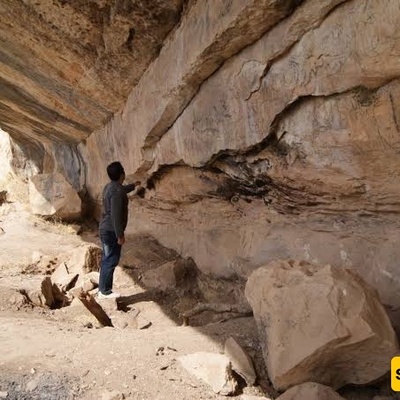
SAEDNEWS: Mir Malas Cave is located on Mount Sarsorkhan, approximately 20 kilometers from the city of Kuhdasht in western Iran.
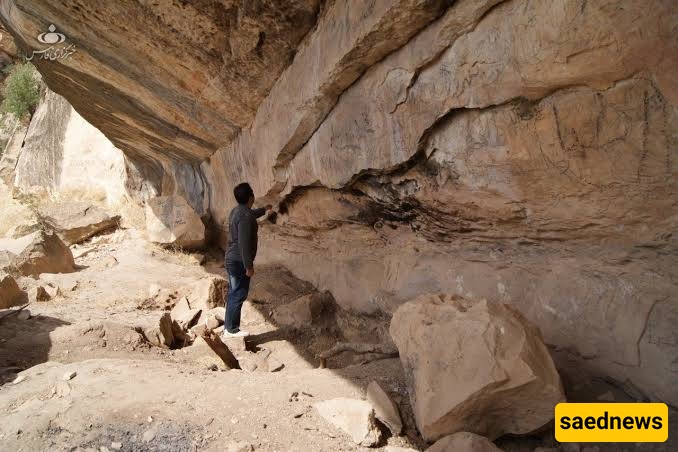
According to Saednews, In the heart of the Zagros Mountains, where rocks have endured thousands of years of wind and rain, Mir Malas Cave in Lorestan preserves traces of ancient human life like an open-air gallery without walls or a roof. Located in Kuhdasht County, Lorestan Province, the cave is considered one of Iran’s most significant rock art sites. What distinguishes Mir Malas from an ordinary cave is its collection of prehistoric paintings, created with natural pigments on rock surfaces. These images depict hunting scenes, animals, and aspects of everyday life in the distant past.
The significance of Mir Malas extends beyond tourism. The site raises fundamental questions about how people lived in western Iran in ancient times and presents researchers with a mystery spanning millennia: exactly when were these images created, and what did they mean?
Mir Malas Cave lies in a mountainous, semi-arid region of Kuhdasht County in Lorestan Province. The area forms part of the Central Zagros Mountains, a region characterized by folded, steep terrain and abundant limestone formations. These geological structures have contributed to the formation of numerous caves and rock shelters throughout the region.
Mir Malas is situated on a rocky slope overlooking deep valleys on one side and elevated mountain terrain on the other. This strategic location may have made it a suitable place for temporary habitation or shelter for groups of people in the past.
The climate of Kuhdasht brings hot summers and relatively cold winters. Seasonal temperature fluctuations, combined with changes in humidity, are among the main causes of natural rock erosion and pose a threat to the ancient paintings.
The surrounding vegetation consists mainly of steppe and mountain plants adapted to dry conditions. The Zagros region has also provided habitats for wildlife such as wild goats, wild boars, and birds of prey. Some animals depicted in the cave paintings reflect the connection between prehistoric rock art and the natural environment.
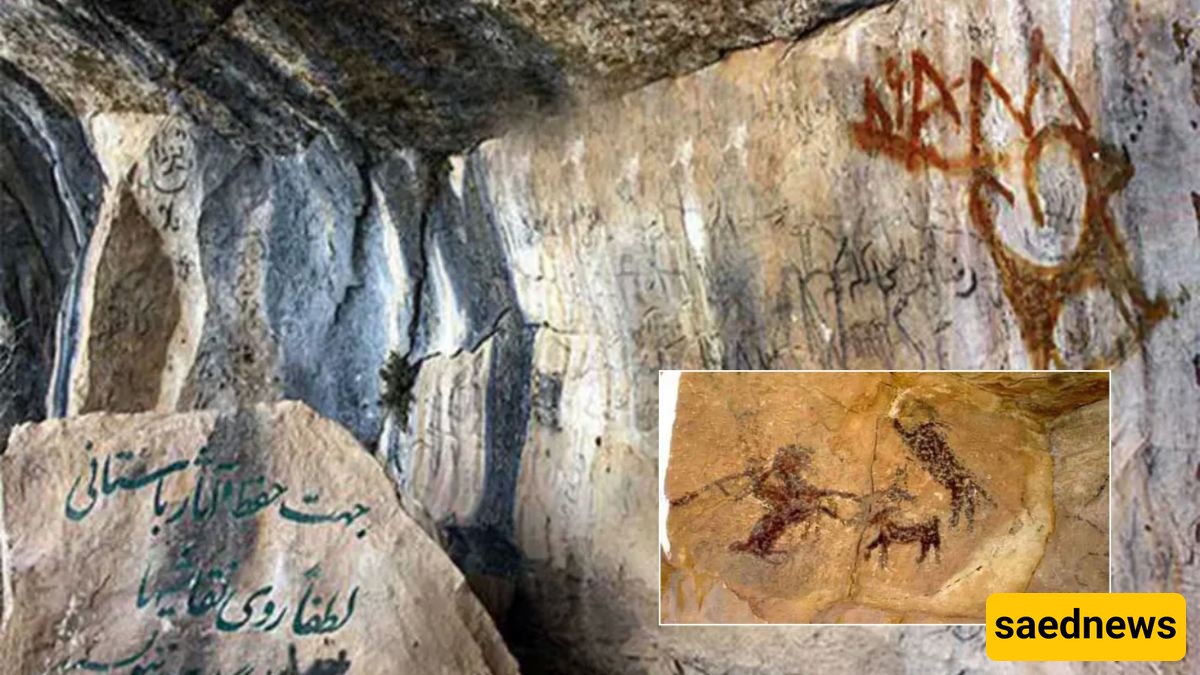
Although local communities had known about the rock paintings for generations, scientific research and documentation of Mir Malas gained momentum in the mid-2000s.
Between 2008 and 2011, a joint team of Iranian and Belgian researchers, led by Marcel Otte of the University of Liège and L. Remacle, investigated rock art sites across Lorestan. Reports published in European archaeological journals identified Mir Malas and Humian Cave as two of the region’s most notable rock art sites.
These investigations marked an important milestone in bringing international attention to the rock art of the Zagros Mountains.
Subsequent research has included university theses, archaeological papers, and cultural heritage reports. Nevertheless, many questions remain unanswered, particularly regarding the precise dating of the paintings, their symbolic meanings, and their relationship to other archaeological sites in the region.
These uncertainties make Mir Malas an ongoing subject of archaeological investigation, with the potential for future discoveries to provide new insights into its past.
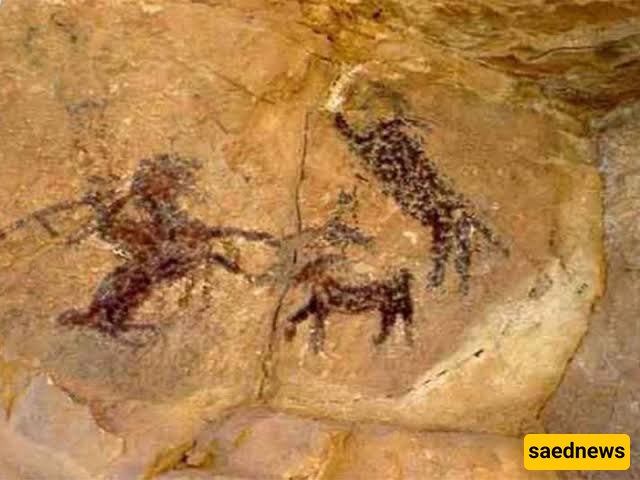
The main archaeological significance of Mir Malas lies in its rock paintings. These images were created using pigments derived primarily from natural minerals, including iron and manganese oxides, and applied to limestone surfaces.
The dominant colors include shades of red, brown, and black, with ochre yellow appearing in some areas. The use of mineral-based pigments may have contributed to the paintings’ relative durability under natural weather conditions.
The paintings at Mir Malas can be divided into several major categories.
1. Animal figures
Depictions include wild goats, deer, horses, and other animals whose precise identification requires further comparative analysis. The wild goat holds a prominent place in Iranian rock art and appears repeatedly at different archaeological sites. Its frequent representation may indicate economic importance, symbolic significance, or a role in ancient rituals.
2. Hunting scenes
Some paintings appear to depict human figures pursuing animals or aiming weapons at them. These scenes may provide insight into hunting-based subsistence, survival strategies, and the collective skills of prehistoric communities.
3. Human-like figures
Human figures appear in a variety of postures, including standing, running, and bending. Some may represent dancing, ritual activities, or communal ceremonies, although their exact meanings remain uncertain.
4. Geometric symbols and signs
Dots, lines, and simple geometric shapes also appear among the paintings. These are more difficult to interpret and may have served as markers, counting systems, or symbols associated with particular beliefs.
Determining the exact age of rock paintings is difficult because absolute dating methods are not always applicable. Mineral pigments generally contain insufficient carbon for conventional radiocarbon dating.
As a result, researchers rely largely on stylistic analysis, comparisons with nearby archaeological sites, and archaeological context to estimate their age.
The prevailing view places Mir Malas within prehistoric periods, possibly dating to millennia before the Common Era. However, some researchers consider a broader chronological range possible.
Rather than diminishing the site's importance, these differing interpretations highlight the need for further research and more precise dating methods.
The artists of Mir Malas may have used their fingers, pieces of stone, or simple tools to apply pigments to the rock surfaces.
Some images feature thick, bold lines, while others have finer outlines. These differences may reflect variations in tools, artistic skill, or stages of execution at different times.
The variations suggest that the paintings may have been created over multiple periods by different individuals or groups, rather than being the work of a single generation.
Humian Cave, another important rock art site, is located a relatively short distance from Mir Malas and contains valuable prehistoric paintings of its own.
Comparing the two sites provides a clearer understanding of Lorestan's rock art traditions. Both caves feature animal figures and hunting scenes, although they differ in artistic style, the density of the images, and their state of preservation.
Some researchers suggest that the two sites may represent parts of a broader regional artistic tradition that continued over an extended period.
This comparison demonstrates that Mir Malas was not an isolated phenomenon but rather part of a larger cultural landscape in the Central Zagros Mountains. This wider context makes Lorestan one of Iran's most important regions for studying prehistoric rock art.
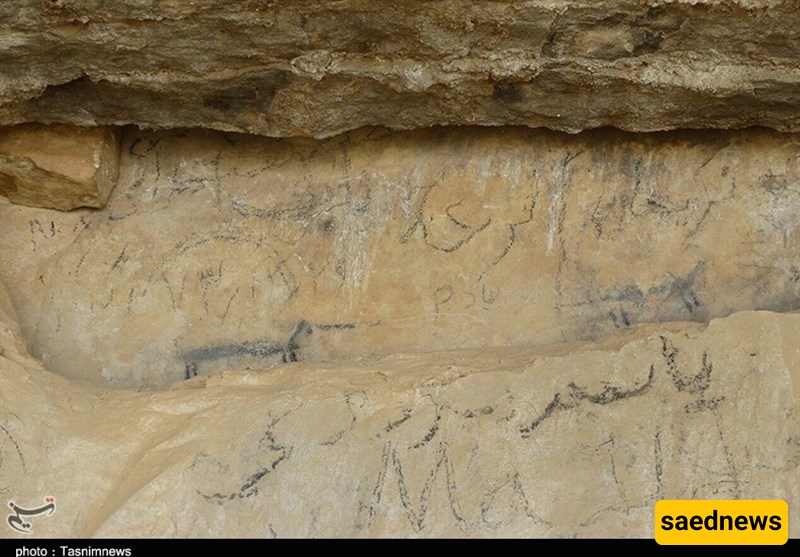
From an archaeological perspective, Mir Malas may provide valuable information about settlement patterns, migration routes, human-environment relationships, and symbolic beliefs.
Rock art constitutes a form of material evidence created within a natural setting. Interpreting it requires comparison with other archaeological findings, including stone tools, animal remains, and evidence of ancient settlements.
Studying these different sources together can deepen our understanding of the region's cultural history.
From a cultural and historical perspective, Mir Malas forms part of the collective memory of the people of Lorestan. The site bears witness to the long history of human habitation in a landscape occupied for thousands of years.
Such archaeological remains help local communities reconnect with their historical roots and recognize the importance of protecting their heritage. Preserving Mir Malas is therefore not only a scientific responsibility but also a cultural and educational commitment to future generations.
The geology of Kuhdasht, characterized by limestone formations and dissolution processes, has provided the conditions necessary for the development of caves and rock shelters.
The relatively smooth, sheltered rock surfaces would have offered suitable locations for prehistoric artists to create their paintings.
However, the same natural processes that helped shape the cave now threaten the survival of its artwork. Natural cracks, falling rock fragments, and moisture penetration can gradually fade or damage the images.
Understanding these geological processes is essential for developing effective conservation strategies and protecting the paintings from further deterioration.
Mir Malas Cave is located in Kuhdasht County, in Lorestan Province, western Iran, within the mountainous landscape of the Zagros range.
For visitors interested in archaeology, ancient history, and cultural heritage, the site offers an opportunity to explore one of the region's notable rock art locations. Its prehistoric paintings provide a rare glimpse into how ancient communities may have observed their surroundings, represented animals, and expressed aspects of their lives through art.
Because the paintings are vulnerable to environmental damage, visitors should avoid touching the rock surfaces or disturbing the archaeological remains. Checking local access conditions and consulting regional cultural heritage authorities before planning a visit is advisable.
Mir Malas Cave is more than a geological formation: it is a valuable record of humanity's artistic and cultural past, preserved on the rocks of the Zagros Mountains.