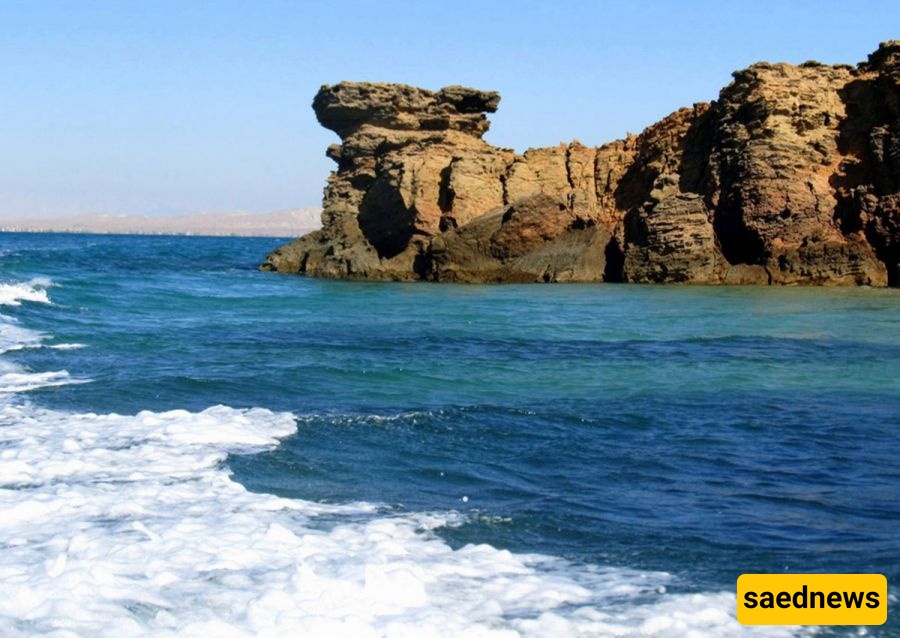
SAEDNEWS: Located in western Qeshm Island, this 30,000-hectare geopark was the first of its kind in Iran and the Middle East, joining UNESCO’s Global Geoparks Network in 2006 and regaining recognition in 2017.
Accoridng to Saednews, To help people understand the geological periods that Earth has experienced, UNESCO has designated certain areas as geoparks. The idea of establishing geoparks was introduced by UNESCO in 1999.
The Global Geoparks Network (GGN) is a legally constituted, non-profit organization with an annual membership fee. Membership is mandatory for all UNESCO Global Geoparks.
Established in 2004, the GGN is a dynamic network in which members commit to cooperating with one another, exchanging ideas on best practices, and participating in joint projects to improve the quality standards of UNESCO Global Geoparks and their activities.
Although the GGN holds its general assembly every two years, it operates through regional networks, such as the European Geoparks Network, which meets twice a year to establish and develop joint activities.
Today, the GGN continues to grow by bringing together expertise and knowledge from different regions and cultures around the world. It promotes best practices and establishes high-quality standards for integrating geological heritage conservation with sustainable economic development.
At UNESCO's 38th General Conference in November 2015, its 195 member states approved the creation of the new designation, "UNESCO Global Geoparks."
UNESCO officially began its geoparks initiative in 2001. In 2004, the GGN was established with 25 geoparks located in Europe and China. Over the years, geoparks have attracted increasing attention because they promote sustainable development and offer exceptional destinations for tourists.
A geopark is an area where the geological heritage is carefully and continuously protected and managed. Its boundaries are clearly defined, and it contains several significant geological features.
A geopark should also play an effective role in the economic development of surrounding communities. In addition to geological formations, it may contain historical sites, ecological attractions, archaeological remains, and other elements of cultural and natural heritage.
The practice of designating protected, clearly defined areas for tourism under the name "geoparks" became widespread around the world in 2000. China currently has the largest number of national and global geoparks in Asia. Qeshm Island Geopark was the first geopark in Iran and the Middle East.
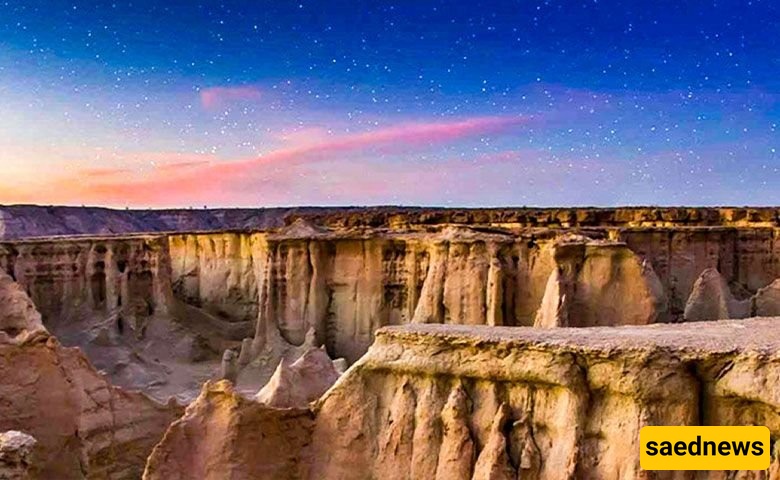
In the western part of Qeshm Island lies Qeshm Geopark, covering an area of approximately 30,000 hectares. It extends between the island's northern and southern coasts, with Tabal and Selakh villages to the east and Gouri and Kani villages to the west.
Qeshm Global Geopark was included in the UNESCO Global Geoparks Network in 2006, becoming the first and, at the time, the only geopark in the Middle East on the list. As Iran's first geopark, it is considered one of the world's most distinctive geological sites. Located near the coast and mangrove forests, it features numerous remarkable geological formations.
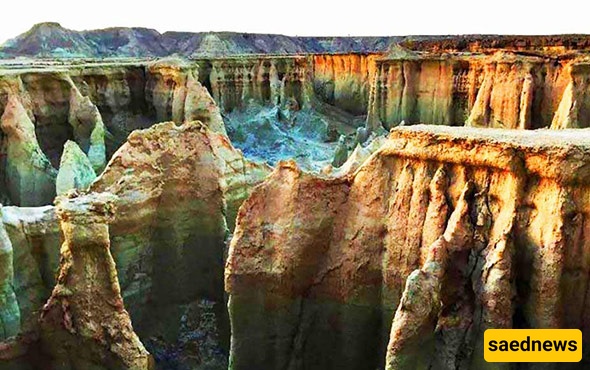
Visitors can discover countless natural wonders and rock formations sculpted by erosion into unusual shapes resembling animals and even human faces. The geopark includes several major sites, some of which are described below.
From the top of this beautiful plateau, visitors can enjoy spectacular views of the island's northern and southern coastlines. Located in the central part of the island, the plateau rises to an elevation of more than 120 metres.
Qeshm Roof is an outstanding viewpoint, with layers of marl and sandstone visible along its walls. From the summit, visitors can admire attractions such as the Hara mangrove forests and the Valley of Statues.
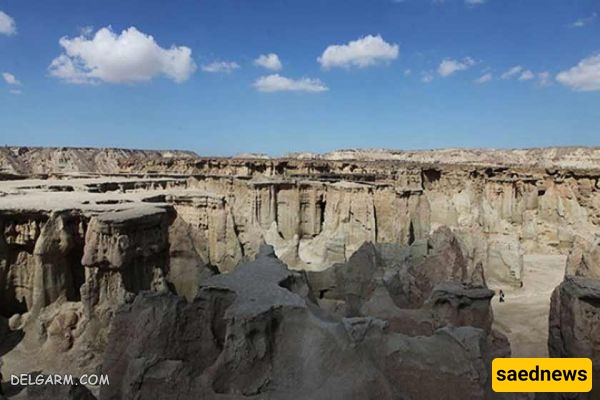
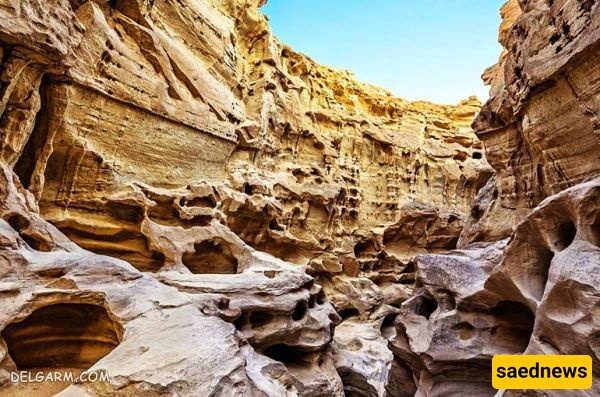
At this site, visitors can explore two intersecting canyons featuring narrow passages, vertical walls, and extraordinary formations that resemble imaginative works of art carved into the rock.
In some places, the walls are more than one metre wide. The canyon formed within sandstone layers, where cavities and hollows have developed between the rock strata, creating fascinating patterns.
A well was dug into the canyon floor to collect and use rainwater flowing through the area. This is why the site is known as Chahkooh, meaning "Mountain Well."
Cracks in the clay surface of this valley have created formations similar to those found in the Valley of the Stars. Erosion has sculpted the rocks into remarkable natural statues, giving the landscape a distinctive and striking appearance.
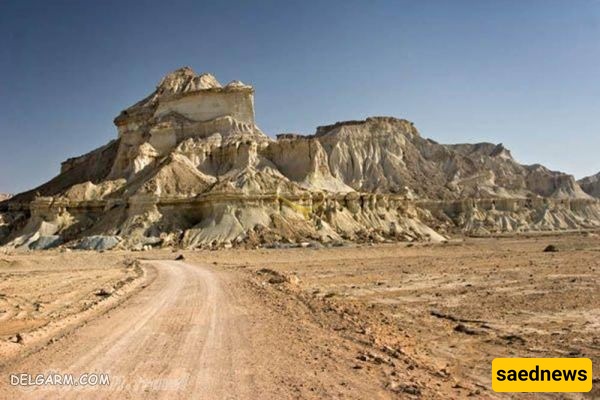
Although this site lies outside the main boundaries of the geopark, its distinctive geomorphological features have made it one of the area's principal attractions.
The valley consists of soft sedimentary layers topped by a layer of sandstone. Its dramatic landscape includes fascinating small, needle-shaped rock pillars that enhance its unusual appearance.
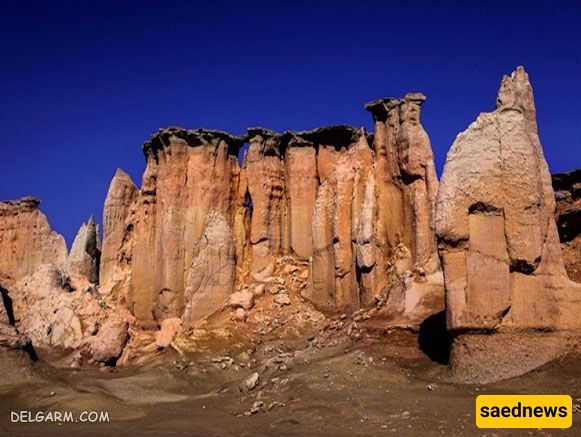
On the occasion of Persian Gulf National Day, Qeshm Geopark regained its global recognition. Five years earlier, it had been removed from UNESCO's list for various reasons. Following several efforts to address the issues raised, it was reinstated in the Global Geoparks Network.
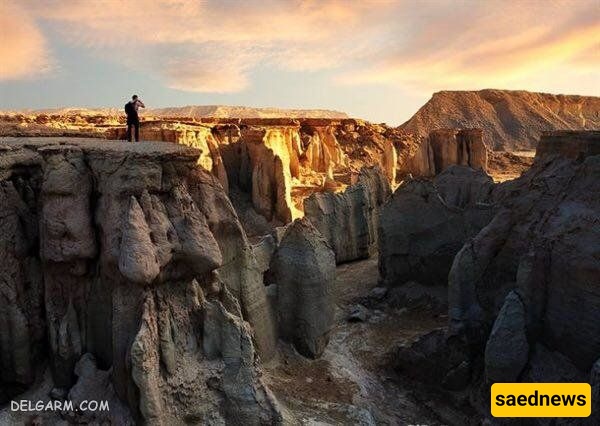
According to the decisions made at UNESCO's 201st Executive Board session, eight geoparks around the world joined the UNESCO Global Geoparks Network, while two new geoparks were developed in China and Mexico.
These geoparks are located in China, France, the Republic of Korea, Mexico, Spain, and Iran. Representing the extraordinary biological and geological diversity of our planet, the eight sites were approved by the relevant geopark authorities and officially added to the UNESCO Global Geoparks Network on 5 May 2017.
Qeshm Global Geopark remains a remarkable destination where geological wonders, natural landscapes, and cultural heritage come together, making it one of the Middle East's most valuable geological treasures.