SAEDNEWS: Retiro Park in Madrid blends royal history, a scenic lake, the Crystal Palace, rose gardens, and grand fountains. Once a royal retreat, it is now a favorite spot for visitors, culture, and leisure.
According to Saednews, El Retiro Park, officially known as Parque del Buen Retiro, is one of the largest and most famous parks in Madrid, Spain. The name roughly translates to “Park of Pleasant Retreat,” and it is widely regarded as one of the city’s most popular green spaces. Once reserved exclusively for the Spanish royal family, the park is now a magnificent public area filled with cultural attractions, historic monuments, gardens, and recreational spaces. It is particularly lively on weekends, when locals and visitors gather throughout the park.
Located in the heart of Madrid, El Retiro is a remarkable urban sanctuary featuring numerous fountains, landscaped gardens, sculptures, monuments, and a large artificial lake where visitors can enjoy boating. The park is also an important cultural destination, with attractions such as the Velázquez Palace and the Crystal Palace. For anyone visiting Madrid, exploring El Retiro is an essential part of experiencing the city.
El Retiro Park is situated close to central Madrid and covers an extensive area of historic gardens and recreational spaces. In addition to street performances and outdoor activities, the park is known for its boating facilities, sculptures, monuments, palaces, and exhibition spaces.
During the summer, El Retiro hosts events such as the annual Madrid Book Fair and free concerts, making it an especially attractive destination for visitors exploring Spain. Its combination of nature, history, architecture, and cultural events makes the park one of Madrid’s most distinctive attractions.
Construction of the Real Sitio del Buen Retiro, or Royal Site of Buen Retiro, began under King Philip IV in the 1630s as a royal retreat. The gardens and surrounding complex were developed between approximately 1630 and 1640.
The original royal estate covered more than 125 hectares and included thousands of trees, fountains, sculptures, gardens, and architectural structures. Although the area initially began as a relatively modest park, it was greatly expanded during the 17th century.
Several buildings were constructed within the royal grounds, although only a small number survived later changes and destruction. The artificial lake was also created during this period and was used for staged naval battles and other water-based spectacles for the royal court.
For centuries, El Retiro remained associated with the monarchy and was largely reserved for the king and his court. Following political changes in Spain, the park was opened permanently to the public in 1868.
El Retiro contains a remarkable variety of attractions, including its famous lake, historic monuments, palaces, formal gardens, natural areas, lawns, and fountains. Each part of the park offers a different glimpse into Madrid’s history and culture.
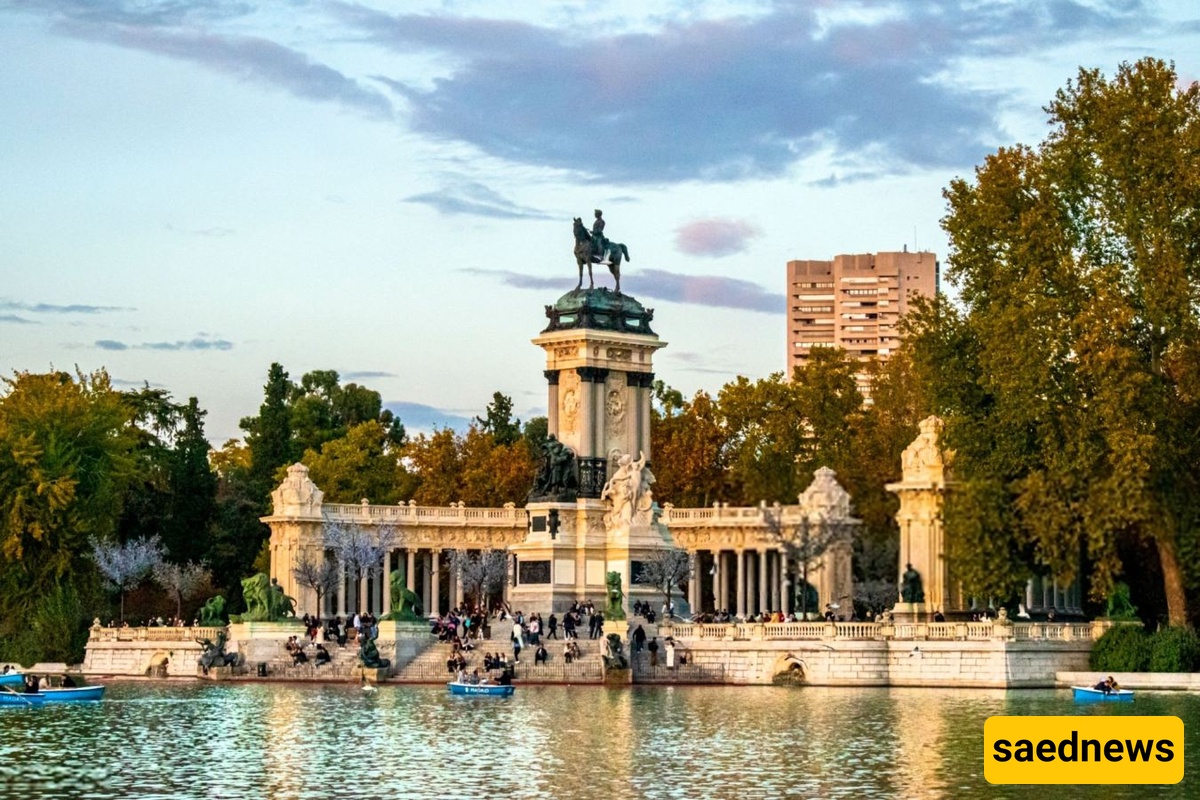
The Estanque del Retiro, or Retiro Pond, is a large artificial lake located near the northern entrance of the park. During the royal era, the lake was used for entertainment and court spectacles, including water performances and staged naval activities.
Today, visitors can rent traditional rowing boats and enjoy a relaxing trip across the water. The lake is also used for recreational boating and kayaking, making it one of the park’s most popular attractions.
Beside the lake stands the impressive Monument to Alfonso XII, consisting of a semicircular colonnade and a monumental base crowned by an equestrian statue of the king. Together, the lake and monument form one of the most recognizable scenes in El Retiro.
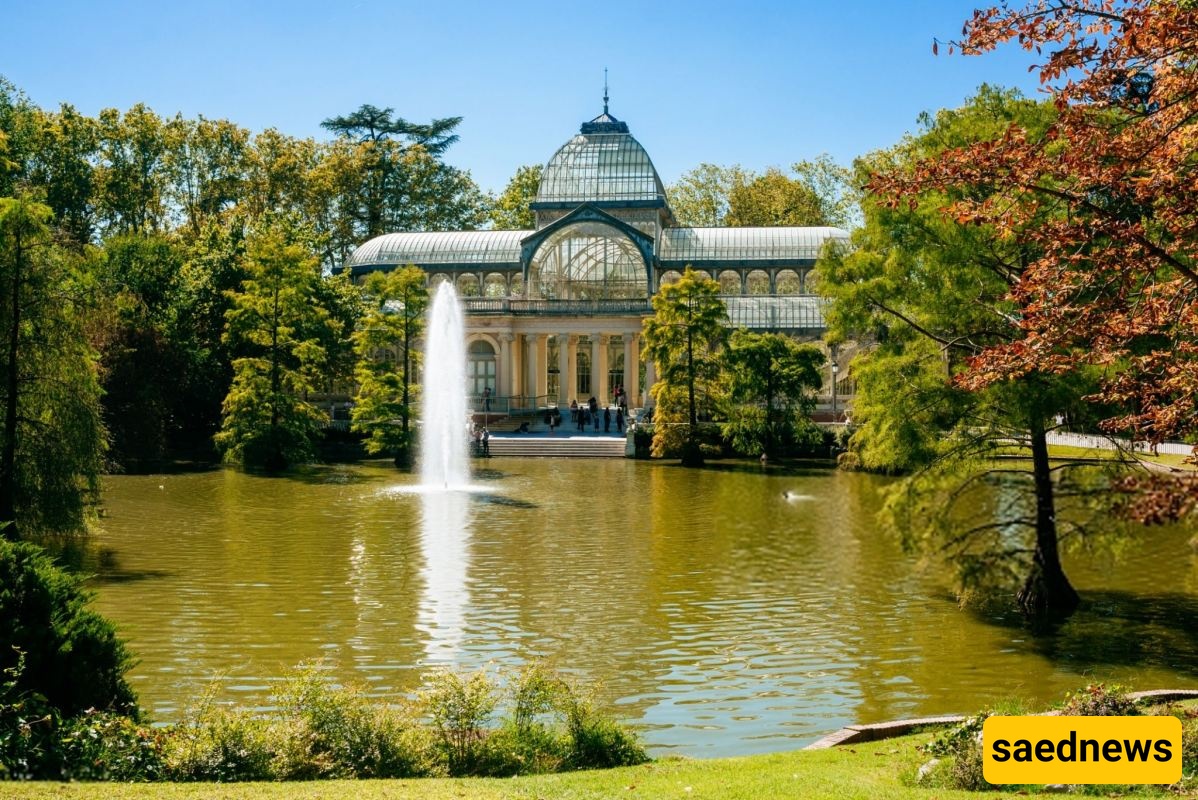
The Crystal Palace, designed by architect Ricardo Velázquez Bosco, is one of El Retiro’s most distinctive landmarks. It was originally constructed in 1887 for an exhibition featuring the Philippines and was inspired by the glass-and-iron exhibition architecture popular during the period.
The elegant structure features a tall dome reaching approximately 22 meters in height and overlooks a small lake. Its walls are largely made of large glass panels supported by an iron framework, creating an airy and transparent appearance.
The building is often compared with the Crystal Palace in London's Hyde Park because of their similar architectural concepts and original exhibition purposes.
Today, the Crystal Palace is used for temporary exhibitions connected with the Museo Nacional Centro de Arte Reina Sofía. Admission to exhibitions is generally free, although opening hours may differ from those of the surrounding park.
The Rosaleda, or Rose Garden, is another attractive area of El Retiro. It consists of landscaped sections filled with rose bushes and ornamental plants.
One of its most notable landmarks is the Fountain of the Fallen Angel, known in Spanish as Fuente del Ángel Caído. The sculpture depicts Lucifer falling from Heaven and is one of the park’s most unusual works of art. It is also frequently described as one of the very few public monuments in the world depicting the Devil.
The Paseo de la Argentina, popularly known as the Statue Walk, is lined with statues of Spanish monarchs dating mainly from the 18th century.
The promenade provides visitors with an opportunity to admire historic sculptures while walking through one of the park’s most picturesque areas.
El Retiro is generally accessible throughout the year, with seasonal opening hours. It is especially lively during the summer, when longer daylight hours encourage people to spend more time outdoors.
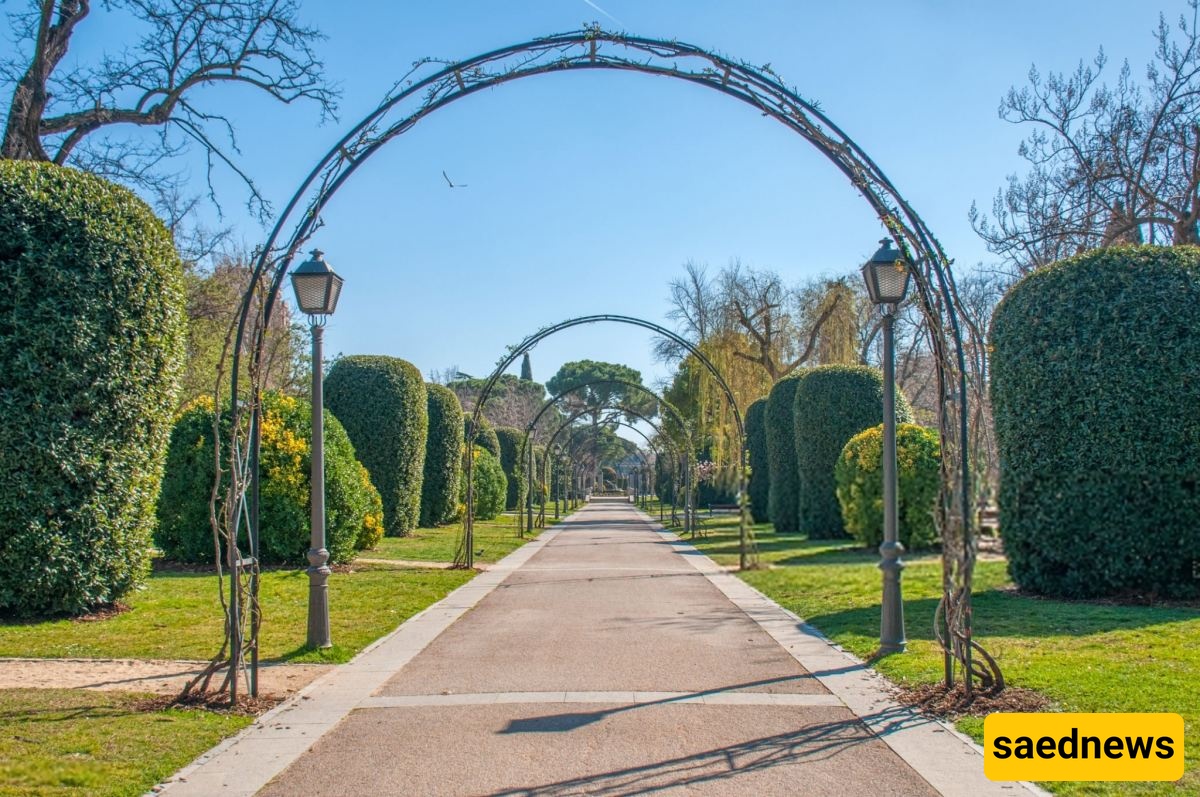
El Retiro is much more than a historic garden. It is a popular place for people to relax, exercise, explore cultural attractions, or simply enjoy the outdoors.
Visitors can:
Rent a rowing boat on the lake
Explore historic monuments and sculptures
Visit temporary art exhibitions
Walk through landscaped gardens
Relax on the lawns
Enjoy outdoor sports and recreational areas
Take children to designated playgrounds
Attend seasonal cultural events
Visit the annual Madrid Book Fair
Enjoy free summer concerts
The park's combination of open spaces, cultural venues, and recreational facilities makes it a lively gathering place for both residents and tourists.
El Retiro is not simply a green space. It also contains historic buildings and surviving elements of the former Buen Retiro royal complex.
Much of the original palace disappeared over time, but several important remnants remain, including the Casón del Buen Retiro, one of the most significant surviving structures associated with the former royal estate.
The Casón del Buen Retiro was originally associated with the court of Philip IV and is one of the few remaining buildings from the historic palace complex.
The building underwent major restoration, including work intended to preserve and enhance its architectural features and decorated interiors. Its history is also closely connected with the Museo del Prado.
In the past, the building housed important works from the Prado collection. Among them was Pablo Picasso's famous Guernica, which was displayed there before being transferred to the Reina Sofía Museum.
Today, the Casón del Buen Retiro serves primarily as a center for research, education, documentation, and professional study associated with the Prado Museum. It contains resources such as archival and documentation facilities and is not generally open to the public as a regular museum. Visitors can, however, admire its historic exterior and architecture.
El Retiro is filled with works of art and historic monuments. Visitors can discover sculptures inspired by classical traditions, royal monuments, decorative fountains, and memorial structures throughout the park.
Among the most prominent landmarks is the monument dedicated to King Alfonso XII, while numerous fountains add character to the gardens and pathways. Many of these works have their own histories and contribute to the park's unique cultural landscape.
El Retiro Park combines centuries of royal history with the everyday life of modern Madrid. What was once a private retreat for the Spanish monarchy has become one of the city's most important public spaces.
With its historic lake, Crystal Palace, rose garden, royal monuments, sculptures, fountains, and cultural events, El Retiro offers visitors a chance to experience nature and Spanish history in the center of Madrid. Its peaceful gardens and lively public spaces make it a memorable destination for travelers exploring the Spanish capital.