SAEDNEWS: Ginger paste is a ready-to-use seasoning made from fresh ginger that speeds up cooking and reduces waste from this flavorful root.
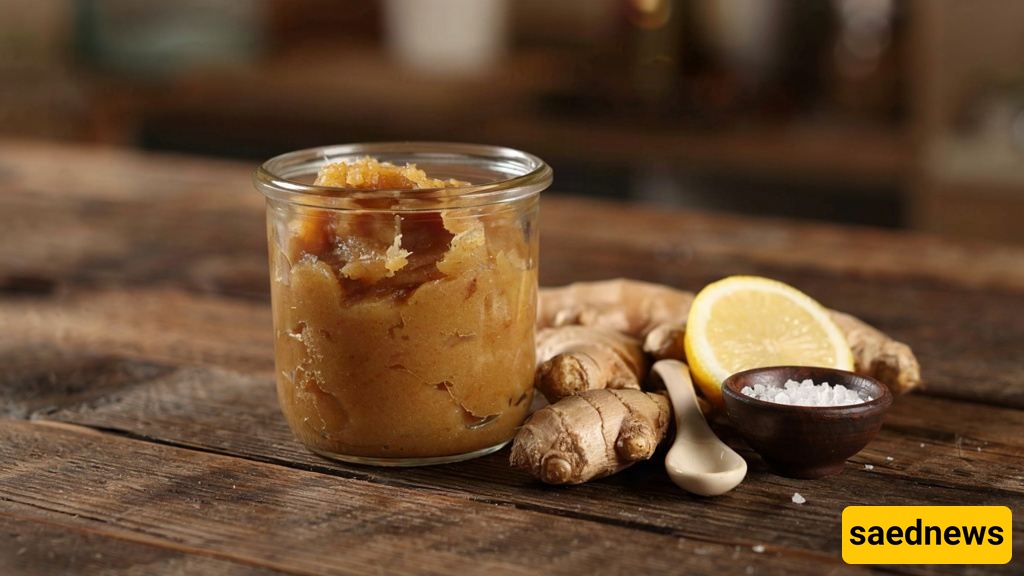
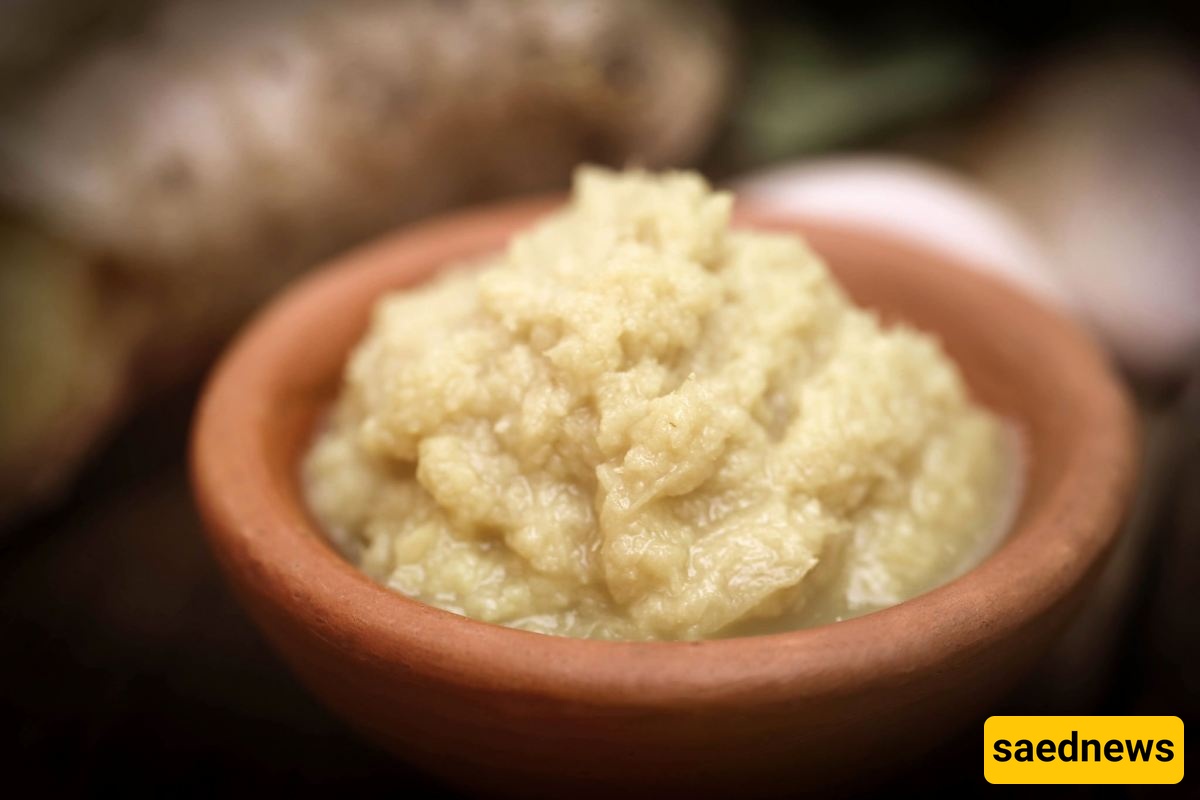
According to Saednews, Ginger paste is a thick, relatively smooth mixture made by crushing, grinding, or blending fresh ginger root. It is also known as ginger purée or fresh ginger paste. It typically has a cream to pale yellow color, a moist, sticky texture, and the distinctive spicy, fresh aroma of ginger.
Ginger paste should not be confused with ground ginger powder, which is made from dried ginger root and has a different, warmer, and drier flavor profile. It also differs from ginger sauce, which is usually thinner and may contain sugar, soy sauce, vinegar, and other seasonings.
To make approximately 250 grams of fresh ginger paste, you will need:
250 grams of fresh, good-quality ginger root
2–4 tablespoons of cold, clean water
½ teaspoon of salt
1 tablespoon of fresh lemon juice or white vinegar
1 teaspoon of neutral oil, such as sunflower or canola oil (optional, for the cooked method)
Choose ginger roots that are firm and heavy, without sprouts, mold, or soft spots. Wash the ginger under cold running water. Peel it using a knife or the edge of a spoon. If the skin is thin, scraping it with a spoon can help minimize waste.
Cut the ginger into small pieces to make blending easier.
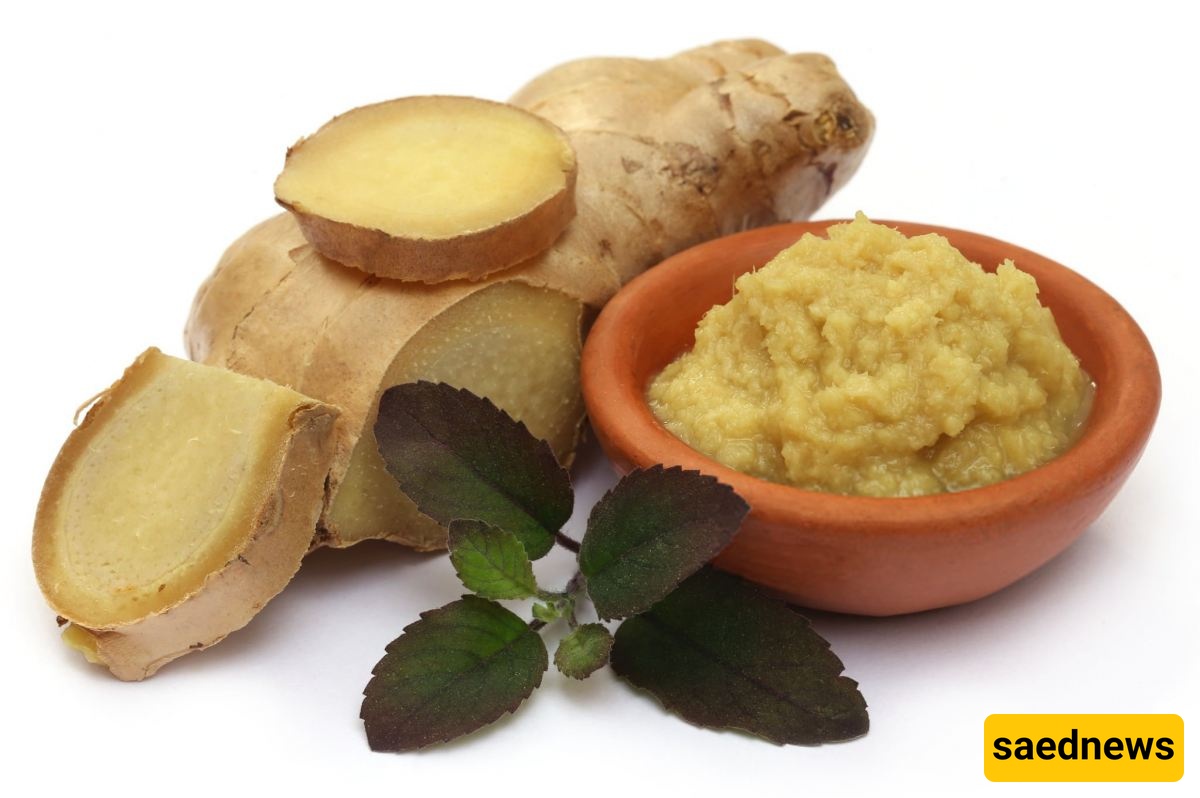
Place the chopped ginger in a food processor or blender. Add two tablespoons of water and pulse for a few seconds.
Scrape down the sides of the container with a clean spoon, then blend again until a smooth paste forms.
If your appliance is not powerful enough, avoid adding too much water. Instead, pause briefly and blend again. For a finer texture, pass the paste through a fine-mesh sieve to remove coarse fibers.
Add the salt and lemon juice or vinegar, then mix thoroughly.
Transfer the raw ginger paste to a clean, dry glass jar. Smooth the surface and close the lid tightly.
Store it in the refrigerator and preferably use it within two to three weeks. For longer storage, freezing is a practical option. The shelf life of homemade paste can vary, so discard it if there are signs of spoilage.
First, blend the ginger as described in the previous method.
Heat one teaspoon of oil in a deep-sided pan. Add the ginger paste and cook over low heat.
Stir in the salt and lemon juice or vinegar. Cook for approximately 5–10 minutes, stirring continuously, until some of the excess moisture evaporates and the paste thickens.
Avoid burning the paste by keeping the heat low and stirring regularly.
Remove the pan from the heat and allow the paste to cool completely. Transfer it to a thoroughly cleaned, heat-safe jar that has been properly sanitized and dried.
Store the cooked ginger paste in the refrigerator. Its quality may last for several weeks, but cooking and using a clean jar do not guarantee a specific safe storage period. For longer-term storage, freezing is recommended.
If you have prepared a large batch of ginger paste, freezing it in small portions is an easy and convenient way to preserve it.
Spoon the ginger paste into an ice cube tray.
Place the tray in the freezer until the paste is completely frozen.
Remove the frozen cubes and transfer them to a freezer-safe bag or airtight container.
Label the container with the preparation date.
Whenever needed, add one or two frozen ginger cubes directly to your cooking.
Frozen ginger paste generally retains good quality for up to three months.
Always store homemade ginger paste in the refrigerator or freezer. Do not leave it at room temperature.
Use a clean, dry, airtight container.
Always remove the paste with a clean, dry spoon to prevent contamination.
If you notice mold, an unpleasant odor, unusual discoloration, or an abnormal sour taste, discard the entire batch rather than trying to remove the affected portion.
Adding lemon juice or vinegar can increase acidity, but it does not replace proper hygiene and refrigeration.
Important food safety note: If you add oil to ginger paste, never store it at room temperature in an airtight container. Garlic and other low-acid ingredients stored in oil can create conditions for dangerous bacterial growth, including botulism. Homemade ginger paste containing oil should be refrigerated promptly and used conservatively, or frozen for longer storage. Do not assume that adding lemon juice or vinegar makes the mixture safe without a validated recipe.
Ginger paste is a versatile ingredient that adds fresh aroma and a spicy flavor to many dishes.
Meat, chicken, and fish: Use it in marinades to enhance flavor.
Stir-fries: Add it to sautéed vegetables, meat, and Asian-inspired dishes.
Soups and stews: Stir it into soups, stews, and traditional dishes for extra warmth and aroma.
Sauces and dressings: Mix it into salad dressings, warm sauces, and pickling mixtures.
Drinks: Add a small amount to ginger tea, smoothies, or lemonade.
Yogurt-based dishes: Stir it into yogurt, strained yogurt, or yogurt sauces for a fresh, spicy kick.
Making fresh ginger paste at home is simple and gives you a convenient ingredient for everyday cooking. You can choose the quick raw method for freshness, the cooked method for a thicker consistency, or the ice cube method for convenient portioning and longer freezer storage.