SAEDNEWS: Greenland is the world’s largest island and the least densely populated country, an autonomous territory within the Kingdom of Denmark. It is known for its icy landscapes, northern lights, polar bears, and colorful towns.
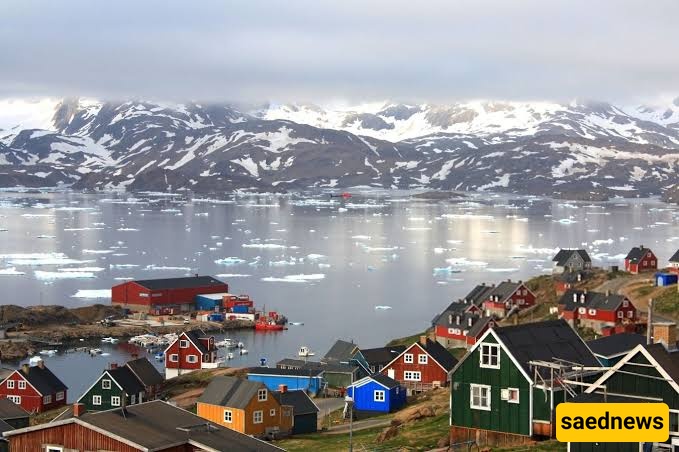
According to Saednews, Greenland is the largest island on Earth and is an autonomous territory within the Kingdom of Denmark. Its people are Danish citizens, while geographically, Greenland is considered part of North America. The Arctic Ocean lies to the north, while the Atlantic Ocean stretches to the south. Almost 80% of the island’s surface is covered by ice.
The name “Greenland” literally means “green land,” which may seem surprising considering that most of the island is covered by ice. According to historical accounts, the name was given by an Icelandic explorer who was exiled to the region after committing a crime. He reportedly chose the name Greenland in the hope that it would encourage more people to settle there.
Interestingly, when judging the two names, Greenland actually contains far more ice than Iceland, whose name literally means “land of ice.” Nevertheless, some parts of Greenland, particularly along its southern coast, become genuinely green during the summer months.
Climate change is also having a major impact on Greenland. Its glaciers are losing ice at an accelerating rate, creating significant consequences for global sea levels and the wider environment.
Besides being the world’s largest island, Greenland is one of the least densely populated inhabited territories on Earth. It has a population of roughly 57,000 people, with most residents living along the southwestern coast.
The majority of Greenland’s population is Kalaallit Inuit, alongside Greenland-born people of Danish and other European backgrounds. Greenlanders are Danish citizens and have access to the Danish welfare system, including publicly funded healthcare.
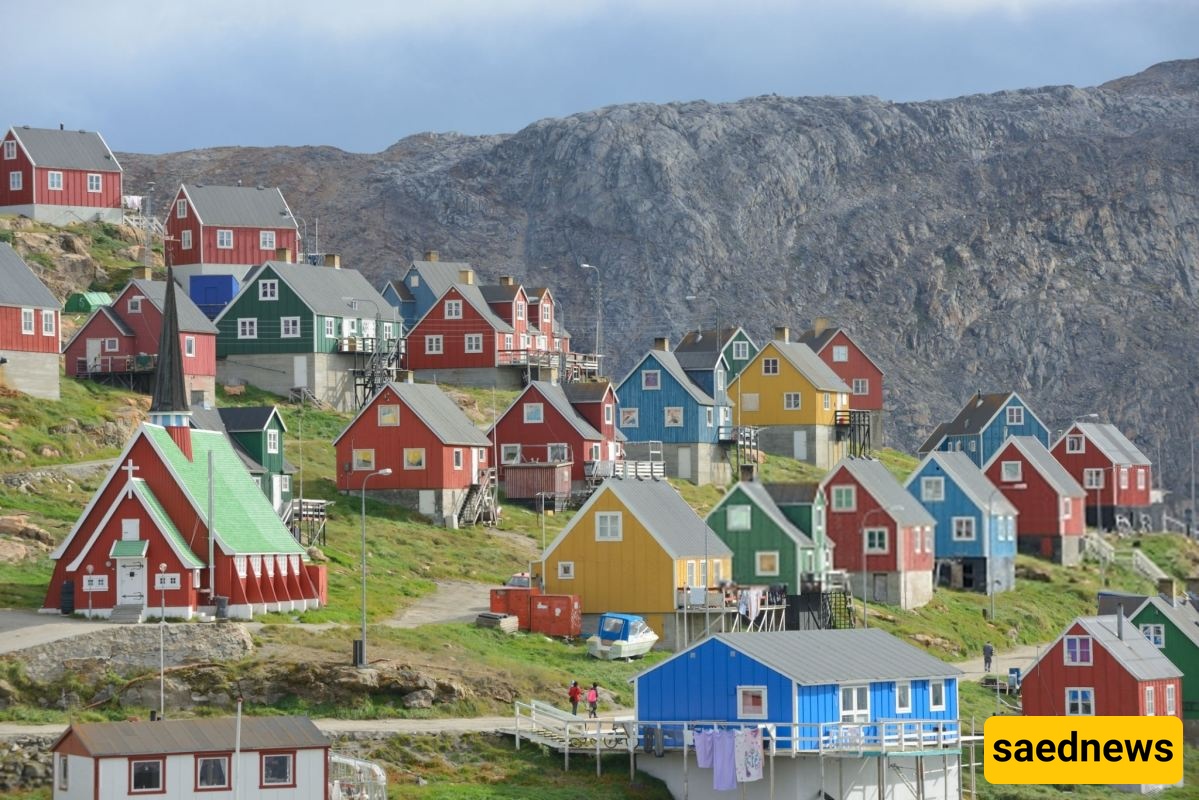
Greenland is a vast island, but most of its towns and settlements are concentrated along the coastline. Because the interior is largely covered by the Greenland Ice Sheet, coastal areas are where most communities have developed.
Some of Greenland’s best-known towns include:
Nuuk, the capital
Sisimiut
Ilulissat
Qaqortoq
Aasiaat
Maniitsoq
Tasiilaq
Uummannaq
Narsaq
Paamiut
Nanortalik
Upernavik
Greenland is not generally considered a budget-friendly travel destination. However, travelers who want to experience the Northern Lights may find the journey worthwhile. From around September into the autumn months, visitors arrive to watch and photograph this spectacular natural phenomenon.
Greenland is home to a variety of Arctic wildlife. Polar bears are among its most famous animals, although they are not found throughout the entire island.
During the summer, whales can often be spotted in the waters surrounding Greenland. Other wildlife includes Arctic foxes, Arctic hares, musk oxen, reindeer, seabirds, and numerous species of fish.
Life in Greenland is very different from life in many other parts of the world. Its harsh natural environment, extremely cold climate, and long winters create unique challenges for residents.
There is no conventional road network connecting Greenland’s towns. Instead, people commonly travel between communities by airplane, helicopter, or boat.
Another remarkable feature of life in Greenland is the midnight sun. During summer, areas north of the Arctic Circle experience a period when the sun remains visible around midnight instead of completely disappearing below the horizon.
Watching the midnight sun from behind Greenland’s dramatic mountains and ice-covered landscapes is one of the island’s most memorable experiences. Even in some of Greenland’s southernmost communities, summer days can provide around 20 hours of daylight, while the brief periods around sunset can remain unusually bright.
One of the most distinctive sights in Greenland is its colorful architecture. Walking through many of the island’s towns, visitors can see houses and other buildings painted in bright shades of red, yellow, blue, green, pink, purple, and orange.
Historically, building colors were sometimes used to indicate the purpose of a building. For example, certain commercial buildings were painted red, hospitals yellow, police stations black, telephone service buildings green, and fish-processing facilities blue.
Although these color conventions have changed over time, the tradition of brightly painted buildings has remained an important part of Greenland’s visual character.
Greenland has a long and fascinating history, and its museums offer visitors an opportunity to learn about the island’s people, culture, exploration, and connection with Scandinavia.
Larger towns are home to museums covering subjects such as Greenlandic history, art, aviation, archaeology, and traditional life. Although Greenland itself has a very long history, many of its modern museums were established during the past several decades.
Some museums focus particularly on the Norse settlements and Scandinavian migration to Greenland, while others explore the lives and traditions of the Indigenous Kalaallit people. Together, these institutions provide a broader picture of Greenland’s development from its earliest inhabitants to the modern era.
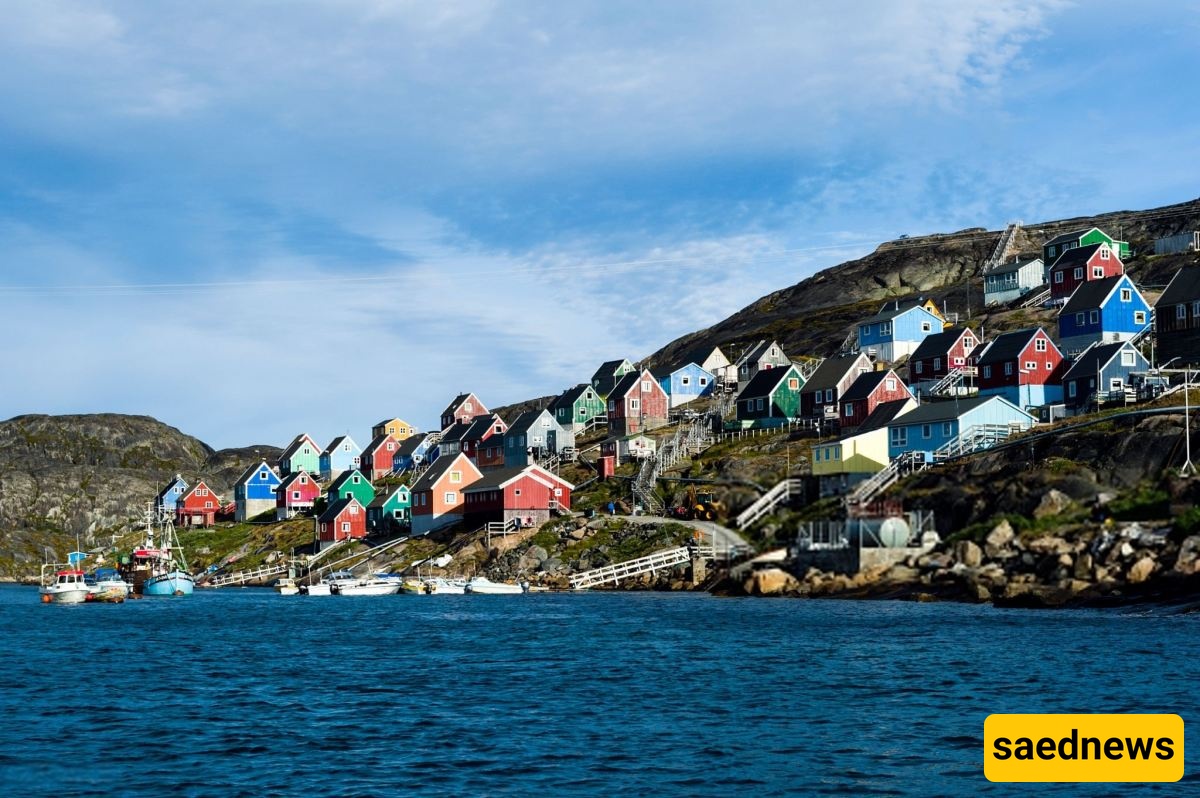
Greenland’s extreme climate strongly influences its cuisine. Because most of the island is covered by ice, there is very little land suitable for conventional farming, livestock production, or growing a wide variety of vegetables.
As a result, seafood plays a major role in the Greenlandic diet. Fishing is an important part of everyday life, and numerous species of fish are found in the surrounding waters.
Different communities and locations have traditionally become associated with particular types of fish. For example, Kapisillit is known for its connection with salmon.
Vegetables and fruit are generally served as side ingredients rather than forming the central part of traditional meals. Greenlandic cuisine reflects the island’s Arctic environment and its close relationship with the sea.
Greenland combines vast icy landscapes, Arctic wildlife, colorful coastal communities, and a distinctive culture shaped by both Indigenous traditions and Scandinavian history. Its remote location and challenging environment make it one of the most unusual inhabited regions on Earth.