SAEDNEWS: The martyrdom of Hazrat Fatimah occurred some time after the Prophet’s passing. This article explores the reported causes and circumstances of her death through different historical accounts.
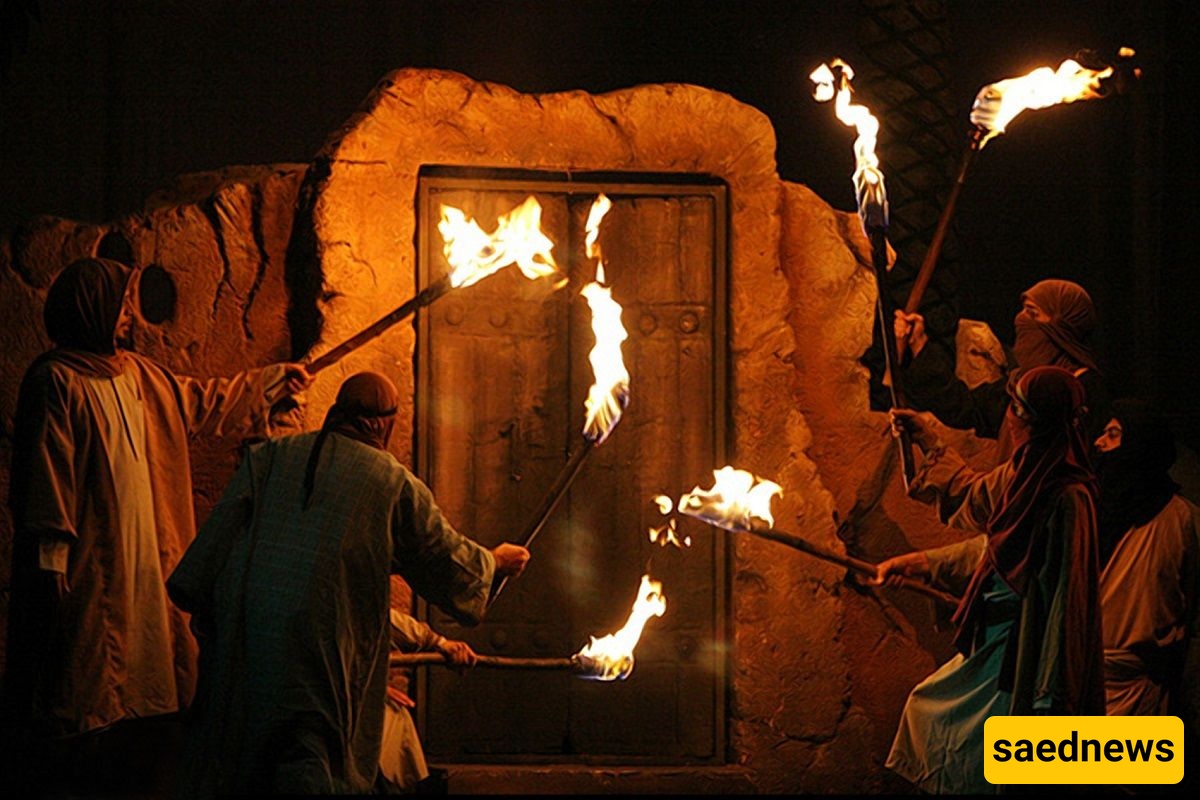
According to Saednews, The reasons behind the martyrdom of Lady Fatima al-Zahra (SA) and the reported incident of setting fire to the house of Imam Ali (AS) are among the frequently discussed questions in Islamic history. According to Shia accounts, the tragic events that followed the death of the Prophet Muhammad (PBUH) caused Lady Fatima to become seriously ill and ultimately led to her martyrdom. The following is an account of these events as presented in the cited historical and religious sources.
Imam Ali’s (AS) refusal to pledge allegiance to the new caliphate was considered unacceptable by those seeking to consolidate their authority. Consequently, they decided to compel Imam Ali (AS), the Banu Hashim, and others who had not pledged allegiance to do so.
According to The Encyclopedia of the Martyrdom of Lady Fatima al-Zahra, pages 236–237, the first attack on the house associated with the Prophet’s revelation reportedly occurred on Friday, two days after the Prophet’s burial.
Abu Bakr and Umar had learned that members of the Banu Hashim had gathered at the house of Fatima, the daughter of the Messenger of God, alongside Ali ibn Abi Talib. They reportedly arrived with a group of men to oppose this gathering and demand allegiance from Imam Ali (AS) and those who rejected Abu Bakr’s caliphate. Umar subsequently took them toward the mosque to obtain their pledge.
According to Tarikh al-Yaqubi, Volume 1, page 527, Imam Ali (AS) and his supporters faced pressure to pledge allegiance.
Imam Ali (AS) is reported to have said:
“I was dragged from my house just as a camel is dragged with a nose ring, until I pledged allegiance.”
— Nahj al-Balagha, Letter 28.
Yaqubi continues his account of the events following the gathering at Saqifah:
Imam Ali (AS) came outside, while Zubayr was carrying a sword. Umar confronted him, struggled with him, knocked him to the ground, and broke his sword. The group then entered the house.
Lady Fatima (SA) came out and declared:
“By God, you must leave, or I will uncover my hair and appeal to God with cries and supplications.”
— Tarikh al-Yaqubi, Volume 1, page 527; Ibn Qutaybah al-Dinawari, Al-Imamah wa al-Siyasah, Volume 1, pages 27–33.
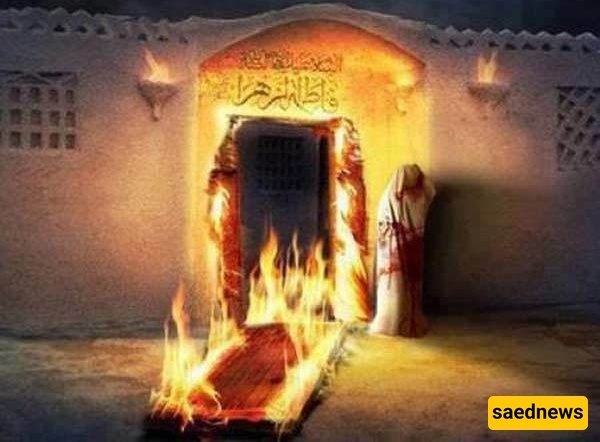
Al-Dhahabi, in his account of Ibn Abi Darim, cites a report attributed to Ibn Hammad al-Kufi. According to this narration, men came carrying a flaming torch while Lady Fatima (SA) was pregnant with Muhsin. The reported assault on her home allegedly resulted in the death of her unborn child. The account further states that Umar kicked her, causing the miscarriage.
— Siyar A'lam al-Nubala, Volume 15, page 578.
Sulaym ibn Qays al-Hilali, who is described in Shia tradition as a devoted companion of Imam Ali (AS), narrates:
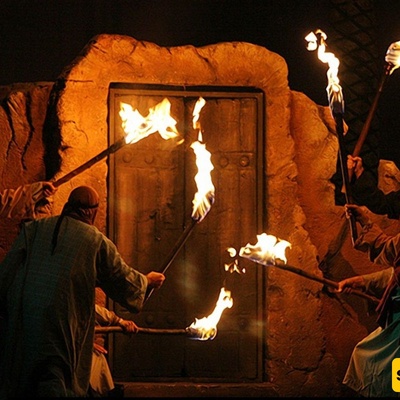
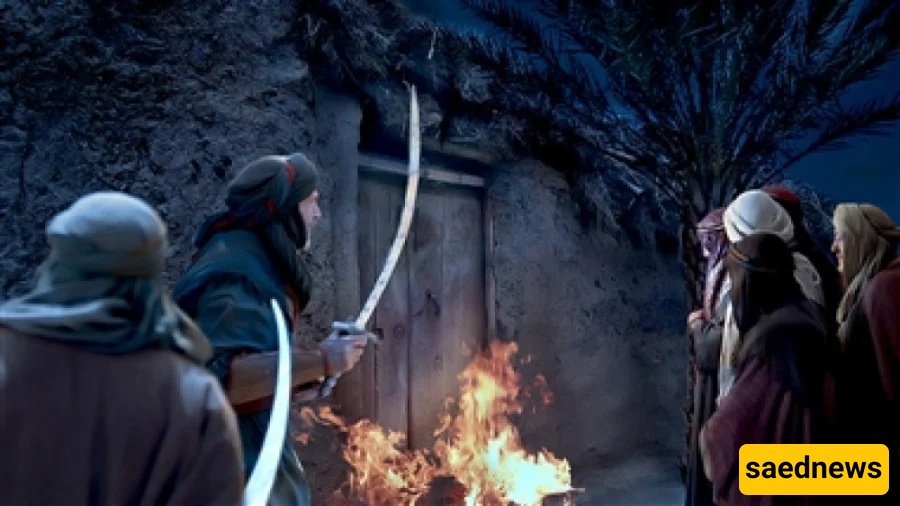
Umar called for fire and set it alight at the door of the house. He then pushed the door open and entered. Lady Fatima (SA) approached him and cried:
“O my father! O Messenger of Allah!”
According to the narration, Umar raised his sword while it remained in its sheath and struck her side. She cried out again, “O my father!” He then raised his whip and struck her arm.
— The Book of Sulaym ibn Qays al-Hilali, page 568.
During a debate in the presence of Muawiyah, Imam Hasan al-Mujtaba (AS) addressed Mughira ibn Shu'bah, saying:
“You are the one who struck Fatima, the daughter of the Messenger of Allah, until you wounded her and caused her to miscarry the child she was carrying.”
— Al-Tabarsi, Al-Ihtijaj, Volume 1, page 414; Bihar al-Anwar, Volume 43, page 197, Hadith 28.
Abu Basir also narrates from Imam Ja'far al-Sadiq (AS):
“The cause of her death was that Qunfudh, Umar’s servant, struck her with the sheath of a sword at Umar’s command. As a result, she miscarried Muhsin, became severely ill, and did not allow anyone who had harmed her to enter and visit her.”
— Bihar al-Anwar, Volume 43, page 170.
Some Sunni scholars, seeking to preserve the standing of the caliphs, reportedly refrained from recounting certain details of these historical events.
Ibn Abi al-Hadid, in his commentary on Nahj al-Balagha, states:
“The assaults reported concerning Fatima al-Zahra have been narrated among Muslims only by the Shia.”
— Sharh Nahj al-Balagha, Volume 2, page 60.
The painful events following the Prophet’s death, combined with her grief over the loss of her father and the difficult circumstances of her illness, further worsened Lady Fatima’s physical and emotional condition. Despite these hardships, she is described as having endured her suffering without complaint.
According to Shia accounts, Lady Fatima (SA) firmly defended the right of her husband, Imam Ali (AS), to the caliphate, which Shia Muslims believe had been divinely designated for him.
During the reported attack led by Umar ibn al-Khattab in support of Abu Bakr’s caliphate, she is said to have suffered severe injuries after being caught between the door and the wall. These accounts state that she also miscarried her unborn child, Muhsin, and endured repeated physical assaults.
Al-Safadi, another Sunni scholar, is quoted as saying:
“Umar struck Fatima on the day of the pledge of allegiance so severely that she miscarried Muhsin.”
— Al-Wafi bi al-Wafayat, Al-Safadi, Volume 5, page 347; Safinat al-Bihar, Shaykh Abbas Qummi, Volume 2, page 292.
Al-Mas'udi, in a passage from Ithbat al-Wasiyyah, writes:
“They proceeded toward his house, attacked it, and burned its door … They pressed the leader of the women against the door until she miscarried Muhsin.”
— Ithbat al-Wasiyyah, Beirut edition, page 153; other editions, pages 23–24.
The article also recounts a lengthy passage attributed to a letter from Umar to Muawiyah. In this account, the writer allegedly describes setting fire to the house door and entering despite Lady Fatima’s attempt to prevent him and his companions from coming inside.
The passage claims that he struck her arm with a whip, leaving a mark resembling a bracelet. Hearing her cries, he reportedly recalled those killed by Ali during the battles of Badr and Uhud, which intensified his anger. He then allegedly kicked the door with such force that Lady Fatima miscarried Muhsin.
The account continues that Lady Fatima cried:
“O my noble father! O Messenger of Allah! Is this how your beloved daughter is treated?”
She then reportedly called upon Fiddah for help, saying that her child had been killed. When she tried to prevent Imam Ali (AS) from being taken away, the narration alleges that she was struck across the face, causing her earring to fall.
— Bihar al-Anwar, Volume 30, page 293; Riyahin al-Shari'ah, Volume 1, page 267.
These painful events, according to the article’s account, left Lady Fatima (SA) bedridden and ultimately led to her death at the age of 18. In accordance with her reported wishes, she was buried at night in secret. The exact location of her grave remains unknown.
Historical and religious narrations differ regarding the exact date of Lady Fatima’s martyrdom. More than ten to fifteen opinions have been recorded, but three dates are particularly well known.
Days
The First Account
This view places her martyrdom 40 days after the death of the Prophet Muhammad (PBUH), corresponding approximately to the 8th–10th of Rabi al-Thani.
Days
The Second Account
This view places her martyrdom 75 days after the Prophet’s death, corresponding approximately to the 13th–15th of Jumada al-Awwal.
Days
The Third Account
This view places her martyrdom 95 days after the Prophet’s death, corresponding approximately to the 1st–3rd of Jumada al-Thani. This is the date range most strongly emphasized in the article.
Researchers of Islamic history who favor the third account regard the 95-day narration as having stronger historical support. However, religious scholars and authorities encourage believers to commemorate the occasion in accordance with all three reported dates.
In summary, the second account places the martyrdom on the 13th of Jumada al-Awwal, while the third places it on the 3rd of Jumada al-Thani.
Note: This translation presents the claims and quotations as reported in the original Persian article. The accounts of the attack, the alleged perpetrators, and the circumstances of Lady Fatima’s death are disputed in Islamic historiography, and the cited reports are not universally accepted across Sunni and Shia traditions.