SAEDNEWS: Karaftu Historical Cave is a remarkable complex of rock-cut architecture nestled in the Zagros Mountains. Blending history, legend, and natural beauty, this extraordinary site attracts numerous visitors to Kurdistan Province every year.
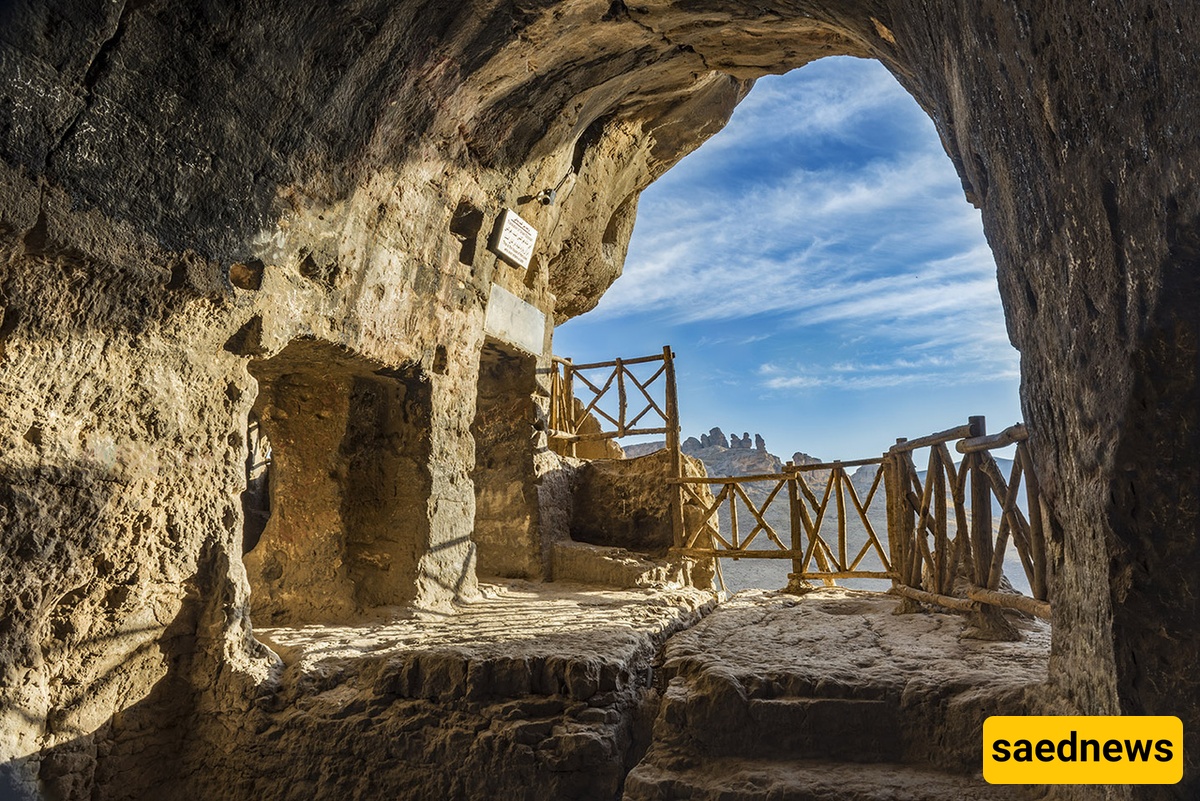
According to Saednews, Kurdistan Province, the green jewel of western Iran, has long been known for its remarkable natural landscapes and historical treasures. Among the many attractions of this region, one of Iran’s most fascinating and mysterious archaeological sites stands out: Karaftu Cave, an extraordinary complex of rock-cut architecture carved into a limestone mountain that transports visitors thousands of years into the past.
Listed among Iran’s national heritage sites, Karaftu Cave brings together history, architecture, nature, and legend in a remarkable setting. Every year, it attracts visitors from across Iran and around the world.
Known as the “Bride of Iran’s Caves,” Karaftu is more than a natural cave. It is evidence of the ingenuity of people who, centuries ago, used relatively simple tools and remarkable creativity to transform the mountain into a place of shelter, residence, defense, and worship.
Karaftu Cave is located in Kurdistan Province, approximately 67 kilometers northwest of Sanandaj and about 20 kilometers northeast of Divandarreh. Although Kurdistan is closely associated with the region’s Kurdish heritage, the cave is interestingly situated relatively close to the border of West Azerbaijan Province. Its strategic location has contributed to its importance for different peoples throughout history.
To reach Karaftu Cave, travelers from Sanandaj generally head toward Divandarreh. After reaching Divandarreh, the journey continues for roughly 20 kilometers along a scenic mountain road toward Karaftu Village, near which the cave is located.
The road itself is part of the experience. Mountain landscapes of the Zagros, green plains, and flowing springs create impressive scenery along the route and make the journey to the cave especially rewarding.
One of the most intriguing questions that comes to mind when visiting Karaftu Cave is: Who carved it, and when?
There is no simple answer. Archaeologists have proposed different theories based on archaeological evidence and discoveries made at the site.
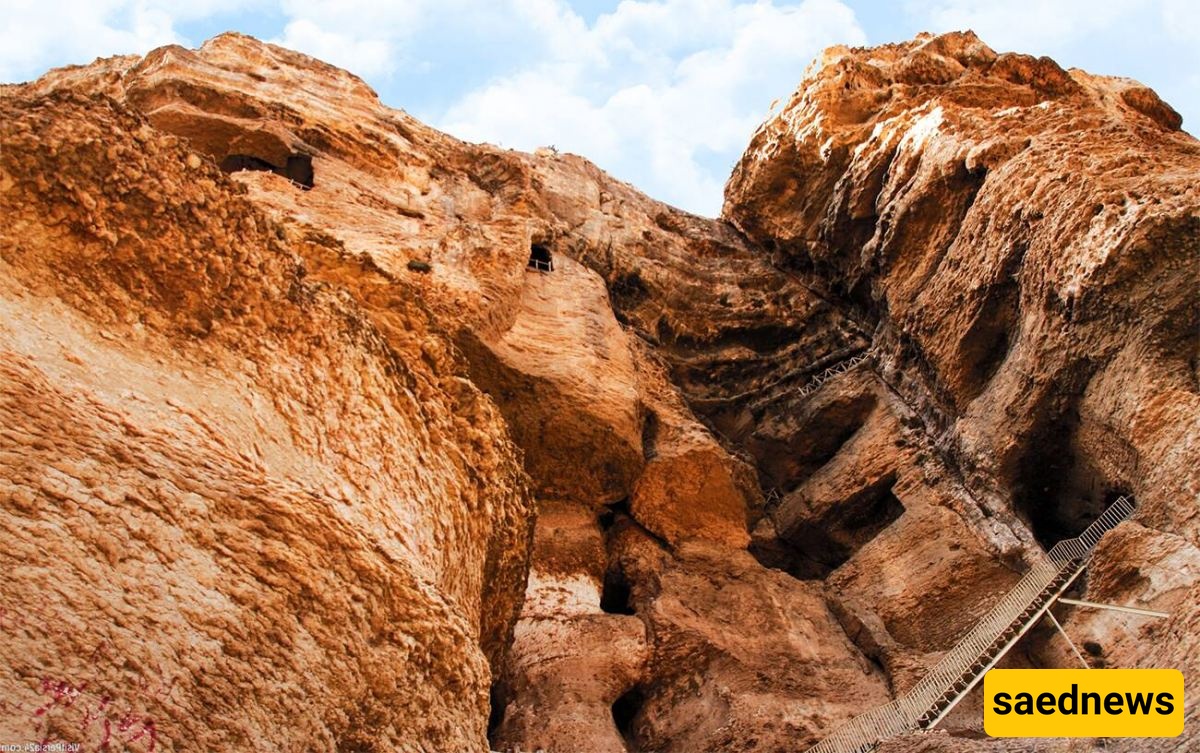
Karaftu originally formed as a natural cave, but humans gradually expanded and modified it during different historical periods. Major modifications are generally associated with the Parthian period, around 2,000 years ago, when the cave was transformed into a multi-level complex containing numerous interconnected rooms.
However, evidence suggests that human occupation of Karaftu may be considerably older than the Parthian era. Some researchers have proposed connections with the Median period or even earlier populations.
Inside the cave, passages, rooms, corridors, stairways, and carefully carved reservoirs for collecting rainwater were created directly in the rock. This sophisticated planning has led some researchers to view Karaftu not simply as a natural shelter but as a highly developed architectural complex.
Another major mystery concerns the cave’s original purpose.
Some researchers believe Karaftu may have served as a sanctuary associated with Mithraism, pointing to similarities between its internal structure and certain Mithraic temples found elsewhere in Iran and the Roman world.
Others interpret it as a defensive fortress and observation post, taking advantage of its elevated and strategic position to monitor important routes.
A third theory suggests that its function changed over time, with the cave serving variously as a place of worship, a military stronghold, and a residential complex.
One of Karaftu Cave’s most significant discoveries is a Greek inscription carved near the entrance on one of the cave walls.
The inscription refers to Heracles (Hercules), the Greek hero and deity. Based on its wording, the site appears to have been dedicated to Heracles, leading to numerous interpretations concerning the cave’s connections with Greek or Seleucid influence in the region.
The inscription dates to approximately the early centuries BC. Some researchers therefore believe that Karaftu may once have functioned as a sanctuary dedicated to Heracles, who was associated with protection and strength.
The tradition has also become part of local culture, with some people referring to the cave as “Hercules Castle.”
Yet an important question remains: Who actually carved the Greek inscription?
Was Karaftu used by Greek communities living in Iran after Alexander the Great’s campaigns, or was the dedication created by a local individual influenced by Greek culture? The question remains open, adding another layer of mystery to the site.
Karaftu is considered one of the rare examples of cave-fortress architecture in Iran and is notable internationally as well.
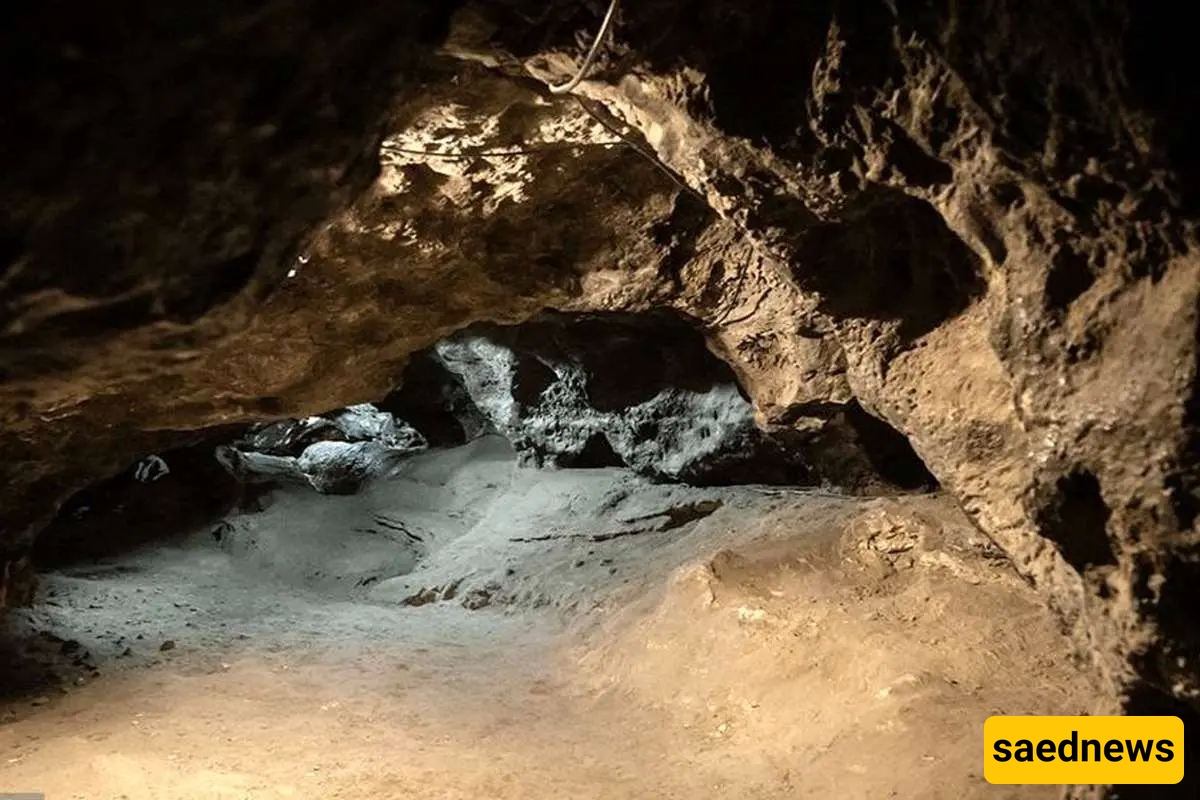
The complex contains approximately three levels with around 40 rooms, corridors, passageways, and stone staircases. What makes the architecture particularly impressive is that much of the complex was carved directly into the mountain rather than constructed using conventional building materials.
In other words, the rooms and passages are essentially part of the mountain itself.
The first level retains more of the cave’s natural character. After entering through the main opening, visitors encounter a large, vaulted space that may have served in the past as a gathering area or storage room.
A narrow, ascending corridor leads to the second level, where the architecture becomes increasingly complex. Small and large rooms are arranged in an interconnected pattern.
Continuing upward through narrow stone stairways leads to the third and highest level. Openings carved into the ceilings served as sources of natural light and ventilation. According to some interpretations, certain openings may also have been used defensively, potentially allowing defenders to drop burning materials onto attackers.
Water reservoirs and carved basins inside Karaftu indicate that its inhabitants may have been capable of remaining in the complex for extended periods, particularly during times of conflict or siege.
Some researchers have also suggested that certain sections may have been used for keeping animals or storing food. These features lend additional support to the theory that Karaftu served, at least during certain periods, as a defensive stronghold.
The origins of the name Karaftu are uncertain. Some theories connect it to Kurdish or Turkic words, while other interpretations have been proposed over time.
One particularly fascinating local legend tells of a beautiful woman named Karaftu who, driven by jealousy over her love for a cave dweller, entered the cave and disappeared inside it.
Other interpretations associate the name with words meaning “thorn” or “work.” Although there is no universal agreement about the precise origin of the name, numerous legends have become attached to the cave and contribute to its cultural appeal.
According to local traditions, Karaftu has served as a refuge for people and even wild animals throughout history. Other stories claim that hidden passages inside the cave once connected it to distant towns.
There is no archaeological evidence confirming these underground connections, but such stories add an intriguing sense of mystery to a visit.
Karaftu Cave is one of Kurdistan Province’s most important tourist attractions because of its unusual combination of natural and cultural features.
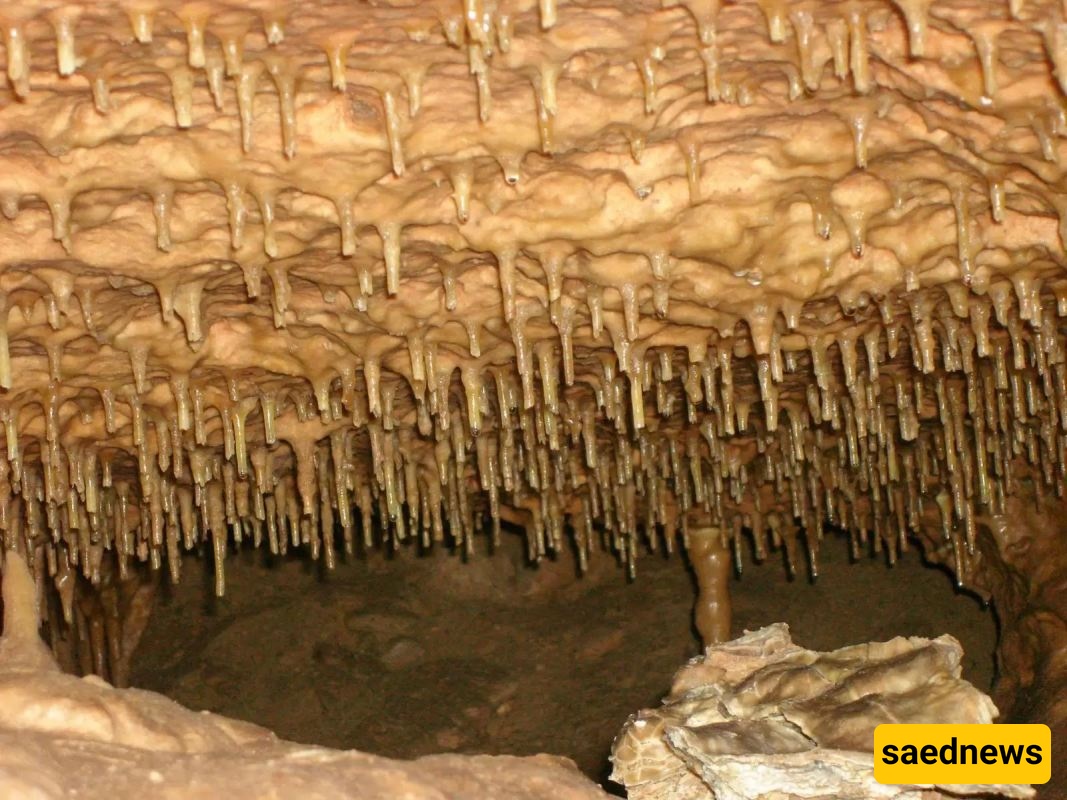
Beyond its historical significance, the cave is also geologically important. It was formed within a limestone formation, and some sections contain attractive stalactites and stalagmites. These natural formations contrast dramatically with the human-made carvings, creating an unusual combination of rugged geology and refined rock-cut architecture.
The cave was officially registered as a national heritage site in 1938 (1316 in the Iranian Solar Hijri calendar). Since then, various measures have been taken to improve the surrounding area and provide visitor facilities.
In recent years, lighting inside the cave has also been improved and visitor routes have been made safer.
A typical visit takes around an hour, during which travelers pass through numerous rooms, corridors, stairways, and passages, each revealing another part of the cave’s long and complex history.
If you are planning a trip to Karaftu Cave, keep a few practical points in mind:
Best time to visit: Spring and summer are generally the most pleasant seasons. The weather is milder, and the surrounding landscape is at its most beautiful. Winter travel can be more difficult because mountain roads may become snowy and slippery.
Wear suitable clothing and shoes: The interior can be dark and humid, while some areas contain steep or slippery stairs. Comfortable walking shoes and warm clothing are recommended.
Bring a light: A flashlight or headlamp can be useful, particularly in darker sections of the cave.
Protect the historical site: Do not write, scratch, or carve anything onto the cave walls. Such damage can permanently harm a nationally protected archaeological site and interfere with future research.
Respect the environment: Karaftu is part of a sensitive mountain ecosystem. Take your waste with you and avoid damaging the surrounding landscape.
One of the advantages of visiting Karaftu Cave is the opportunity to explore other attractions in the surrounding area.
Divandarreh offers local markets and relatively untouched natural landscapes, while Karaftu Village provides visitors with a glimpse of traditional homes and older rural architecture.
The surrounding area also features mineral springs and green plains, particularly around Divandarreh. Visitors can experience aspects of Kurdish culture, including traditional clothing, local customs, and the region’s well-known hospitality.
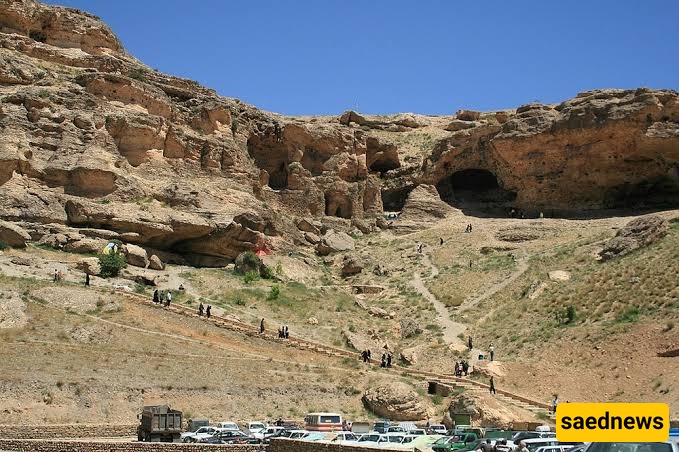
Karaftu Cave is far more than an impressive natural formation. Its combination of natural geology, ancient human engineering, defensive architecture, religious mysteries, Greek inscriptions, and local legends makes it one of the most distinctive historical attractions in western Iran.
Walking through its carved corridors and rooms offers a rare opportunity to experience how ancient communities adapted a natural mountain environment to their needs. Whether Karaftu was primarily a sanctuary, fortress, residence, or a combination of all three, its surviving architecture continues to preserve the mysteries of a remarkably long human history.