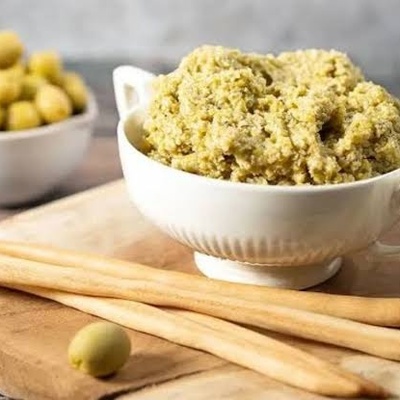
SAEDNEWS: Tapenade is one of the most famous and flavorful Mediterranean condiments, made with a blend of olives, anchovies, capers, garlic, and olive oil.

According to Saednews, Tapenade is originally a French word derived from tapena, meaning capers. This sauce originated in the Provence region of France and was traditionally served as a condiment alongside bread, fresh vegetables, and seafood. The main ingredients in tapenade are olives, capers, anchovies, and olive oil. Over time, various versions of this spread became popular throughout Mediterranean countries.
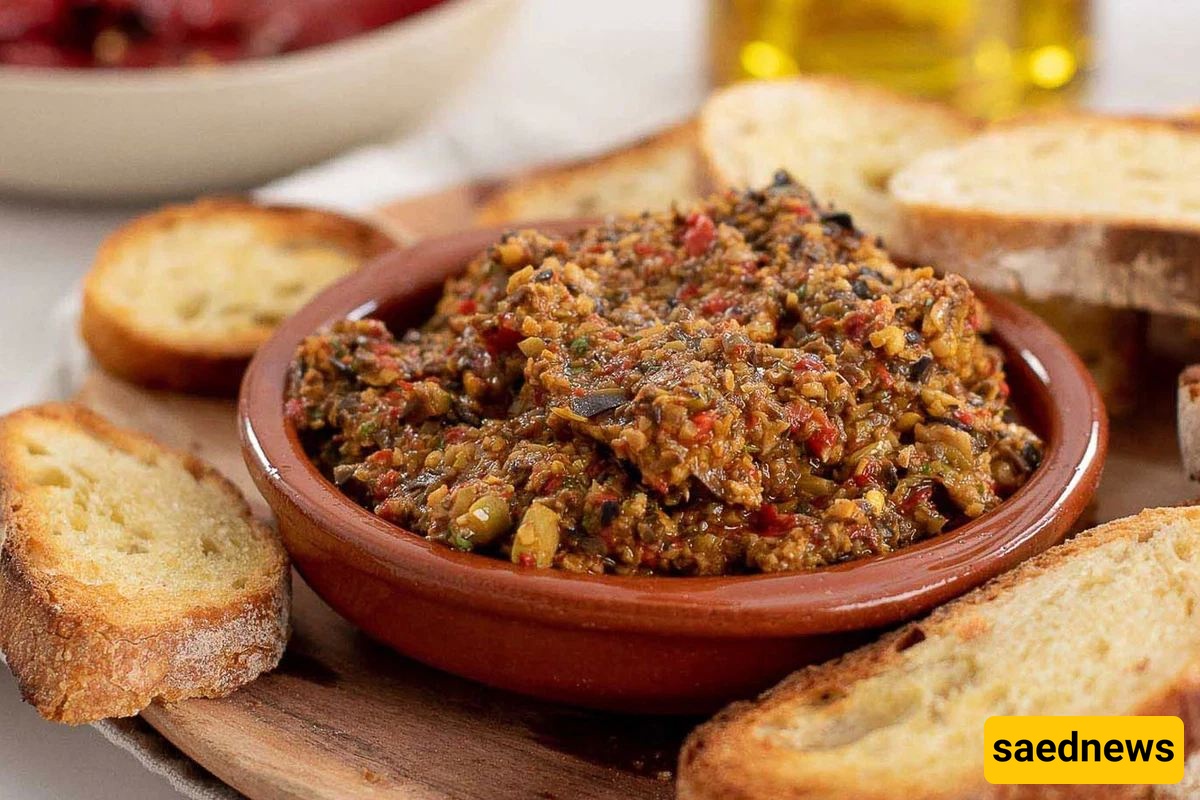
Today, tapenade can be made with green olives, black olives, sun-dried tomatoes, or even without anchovies. However, olives and olive oil remain the foundation of its distinctive flavor. Tapenade has a thick, slightly coarse texture and should not be blended into a completely smooth purée, as its individual flavors and textures are meant to be noticeable.
200 g anchovies
1 cup pitted green olives
1 cup pitted black olives
50 g chopped parsley
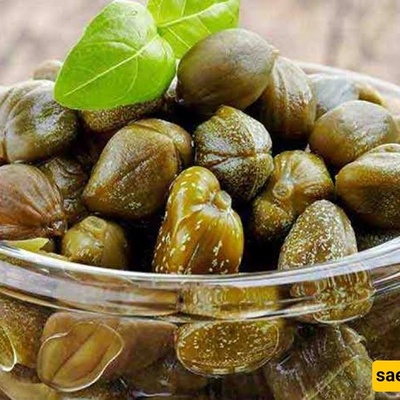
¼ cup capers
1 tablespoon fresh lemon juice
2 garlic cloves
2 tablespoons olive oil
½ cup sun-dried tomatoes
Salt and black pepper, to taste

If you want to prepare homemade tapenade with a professional-quality flavor using simple ingredients, follow these steps.
Drain the green and black olives in a colander and dry them thoroughly with a clean kitchen towel. If the olives are particularly salty, soak them in cold water for a few minutes, then drain them.
Soak the sun-dried tomatoes in warm water until softened, then drain them. Remove the anchovies from their oil or brine and set them aside.
Peel and finely chop the garlic. Wash and thoroughly dry the parsley, then finely chop it. If the capers are large, chop them slightly as well.
Preparing the ingredients this way helps them combine more evenly in a food processor or meat grinder.
Place the green olives, black olives, anchovies, capers, garlic, sun-dried tomatoes, and parsley in a food processor.
Pulse several times until the ingredients form a coarse, cohesive paste. Avoid over-processing the mixture, as authentic tapenade should retain a slightly chunky texture.
Add the fresh lemon juice, olive oil, salt, and black pepper. Pulse briefly again to combine the ingredients.
Taste the tapenade and adjust the seasoning as needed by adding more salt, lemon juice, or olive oil. If the anchovy flavor is too strong, add a little more olive or sun-dried tomato to balance it.
Transfer the tapenade to a clean glass jar with a tight-fitting lid. Cover the surface with a thin layer of olive oil to help prevent it from drying out and darkening.
Refrigerate for at least one hour to allow the flavors to meld. The longer the tapenade rests, the deeper and more harmonious its flavor becomes.
Choose high-quality olives: Fresh, meaty, pitted olives provide the best flavor and texture.
Adjust the anchovies to your taste: Anchovies add depth and savory richness, but you can omit them if you prefer a milder flavor.
Keep the texture slightly chunky: Finely chop the ingredients by hand or use short pulses in a food processor.
Use extra-virgin olive oil: It adds richness, aroma, and depth to the sauce.
Substitute for capers if necessary: Finely chopped pickles or a small amount of vinegar can provide a similar tangy note.
Add salt carefully: Olives, anchovies, and capers are naturally salty, so taste the mixture before adding extra seasoning.
Serve your homemade Mediterranean olive tapenade with crusty bread, crackers, fresh vegetables, grilled seafood, or as a flavorful spread in sandwiches and wraps.