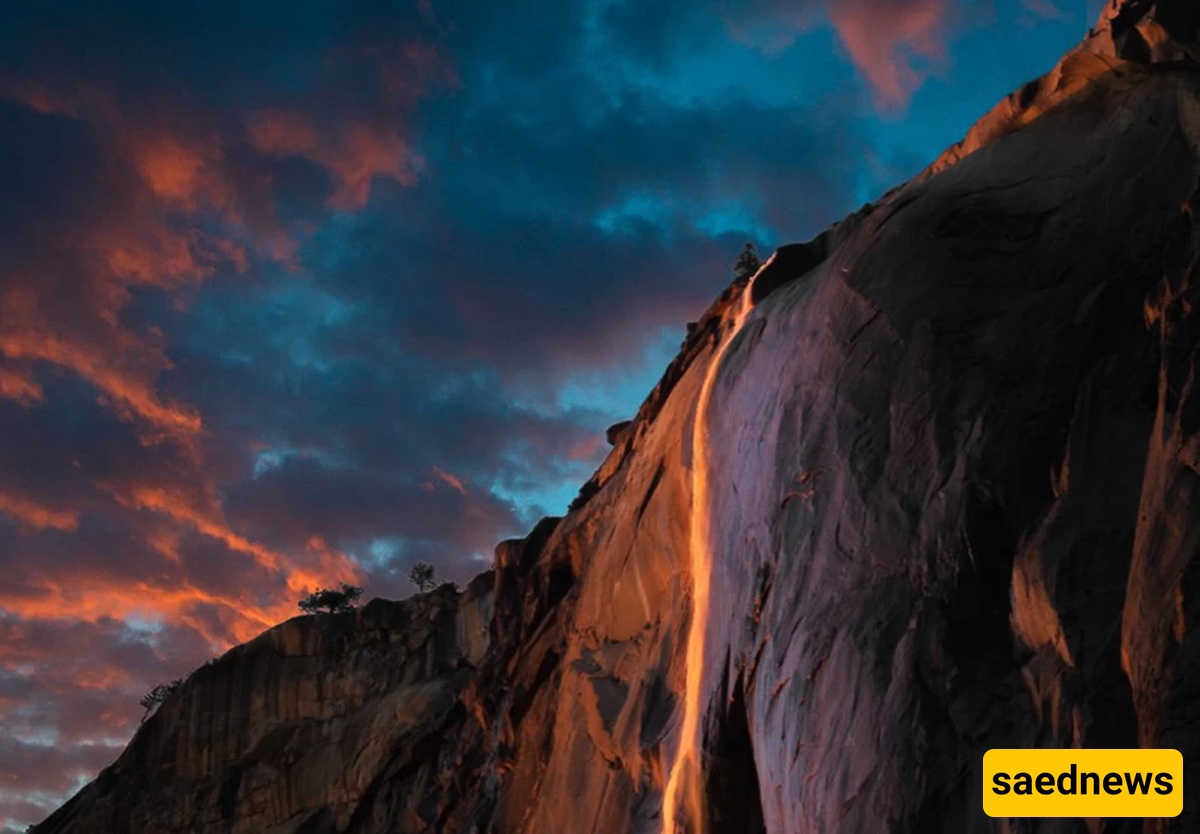
SAEDNEWS: Firefall is the second-tallest waterfall in Yosemite Valley. Measuring approximately 150 meters in height, it cascades down a granite cliff on the eastern side of El Capitan.
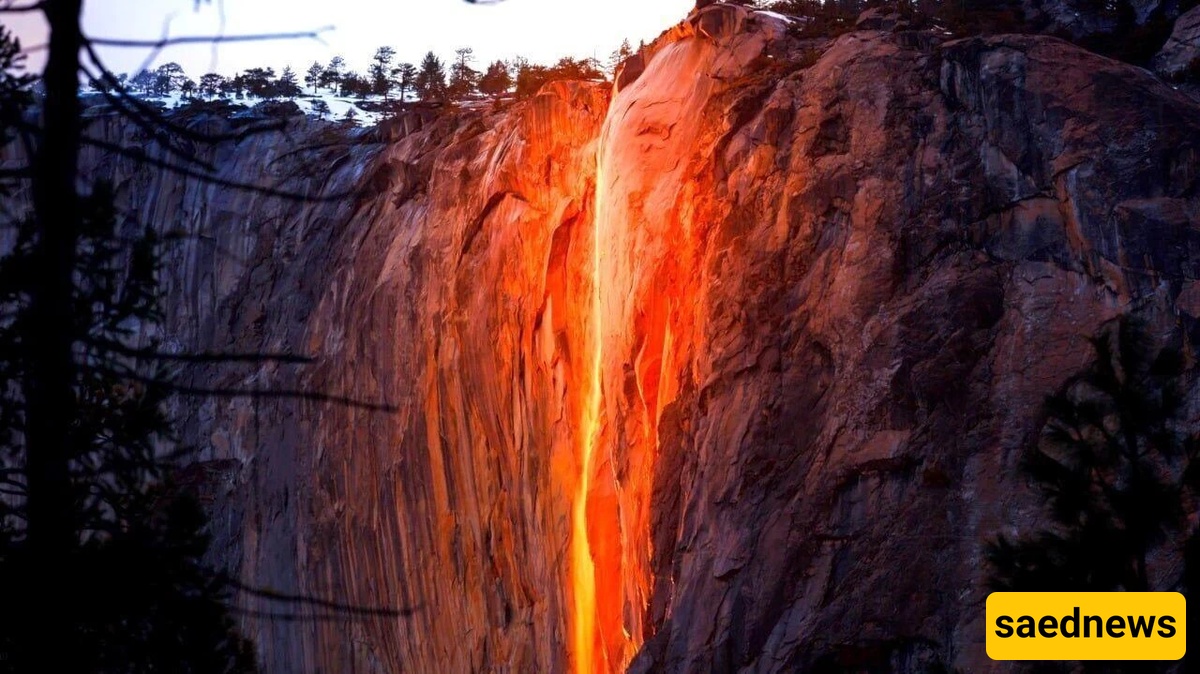
According to Saednews, California’s famous Firefall is a seasonal waterfall. It has no permanent river feeding it and begins flowing after the snow melts. As a result, the waterfall generally flows during winter and spring.
The waterfall appears orange only under specific winter conditions. In autumn, the angle of sunlight can also create a similar glowing effect, but because the weather is colder and there is no flowing water, the fiery appearance cannot normally be seen.
The Firefall is visible only when the sky is completely clear. Even a small cloud can block the sunlight and prevent the rays from reaching the waterfall.
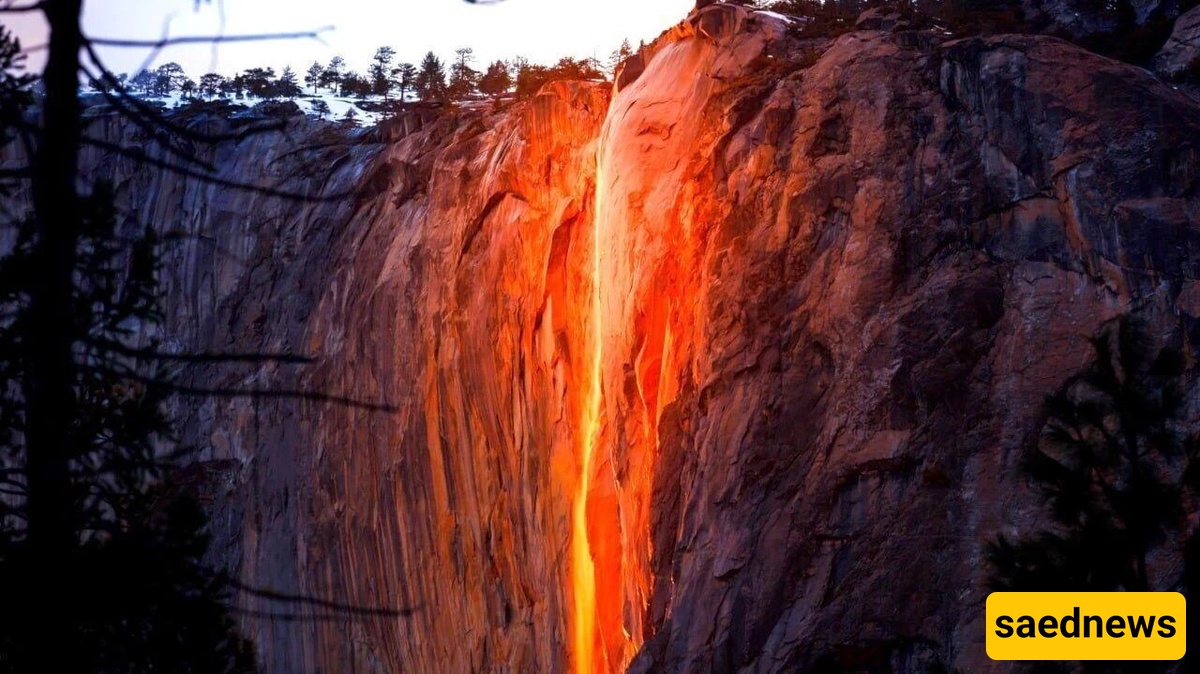
Many visitors travel to Yosemite Valley around mid-February to witness the Firefall. Because the valley has limited capacity, it cannot accommodate everyone at once. Visitors may therefore need to make a reservation before planning their trip. It is important to check the current access requirements and secure a reservation in advance.
One of the best places to view and photograph the waterfall is the El Capitan Picnic Area. Photographers often gather here to capture the glowing waterfall from different perspectives.
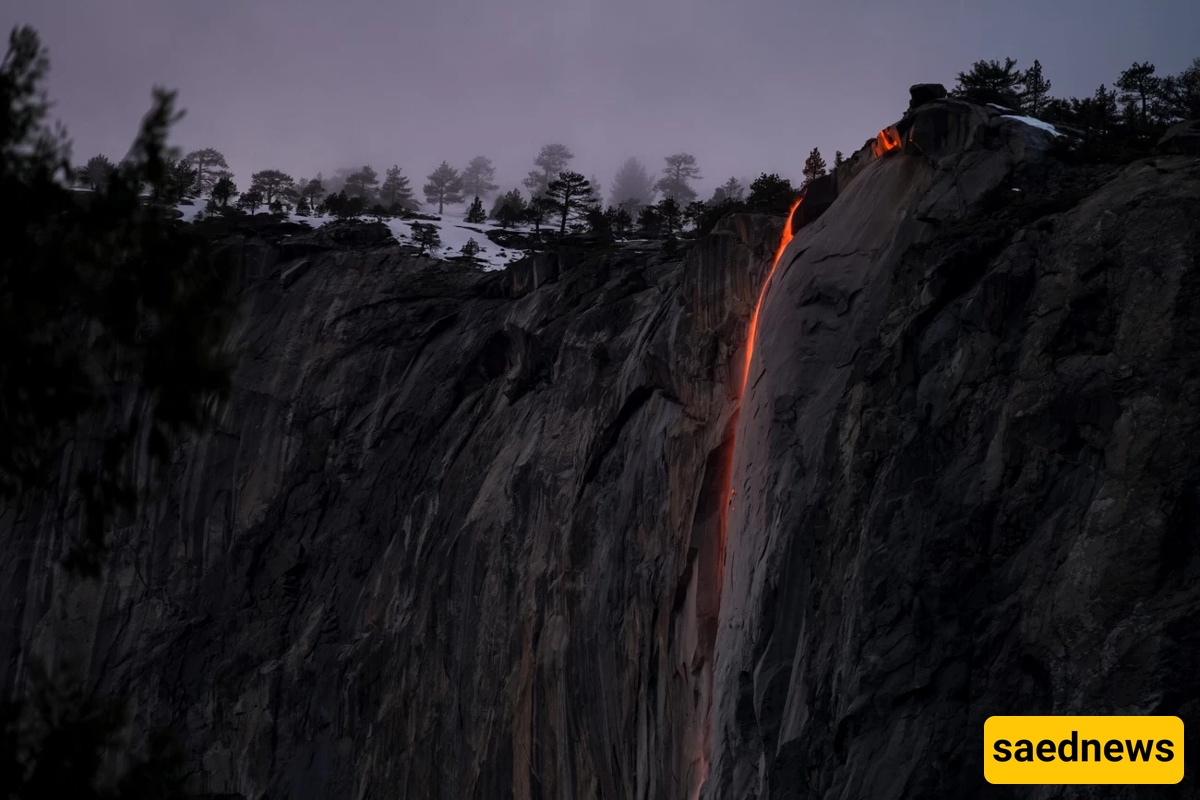
Since this natural phenomenon occurs during winter, visitors should dress warmly. Icy conditions may also occur along the route, so wearing warm, sturdy footwear and carrying suitable equipment is recommended.
Visitors usually need to park their vehicles some distance from the viewing area and walk part of the way. The Firefall phenomenon occurs around sunset, so it will be dark on the return journey. Carrying a flashlight can make the walk back safer and easier.
Visitors should also help protect the surrounding environment. Stay away from meadows, do not enter restricted or fenced areas, and collect all rubbish before leaving.