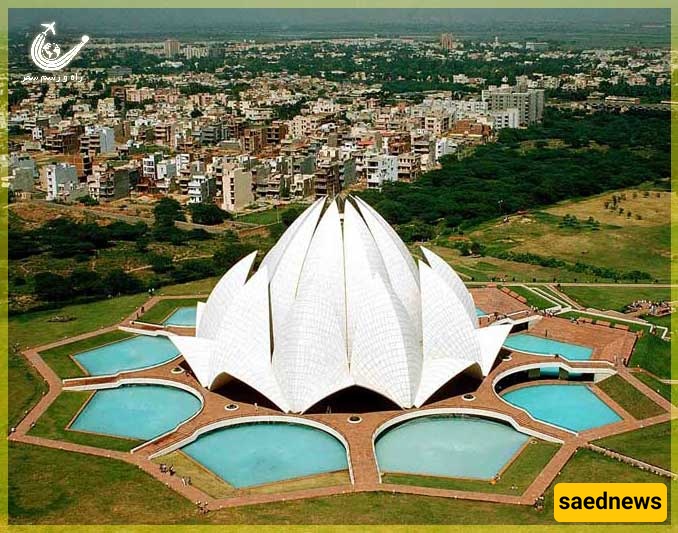
SAEDNEWS: The Lotus Temple, also known as the Bahá’í House of Worship, is one of the eight continental Houses of Worship of the Bahá’í Faith. Located in New Delhi, the capital of India, it is widely recognized as the Mother Temple of the Indian subcontinent.
According to Saednews, Iran is a relatively dry country, which is why many Iranian travelers prefer visiting Europe to enjoy its lush green landscapes. However, a large number of Iranian tourists are also fascinated by ancient civilizations, historical landmarks, and traditional architecture. Among the countries that attract visitors because of their rich history and remarkable architectural heritage, India is one of the most popular destinations. This article introduces one of the most famous attractions included in many India travel itineraries: the Lotus Temple in New Delhi.
One reason travelers may choose a Delhi tour instead of visiting destinations such as Goa is the opportunity to see the magnificent Lotus Temple. Also known as the Bahá’í House of Worship or the Lotus Temple, this extraordinary building is one of the most recognizable landmarks in the Indian capital.
The temple was designed by Fariborz Sahba, an Iranian Bahá’í architect. Its distinctive structure was inspired by the shape of a lotus flower, a symbol that has deep cultural and spiritual significance in India.
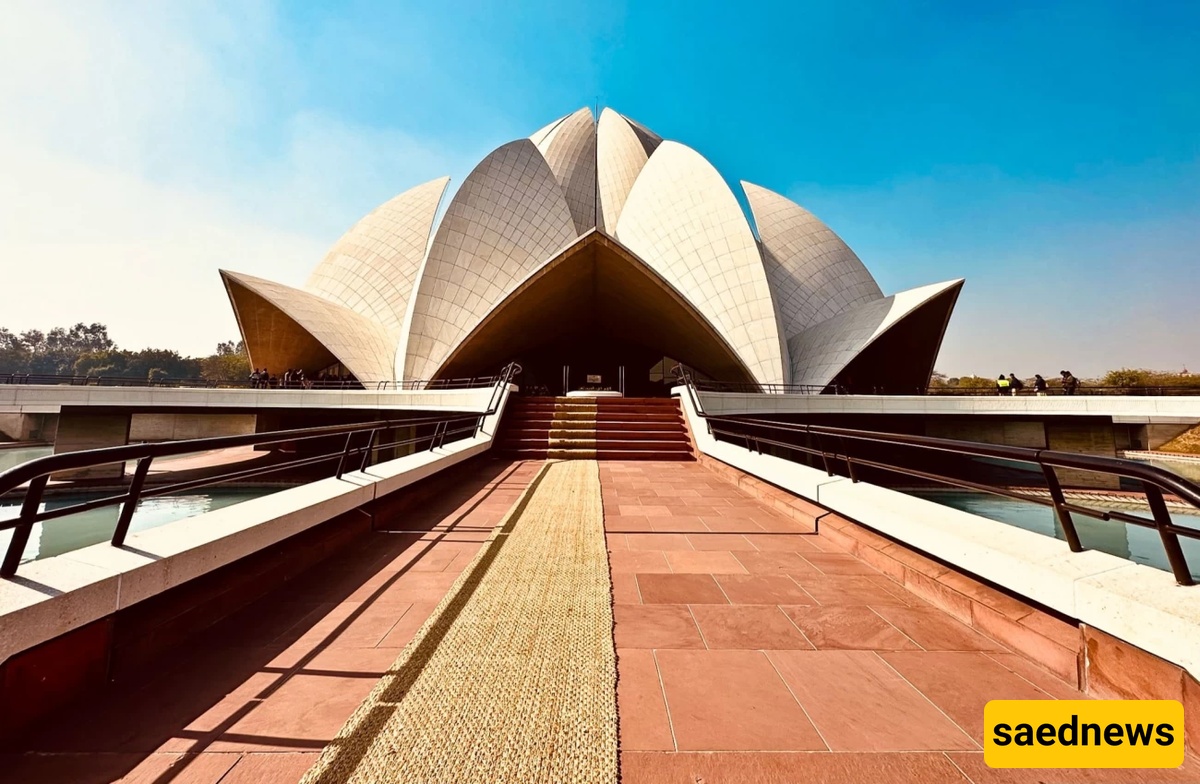
Like many famous landmarks around the world, the Lotus Temple represents the contribution of people and materials from different countries. The building consists of 27 large marble-clad petals arranged in groups of three, creating nine sides. White marble was sourced from Greece and processed in Italy before being used in the construction.
The construction of the Lotus Temple is an interesting story in itself. Work began in 1980, and the temple was completed after approximately six years.
At the time, India had restrictions on the import of foreign goods. As a result, many aspects of the project had to be completed under challenging conditions and without some of the modern construction equipment available today. Despite these limitations, the architects and builders succeeded in creating an internationally recognized architectural masterpiece.
Since its completion, the Lotus Temple has received numerous international awards and recognition for its innovative design and architectural excellence.
The Lotus Temple is located in New Delhi, India, near the presidential complex. Beyond its striking architecture, the temple has become an important symbol of modern Indian architecture.
Because of its unique design and cultural significance, the monument has attracted considerable international attention. It has even been compared to the Taj Mahal in terms of its importance as a landmark of Indian architecture.
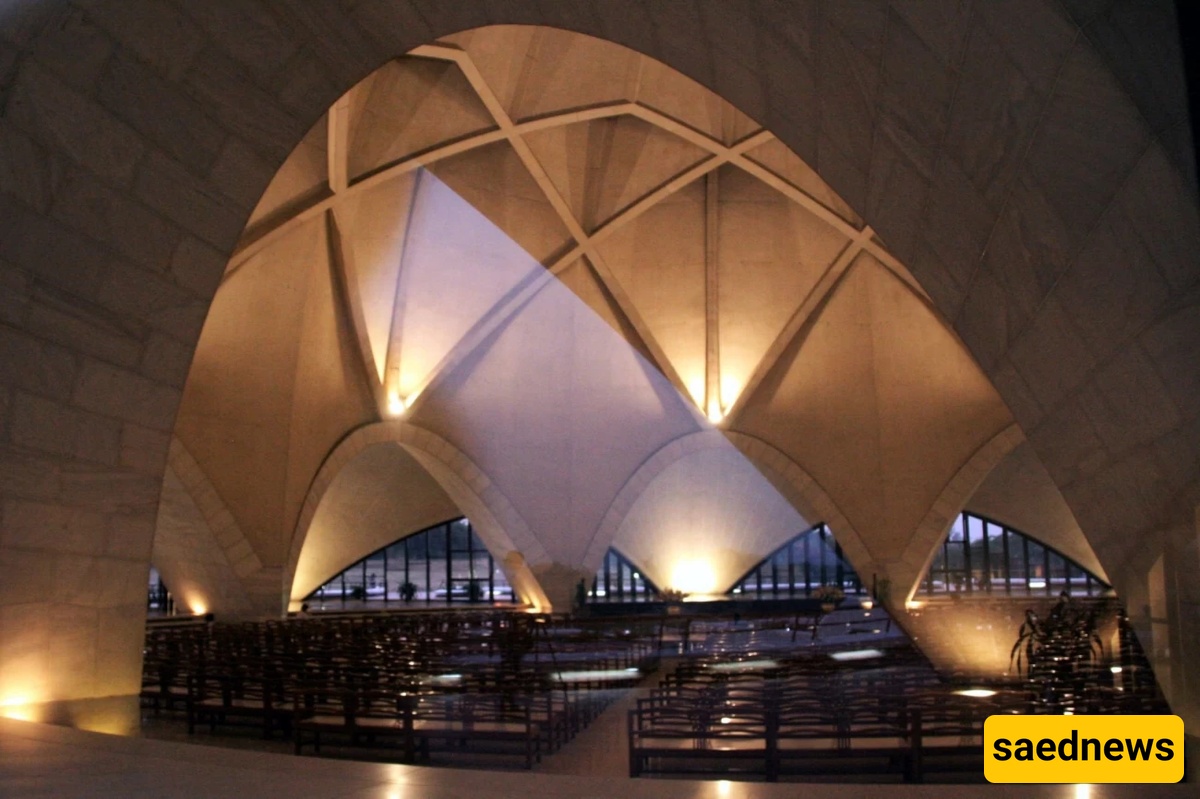
The central prayer hall can accommodate approximately 1,300 people. The building has nine entrances, each leading toward the central hall. The structure reaches a height of about 27.3 meters, while its overall diameter is approximately 70 meters. The temple stands within a large landscaped area covering more than 64 hectares.
Visitors traveling to India should not be surprised by the large crowds around popular attractions. India is home to people from many different religions, cultures, and traditions, and the Lotus Temple reflects this diversity.
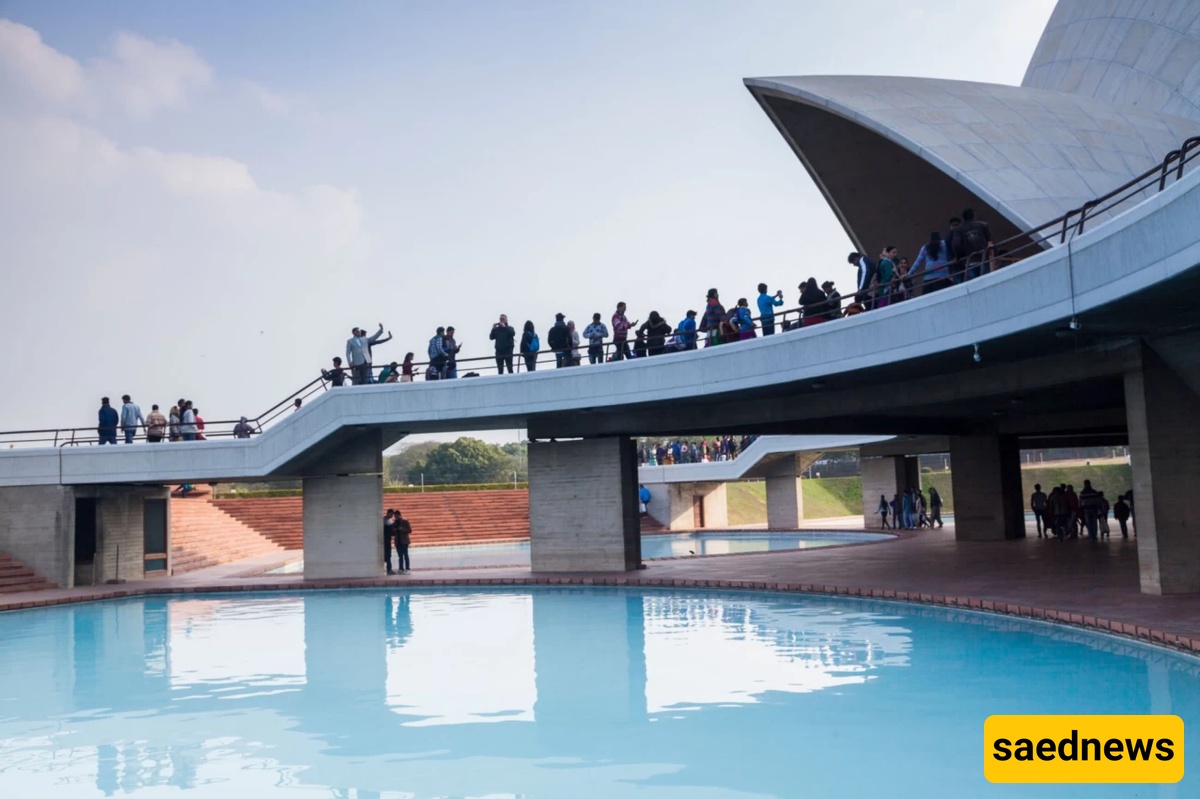
Although the temple is a Bahá’í House of Worship, people of all religions and beliefs are welcome to enter, sit quietly, meditate, pray, or simply enjoy the peaceful atmosphere. The temple is not limited to followers of a particular faith and is intended as a place where people from different backgrounds can come together in an atmosphere of peace and reflection.
The surrounding gardens add to the beauty and tranquility of the site. Despite being a relatively modern monument, the Lotus Temple has attracted millions of visitors from around the world and has become one of New Delhi's most popular tourist attractions.
Its combination of innovative architecture, peaceful surroundings, and universal spiritual message makes the Lotus Temple one of the most memorable places to visit in India.