SAEDNEWS: St. Mary’s Cathedral is a historic cathedral located on Toompea Hill in Tallinn, Estonia. Join us as we take a closer look at this remarkable church and discover more about its history and significance.
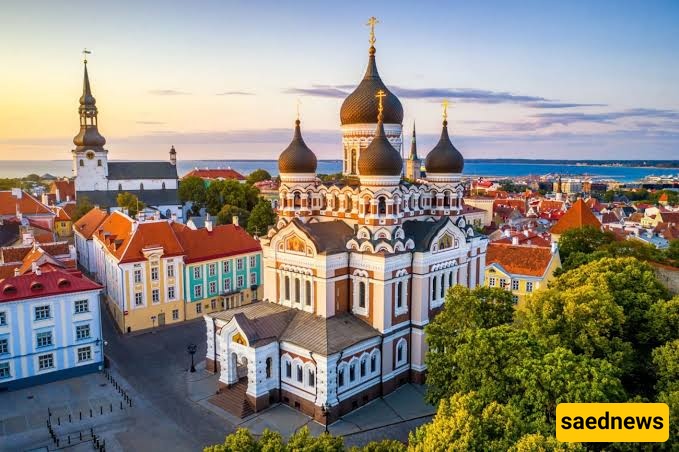
According to Saednews, Tallinn Cathedral was founded by the Danes in the 13th century. It is the oldest church in Tallinn and on mainland Estonia. The building is also the only structure on Toompea Hill that survived the devastating fire of the 17th century. Originally a Roman Catholic cathedral, it became Lutheran in 1561 and now belongs to the Estonian Evangelical Lutheran Church.
The first church on the site was probably a wooden building constructed in 1219, when the Danes invaded Tallinn. In 1229, Dominican monks arrived and began building a stone church to replace the earlier wooden structure.
In 1233, the monks were killed during a conflict between the Brothers of the Sword and vassals supporting the papal legate. As a result, the church was destroyed.
A letter requesting permission to reconsecrate the church was sent to Rome in 1233. This document is considered the earliest surviving written record of the church.
The Dominicans were unable to complete the building. They constructed only the foundation walls, and the church was completed in 1240. It was designed as a single-nave structure with a rectangular plan. That same year, it was designated as a cathedral and dedicated to the Virgin Mary.
Renovation of the cathedral began at the beginning of the 14th century. The church was enlarged, beginning with the construction of a new chancel. A new sacristy was also built around the same period.
The expansion from a single-nave church into a three-nave structure began in the 1330s. However, the construction work continued for almost a century.
The longitudinal section of the church, measuring approximately 29 meters and built according to basilica principles, was completed in the 1430s. The rectangular pillars of the nave had been completed during the second half of the 14th century.
The cathedral suffered extensive damage during the great fire of 1684, which destroyed all of its wooden furnishings. Several vaults collapsed, while many carved stone details were severely damaged, particularly in the chancel.
Following the fire, the church was essentially rebuilt in 1686 to restore it to its former condition. A new pulpit decorated with figures of the apostles and a new altar were created by the Estonian sculptor and woodcarver Christian Ackermann.
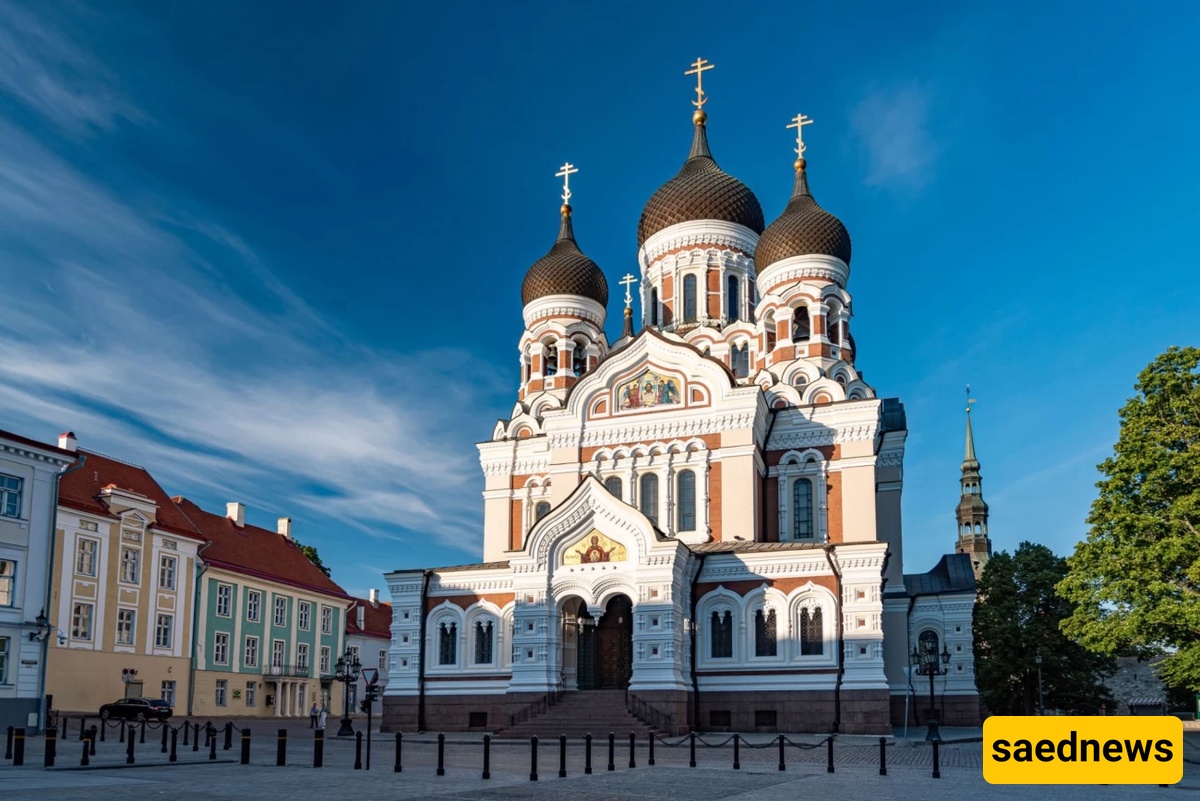
The exterior of the cathedral largely dates from the 15th century, while some of its decorative elements date from the 18th century. Most of the church's furnishings originate from the 17th and 18th centuries.
Between 1778 and 1779, a new Baroque spire was constructed on the western side of the cathedral, giving the building much of the appearance it has today.
The cathedral contains a remarkable collection of historical monuments and religious furnishings. These include tombstones dating from the 13th to the 18th centuries, carved stone sarcophagi from the 17th century, an ornate altar and chancel, chandeliers, and numerous coats of arms dating from the 17th through the 20th centuries.

Two of the cathedral's four bells date from the 17th century, while the other two were made in the 18th century. The cathedral's organ was built in 1914.
Today, Tallinn Cathedral remains one of Estonia's most significant historic churches and an important landmark of Toompea and the city of Tallinn.