SAEDNEWS: Fatehpur Sikri, the historic city of Mughal Emperor Akbar in Uttar Pradesh, India, was once the capital of the Mughal Empire. Recognized as a UNESCO World Heritage Site in 1986, it is a must-visit destination for history lovers and Jodha Akbar fans.
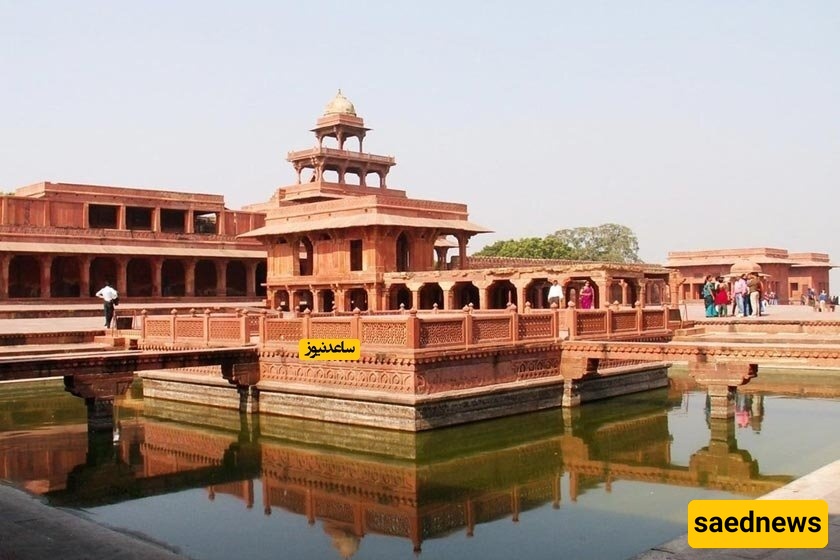
According to the tourism section of Saed News, Fatehpur Sikri is a historic city near Agra, India, with a legacy dating back to the 16th century. Founded by Emperor Akbar, one of the most powerful rulers of the Mughal Empire, the city once served as the capital of the Mughal Empire before Agra took over that role. Every major structure in this ancient city, including palaces, gardens, roads, mosques, and royal residences, was built under Akbar’s orders. Due to its outstanding historical, cultural, and architectural importance, Fatehpur Sikri has been recognized as a UNESCO World Heritage Site.
Fatehpur Sikri was established in 1571 by Emperor Akbar as the capital of the Mughal Empire. The city was built to honor Sheikh Salim Chishti, a respected Sufi saint who had predicted the birth of Akbar’s son. In 1569, Akbar’s wife Mariam-uz-Zamani gave birth to a son named Prince Salim, who later became Emperor Jahangir.
During his military campaigns in Punjab, Emperor Akbar left Fatehpur Sikri. Due to water shortages, the city was completely abandoned by 1610. Archaeological research, including studies by historians and archaeologists such as Pratap Singh, suggests that some artifacts, sculptures, and structures in the region date back more than 1,000 years. Before Akbar made it his capital, earlier Mughal rulers, especially Babur and Humayun, had already contributed to the development and planning of the area.
In 1803, the British began efforts to restore Fatehpur Sikri. One of their major steps was establishing an administrative center there. About twelve years later, Lord Hastings ordered the repair and restoration of historical monuments in Fatehpur Sikri and Sikandra.
Akbar, also known as Jalal-ud-din Muhammad Akbar, was the third ruler of the Mughal dynasty in India. He was the son of Humayun and the father of Jahangir and ruled from 1556 to 1605. Known as Akbar the Great, he is remembered as one of India’s most influential rulers, admired for his wisdom, courage, and leadership.
Akbar was known for his policy of religious tolerance. During his long and powerful reign, he played an important role in maintaining stability across the Indian subcontinent and expanding the Mughal Empire. He attempted to bring harmony among different religions and introduced a spiritual movement called Din-i Ilahi, which combined elements from Hinduism, Islam, Sikhism, Christianity, Jainism, and Zoroastrian traditions.
The period of Akbar and his successors is considered one of the rare examples in history where non-Muslim subjects enjoyed equal legal rights with Muslims without external pressure forcing such policies.
Akbar married three times: to Ruqaiya Sultan Begum, Salima Sultan Begum, and Jodha Bai (Mariam-uz-Zamani). These marriages produced seven children, but after Akbar’s death, only Jodha Bai’s son, Jahangir, succeeded him on the throne.
Jodha Bai, also known as Mariam-uz-Zamani, was a Rajput princess and the wife of Emperor Akbar. In 1562, Akbar married her to strengthen relations between the Mughal Empire and Rajput communities and to encourage cooperation between Islamic and Hindu traditions.
In 1569, the couple had a son named Salim (Nur-ud-din Muhammad), who later became Emperor Jahangir after Akbar’s death.
The love story of Akbar and Jodha Bai has inspired several television series and films, including the popular historical drama “Jodha Akbar,” which portrays their relationship and the cultural connection between their two worlds.
Major Attractions of Fatehpur Sikri
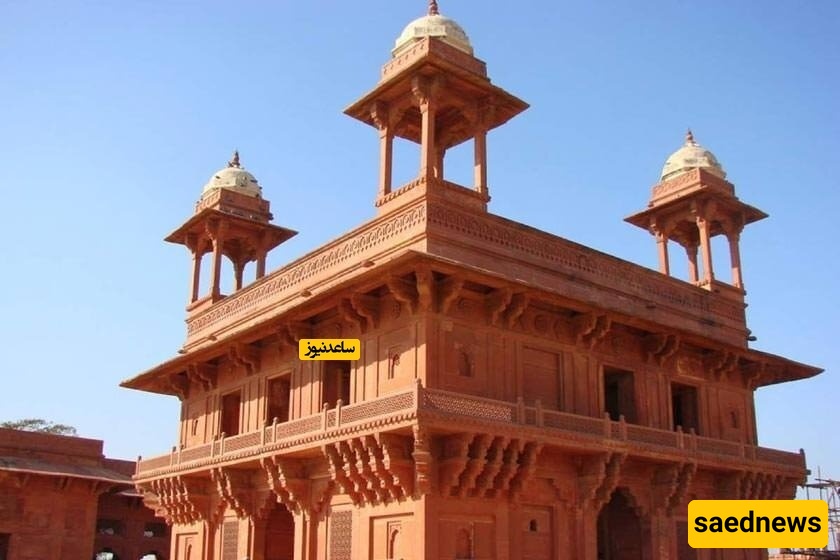
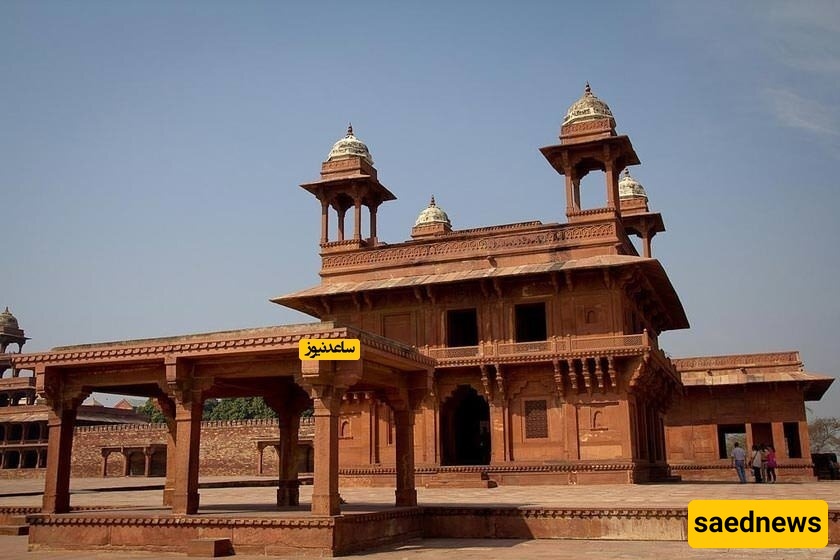
Diwan-i-Khas is one of the most remarkable buildings in Fatehpur Sikri. The highlight of this structure is its central pillar, often called the Lotus Throne. This beautifully carved column reflects exceptional craftsmanship and connects the corners of the first floor to a circular platform.
The circular platform served as a special seat for Emperor Akbar. The hall was designed for private meetings where Akbar discussed important matters with selected officials, guests, and religious leaders.
The palace of Jodha Bai, also known as Mariam-uz-Zamani Palace, was the residence of Akbar’s favorite queen. It was also considered part of the royal harem, where other wives of the emperor lived.
The palace is one of the most significant structures in Fatehpur Sikri and showcases a unique combination of Rajput and Mughal architectural styles. The design reflects Jodha Bai’s Rajput heritage from the Amer region of Jaipur, blending Hindu and Islamic artistic traditions.
Buland Darwaza, meaning “Great Gate” in Urdu, is one of the most impressive monuments in Fatehpur Sikri. Standing 54 meters above ground level, it was constructed in 1601 under Emperor Akbar’s command to celebrate his victory over Gujarat.
The gateway is built from red sandstone and decorated with carved marble and granite details. Its architecture reflects the artistic excellence of the Mughal period.
An important Persian inscription on the gateway carries a message attributed to Jesus, son of Mary, stating that the world is only a bridge to cross and not a permanent home. The inscription reflects the atmosphere of religious thought and tolerance during Akbar’s reign.
Located near Agra in the Indian state of Uttar Pradesh, Fatehpur Sikri is one of the finest examples of Mughal architecture and remains a major attraction for travelers interested in history and culture. Meaning “City of Victory,” Fatehpur Sikri was established in 1571 by Emperor Akbar as the capital of the Mughal Empire and continues to preserve the grandeur of India’s royal past.