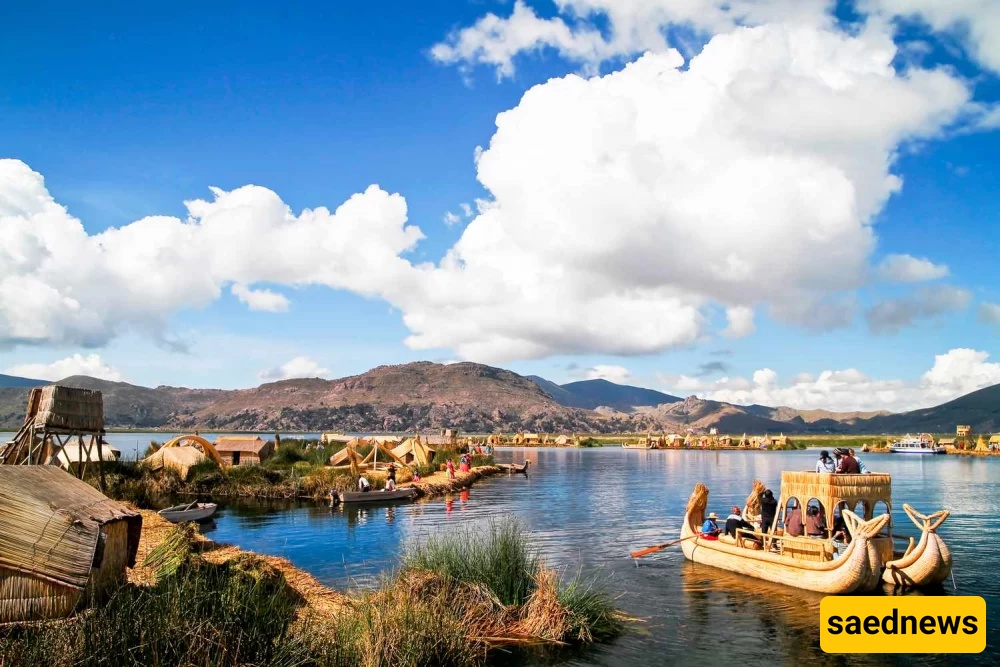
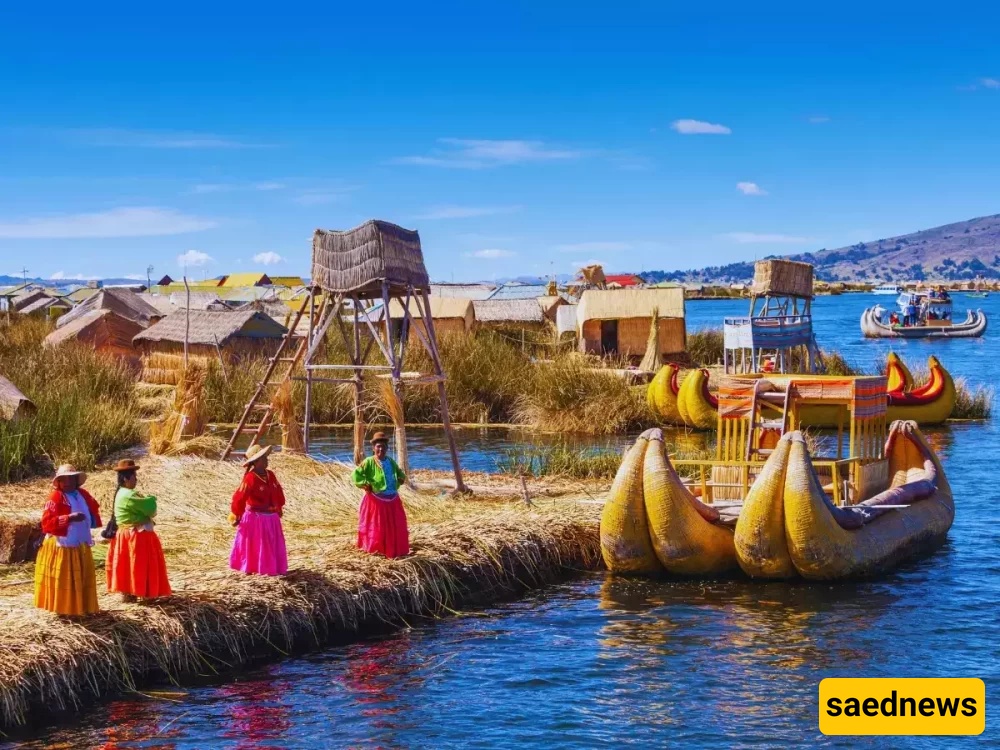
SAEDNEWS: Lake Titicaca, known for its unique floating islands, is a remarkable destination filled with breathtaking attractions and diverse historical structures. Despite its popularity, the lake remains a peaceful and untouched place, offering travelers a serene experience surrounded by natural beauty and ancient mysteries.
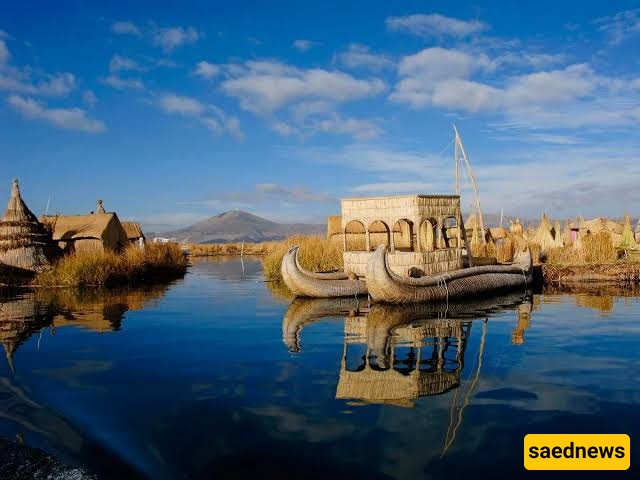
According to Saednews, Archaeologists have uncovered evidence of an ancient and highly advanced civilization beneath the waters of Lake Titicaca in South America. The discovery site is located deep within Lake Titicaca, one of the highest large lakes in the world, situated on the border between Bolivia and Peru. The exploration of this underwater ancient city is considered one of the world’s most significant archaeological projects, with excavation and research efforts expected to continue for several years.
Located just a short distance from the town of Tiquina, Lake Titicaca is one of the largest and deepest lakes in South America. It is the continent’s largest lake by water volume and surface area, and it is also recognized as the highest navigable lake in the world. The discovery of an ancient settlement beneath its waters began as a major archaeological project more than a decade ago.
At the beginning of the research, Belgian archaeologist Christophe Delaere, from a Belgian university, used information provided by local communities to locate traces of a lost civilization beneath the vast lake. Since then, 24 archaeological and historical sites have been identified underwater, providing valuable information about the ancient cultures that once flourished in the region.
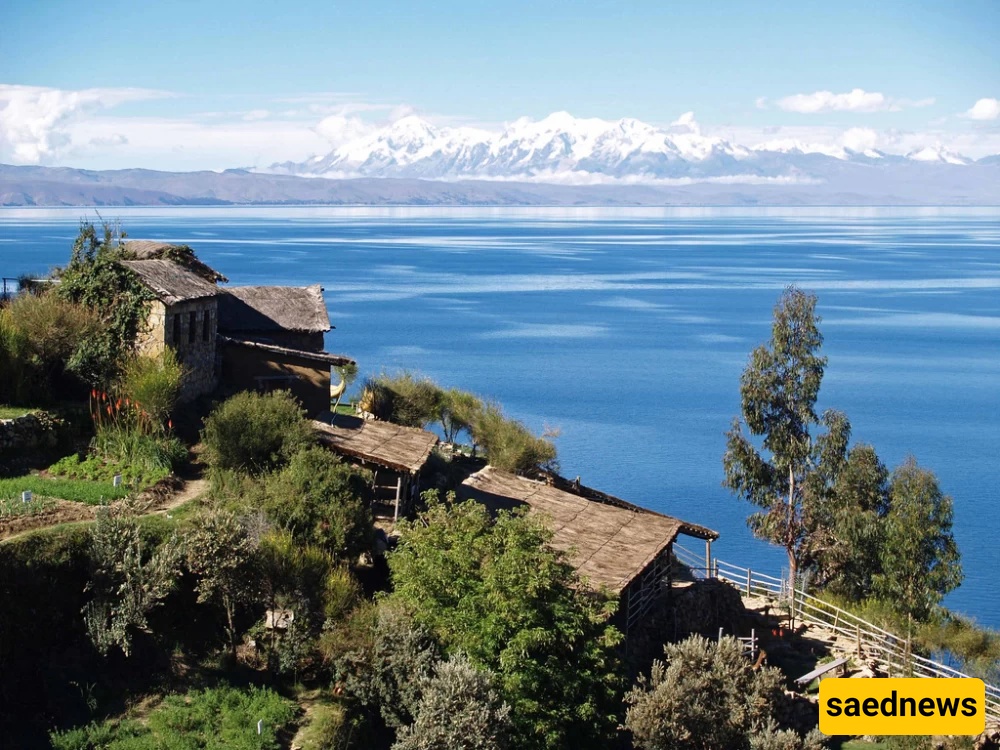
One of the most remarkable archaeological locations discovered is located near Santiago de Ojjelaya. The Bolivian government has announced plans to build a museum in the area to preserve underwater structures, ancient artifacts, and historical remains found both beneath the lake and on land.
The Lake Titicaca underwater archaeological project was estimated to require years of work and a budget of around $10 million. The Bolivian government, with support from UNESCO, has been working to secure the necessary funding for the museum, while the Belgian Development Cooperation Agency has also provided assistance.
The museum is planned to consist of two main sections, covering a total area of approximately 9,360 square meters. One section will be built near the lake’s shoreline and will display artifacts and historical objects recovered from the underwater discoveries.
The second section will be partially constructed underwater, allowing visitors to observe archaeological sites and the remains of the submerged city directly beneath the lake.
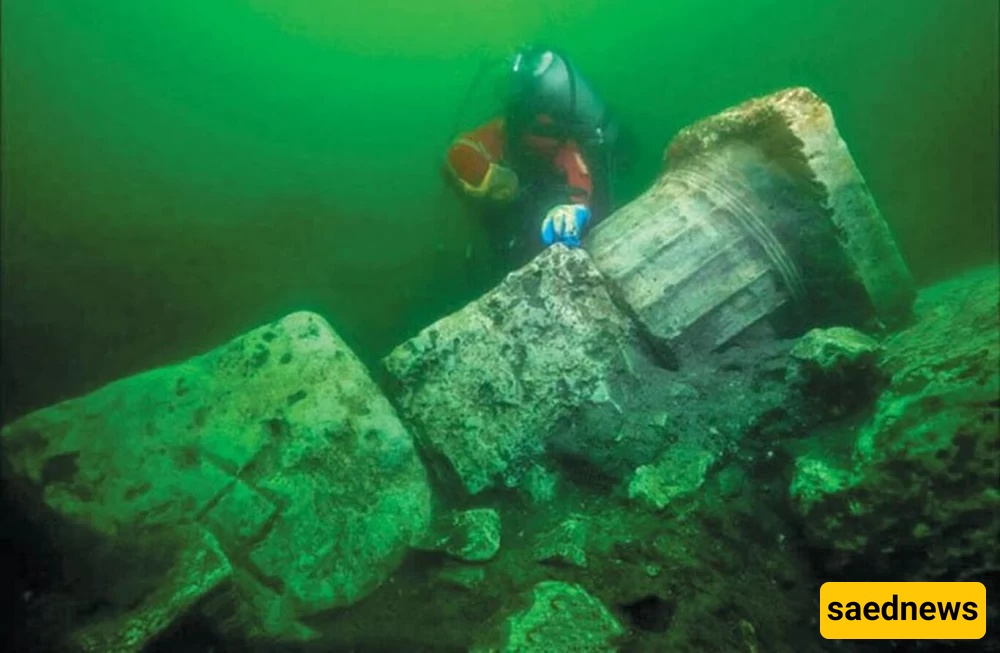
Large, strong glass walls will create an underwater viewing area inside the lake, allowing visitors to see ancient ruins and archaeological sites preserved on the lakebed. The discovery of this submerged city is considered one of the most valuable archaeological findings in the region, and the museum project will help share this extraordinary heritage with people around the world.
According to Bolivia’s tourism authorities, the museum is expected to significantly increase tourism in the region. It could also transform the area into an international center for archaeological, geological, and biological research, making it unique on a global scale.
Christophe Delaere explained that the museum’s design will incorporate elements inspired by ancient architecture, creating harmony between the building, the archaeological sites, and the cultural atmosphere of the region.
José Luis Paz, director of historical heritage at Bolivia’s Ministry of Culture, explained that after the museum is completed, visitors will be able to explore two main types of underwater historical remains:
Religious and ceremonial sites, which are mostly located beneath the lake’s waters and on the lakebed.
Residential and everyday living areas where ordinary people worked and lived, which are mainly located closer to the shoreline.
Paz believes that the ceremonial areas were likely submerged long after the residential buildings and settlements disappeared underwater.
A team of archaeologists, divers, and experts from Bolivia and Belgium has identified thousands of historical objects at different underwater locations. Many of these artifacts have been brought to the surface for study, while a large portion remains preserved underwater.
According to project officials, more than 10,000 objects have been discovered, including gold pieces, ceramics, bowls, and pottery vessels. Researchers believe these artifacts are connected to pre-Inca civilizations, particularly the Tiwanaku culture.
Some of the discovered objects date back around 2,000 years, while others belong to the Tiwanaku Empire, one of the earliest and most influential civilizations in the Andes region.
Tiwanaku was a powerful and remarkable civilization that developed in what is now Bolivia. Its capital city was built near Lake Titicaca at an altitude of nearly 4,000 meters above sea level, making it one of the highest urban centers of the ancient world.
The civilization reached its peak between approximately 500 and 1000 AD, when more than 10,000 people lived in the area. Although the exact origins of Tiwanaku remain uncertain, archaeological evidence suggests that settlements existed around Lake Titicaca as early as 2000 BC.
The discovery of ancient structures and artifacts beneath Lake Titicaca has provided researchers with new insights into one of South America’s most fascinating ancient civilizations and revealed another chapter in the history of the Andes.